HIPAA privacy rule: A complete guide to healthcare data protection
Healthcare organizations handle vast amounts of sensitive patient information. Protecting this data is not just a matter of ethics; it’s a legal requirement under the HIPAA privacy rule. This rule sets strict guidelines on how protected health information (PHI) is used, shared, and safeguarded.
For patients, HIPAA ensures confidentiality and grants them rights over their health records. HIPAA certification for healthcare providers, insurers, business associates, and medical couriers is essential to avoid legal penalties and maintain trust.
This guide breaks down the key aspects of the HIPAA privacy rule, including what it covers, who must comply, patient rights, and best practices for protecting healthcare data.
What is the HIPAA privacy rule?
The HIPAA privacy rule is a federal regulation designed to protect individuals’ medical information while allowing the healthcare system to function efficiently. Established under the Health Insurance Portability and Accountability Act (HIPAA) of 1996, the rule sets national standards for how protected health information (PHI) is used and disclosed.
This regulation applies to healthcare providers, health plans, and healthcare clearinghouses, as well as business associates that handle PHI on their behalf. The goal is to ensure patient confidentiality while allowing necessary information flow for treatment, payment, and healthcare operations.
What is protected health information (PHI)?
Protected health information includes any identifiable data related to a patient’s health, treatment, or payment for healthcare services. This includes:
- Names, addresses, and phone numbers
- Social Security numbers and medical record numbers
- Health insurance details
- Biometric identifiers like fingerprints and voiceprints
- Any information that could be used to identify an individual in a medical context
PHI can exist in various formats – electronic, paper-based, or verbal. The HIPAA privacy rule ensures that all forms of PHI are safeguarded from unauthorized access or misuse.
Permitted uses and disclosures of PHI under HIPAA
HIPAA allows healthcare entities to share PHI without patient consent in specific cases. These include:
- Treatment: Doctors, nurses, and specialists can share PHI to coordinate patient care. For example, a primary care physician can send medical records to a specialist for further evaluation.
- Payment: Healthcare providers can share PHI with insurance companies to process claims and payments.
- Healthcare operations: PHI can be used for administrative activities such as quality improvement programs, staff training, and compliance monitoring.
- Public health and safety: Certain disclosures are permitted to protect public health, such as reporting contagious diseases, child abuse, or medical device malfunctions to regulatory agencies.
- Legal requirements: PHI can be shared in response to court orders or law enforcement requests or to prevent serious threats to health or safety.
Who must comply with the HIPAA privacy rule?
HIPAA applies to three main groups. HIPAA-covered entities include the following:
1. Covered entities
These are organizations that directly handle PHI, including:
- Healthcare providers (hospitals, doctors, clinics, pharmacies)
- Health plans (insurance companies, HMOs, government health programs)
- Healthcare clearinghouses (entities that process health information between providers and insurers)
2. Business associates
Business associates are third-party organizations that perform services for covered entities and have access to PHI. Examples include:
- Billing companies
- Cloud storage providers
- IT service providers
- Law firms handling healthcare-related legal matters
Business associates must sign a HIPAA-compliant agreement that outlines their responsibility to protect PHI.
3. Subcontractors of business associates
Any subcontractor hired by a business associate that creates, receives, maintains, or transmits PHI must also comply with HIPAA.
Examples include:
- Data backup providers
- Software developers handling healthcare applications
- Third-party transcription services
Since subcontractors indirectly handle PHI, they must comply with HIPAA rules and sign a BAA with the business associate they work for.
Patient rights under the HIPAA privacy rule
HIPAA gives patients several rights over their health information, ensuring they have control over who can access and share their data.
1. Right to access medical records
Patients can request copies of their medical records and review the information healthcare providers have on file. Providers must respond within 30 days and may charge a reasonable fee for copies.
2. Right to request corrections
If a patient finds an error in their medical record, they can request a correction. The provider must respond, though they are not required to accept the correction if they believe the information is already accurate.
3. Right to request privacy restrictions
Patients can ask healthcare providers to limit how their information is shared, such as preventing disclosure to certain family members or insurers. However, providers are not always obligated to comply if the restriction interferes with medical care or billing.
4. Right to confidential communication
Patients can request that healthcare communications be sent to a specific location or through a preferred method, such as email instead of mail.
5. Right to an accounting of disclosures
Patients can ask for a record of who has accessed their PHI, excluding disclosures made for treatment, payment, or healthcare operations.
HIPAA privacy rule compliance requirements for organizations
Organizations must follow strict policies and procedures to protect PHI and meet HIPAA privacy rule standards.
1. Develop privacy policies
Covered entities and business associates must create internal privacy policies that outline how PHI is handled, stored, and shared. These policies should be regularly updated to reflect changes in regulations.
2. Train employees on HIPAA regulations
All employees who handle PHI must undergo HIPAA training to understand privacy requirements, permissible disclosures, and security protocols. Training should be ongoing to keep staff informed of new threats and best practices.
3. Implement access controls
Organizations must limit PHI access to only those who need it for their job responsibilities. This includes role-based access controls, strong authentication methods, and audit logs to track access.
4. Secure physical and electronic records
Physical records should be kept in locked cabinets or secure areas, while electronic records should be encrypted and protected with strong healthcare cyber security measures. Organizations should also have backup and recovery plans to prevent data loss.
5. Conduct regular risk assessments
HIPAA requires organizations to conduct regular risk assessments to identify vulnerabilities in their PHI protection measures. Any identified risks must be addressed promptly.
6. Establish breach response protocols
In the event of a data breach, organizations must follow HIPAA’s breach notification rule, which requires them to notify affected individuals, the U.S. Department of Health and Human Services (HHS), and sometimes the media, depending on the scale of the breach.
Ensure compliance with the HIPAA privacy rule with CyberArrow
Staying compliant with the HIPAA privacy rule can be complex, especially with evolving regulations and strict enforcement. Manual compliance processes increase the risk of errors, data breaches, and hefty penalties.
CyberArrow simplifies HIPAA compliance with automated evidence collection, real-time monitoring, and streamlined reporting – reducing manual workload and ensuring your organization stays audit-ready.
With built-in compliance frameworks, intuitive dashboards, and expert guidance, CyberArrow helps healthcare providers, insurers, and business associates confidently maintain HIPAA compliance.
With CyberArrow:
- Automate compliance tasks
- Monitor and manage compliance risks effortlessly
- Stay ahead of HIPAA audits with real-time insights
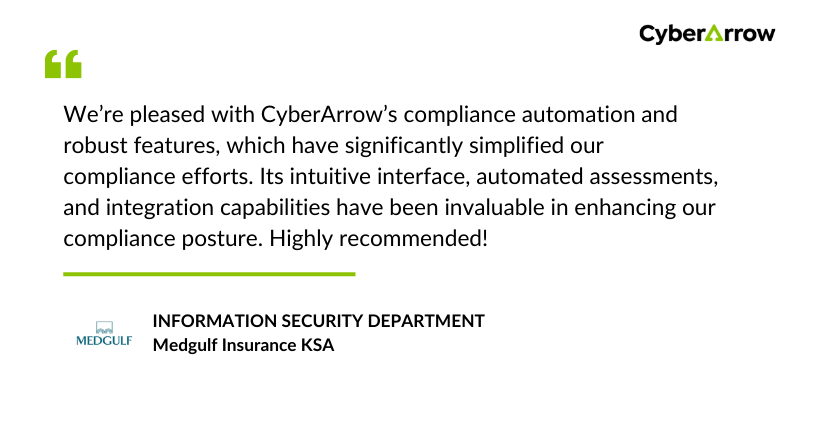
See what companies like Medgulf Insurance say about CyberArrow: