HIPAA certification for medical couriers: What you need to know
Medical couriers play a critical role in healthcare logistics. They ensure that lab specimens, test results, prescription medications, and sensitive medical records are transported safely and efficiently. However, beyond speed and accuracy, medical couriers must also handle protected health information (PHI) with the highest level of security and confidentiality.
This makes HIPAA certification for medical couriers essential. The Health Insurance Portability and Accountability Act (HIPAA) sets strict guidelines for handling PHI, and failure to comply can lead to legal penalties, reputational damage, and even loss of business.
In this guide, we’ll explore why HIPAA certification is crucial for medical couriers, what it involves, and how couriers can achieve compliance.
Why medical couriers need HIPAA certification
HIPAA compliance isn’t just for hospitals and insurance companies; it applies to anyone handling PHI, including medical couriers. Whether working for a dedicated medical courier service or as part of a larger healthcare logistics company, couriers protect patient information during transport.
Without proper HIPAA training and certification, couriers risk exposing sensitive data through misplaced documents, unsecured electronic transmissions, or even casual conversations about patient information. This can result in serious consequences, including legal action and loss of trust from healthcare providers.
Here’s why HIPAA certification is non-negotiable for medical couriers:
1. Protecting patient privacy and avoiding legal risks
Every medical courier is responsible for keeping PHI secure while in transit. Mistakes, such as losing a document, leaving a package unattended, or discussing patient details in public, can lead to HIPAA violations. These violations can result in:
- Fines ranging from $100 to $50,000 per HIPAA violation, depending on the severity.
- Criminal charges for willful neglect or intentional misuse of PHI.
- Loss of contracts with healthcare organizations due to non-compliance.
2. Gaining trust and credibility with healthcare providers
Hospitals, labs, and pharmacies won’t work with couriers who don’t follow compliance standards. A HIPAA-certified courier demonstrates professionalism and reliability, making them a preferred choice for medical institutions that must ensure the safe and lawful transportation of sensitive materials.
3. Reducing the risk of data breaches
Data breaches aren’t limited to cyberattacks; they can happen physically, too. A courier losing a laptop containing medical records, mishandling paperwork, or delivering samples to the wrong facility could expose private patient data. HIPAA certification ensures couriers understand best practices for securing PHI at all times.
How medical couriers can achieve HIPAA certification
Getting HIPAA-certified isn’t as complicated as it might seem, but it does require proper training and an understanding of compliance requirements. The certification process equips couriers with the knowledge needed to handle PHI responsibly, follow security protocols, and avoid common compliance mistakes.
Here’s how medical couriers can achieve HIPAA certification:
1. Enroll in an accredited HIPAA training program
The first step is to complete a recognized HIPAA training course. Many online and in-person programs are available, but couriers should choose one that covers:
- HIPAA Privacy and Security Rules (how PHI must be handled).
- Physical and digital security best practices (including how to safeguard data during transport).
- How to recognize and report HIPAA violations.
Some trusted providers of HIPAA training include:
- The American Health Information Management Association (AHIMA)
- The Health & Human Services (HHS) website
- Online training platforms specializing in healthcare compliance
2. Pass the HIPAA certification exam
After completing the training, couriers must pass a HIPAA certification exam to demonstrate their understanding of compliance regulations. Some courses include quizzes and final assessments, while others require a separate certification exam.
3. Implement HIPAA-compliant practices in daily operations
Certification is just the beginning; ongoing compliance is key. Medical couriers must put their HIPAA training into practice by:
- Using secure transport methods (such as locked containers for documents and temperature-controlled packaging for biological samples).
- Following strict chain-of-custody protocols to ensure packages are only handled by authorized personnel.
- Keeping digital records secure by encrypting electronic communications and avoiding unauthorized access.
4. Stay up to date with HIPAA regulations
HIPAA rules evolve, and compliance isn’t a one-time effort. Couriers should regularly refresh their training to stay informed about:
- New HIPAA updates affecting healthcare logistics.
- Emerging security threats (such as data breaches involving medical transport).
- Best practices for handling PHI securely in an ever-changing healthcare environment.
Common HIPAA compliance mistakes medical couriers should avoid
Even with training, couriers can still make mistakes that put patient data at risk. Understanding these common compliance pitfalls can help couriers prevent costly violations.
- Leaving medical documents or samples unattended: PHI should never be left in an unlocked vehicle, at a delivery location without supervision, or in an unsecured area. Even a brief moment of negligence can lead to a HIPAA breach.
- Mishandling electronic health records (EHRs): Medical couriers transporting digital files (on USB drives, tablets, or laptops) must encrypt and password-protect devices to prevent unauthorized access. A stolen or lost device without proper security could expose thousands of patient records.
- Discussing patient information in public: Even an innocent conversation about a delivery that includes patient details, test results, or medical conditions can be a HIPAA violation. Couriers must ensure all discussions remain confidential and professional.
Overcome HIPAA compliance challenges with CyberArrow
HIPAA compliance can be challenging, especially for medical courier services handling multiple deliveries daily. Ensuring proper training, maintaining security protocols, and keeping up with evolving regulations require a structured approach.
Compliance automation platforms like CyberArrow can help. CyberArrow simplifies HIPAA compliance by:
- Automating compliance training to ensure couriers stay up to date.
- Providing security risk assessments to identify and mitigate vulnerabilities.
- Streamlining documentation and audit processes to reduce administrative burdens.
- Offering real-time compliance monitoring to help medical couriers meet HIPAA requirements effortlessly.
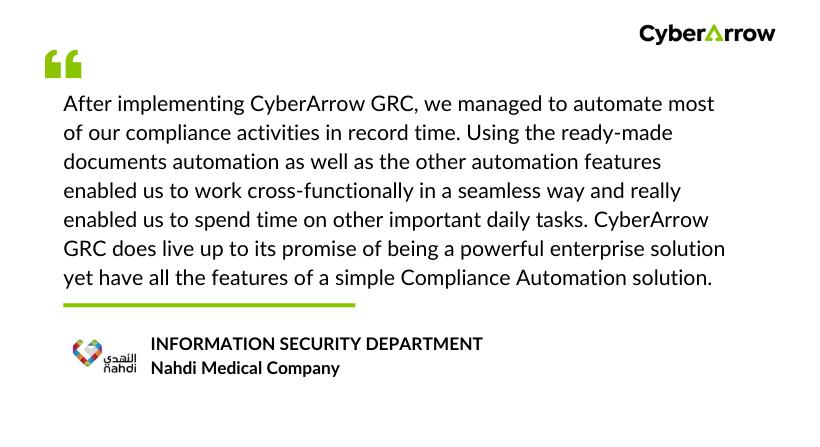
See what companies like Nahdi Medical Company say about CyberArrow GRC: