


What are PHI and ePHI? A guide to healthcare compliance
In the healthcare industry, safeguarding patient information is non-negotiable. Whether stored on paper or in digital form, sensitive data must be handled with care to protect privacy and comply with strict regulations. Terms like PHI and ePHI are at the core of these requirements, representing critical components of data security and compliance efforts.
This guide unpacks the meaning of PHI and ePHI, explains their role in healthcare, and offers insights into how organizations can protect this data while meeting compliance standards.
If your organization handles patient data, understanding and managing PHI and ePHI is key to building trust, avoiding costly fines, and ensuring operational resilience.
What is PHI?
PHI stands for Protected Health Information. It refers to any information that can identify a patient and is created, received, or maintained by a healthcare provider, health plan, or healthcare clearinghouse.
Examples of PHI include:
- A patient’s name, address, or phone number
- Social Security Number (SSN)
- Medical records and lab test results
- Insurance information
- Billing information
PHI is protected under the Health Insurance Portability and Accountability Act (HIPAA) to ensure patient privacy and confidentiality.
What is ePHI?
ePHI stands for Electronic Protected Health Information. It is a specific subset of PHI that is created, stored, or transmitted electronically. This includes any digital format of PHI, such as data stored in electronic health records (EHRs), emails, or cloud storage systems.
Examples of ePHI include:
- Patient medical records stored in an EHR system
- Test results shared via email
- Insurance claims sent through electronic data interchange (EDI)
- Patient information stored on a healthcare provider’s mobile device
The rise of digital healthcare systems has made ePHI a critical focus for compliance. Securing ePHI requires robust cyber security measures to protect it from unauthorized access, breaches, or leaks.
Why is PHI and ePHI protection important?
- Patient trust: Patients trust healthcare providers to keep their sensitive information secure. Breaching this trust can damage a provider’s reputation.
- Compliance with laws: Failing to protect PHI and ePHI can result in violations of regulations like HIPAA, leading to hefty fines and legal actions.
- Preventing cyber threats: Cybercriminals often target ePHI due to its high value on the black market. Securing ePHI reduces the risk of data breaches.
- Improving care quality: Accurate and secure PHI ensures better patient care by providing reliable information to healthcare providers.
Key regulations for PHI and ePHI
1. HIPAA
The Health Insurance Portability and Accountability Act (HIPAA) is the primary regulation governing PHI and ePHI. It has two main rules:
- Privacy rule: Protects the confidentiality of PHI.
- Security rule: Focuses on protecting ePHI through administrative, technical, and physical safeguards.
2. HITECH Act
The Health Information Technology for Economic and Clinical Health (HITECH) Act promotes the adoption of electronic health records and strengthens HIPAA’s rules for ePHI.
3. GDPR (for global compliance)
If a healthcare provider operates internationally, the General Data Protection Regulation (GDPR) may also apply, requiring the protection of personal data, including health-related information.
How to protect PHI and ePHI
1. Implement strong access controls
Limit who can access PHI and ePHI by using secure logins, multi-factor authentication, and role-based access permissions.
2. Encrypt data
Encrypting data ensures that even if it’s intercepted, it cannot be read without the decryption key.
3. Conduct regular audits
Regularly review systems, processes, and access logs to identify potential vulnerabilities and address them promptly.
4. Train employees
Educate staff on how to handle PHI and ePHI securely, recognize phishing attempts, and report suspicious activities.
5. Use secure communication channels
Avoid sharing ePHI through unsecured methods like public email. Instead, use encrypted messaging systems or portals.
6. Backup data
Regularly back up ePHI to ensure that critical information isn’t lost during cyberattacks or system failures.
The challenges of healthcare compliance
Protecting PHI and ePHI is not without its challenges:
- Data breaches: Cyberattacks targeting ePHI are becoming more sophisticated.
- Manual processes: Relying on manual methods for compliance can lead to errors and inefficiencies.
The role of CyberArrow GRC in healthcare compliance
Managing compliance manually can be time-consuming and prone to mistakes. This is where CyberArrow GRC steps in.
How CyberArrow GRC helps:
- Automates compliance processes: Simplifies PHI and ePHI management by automating compliance tasks like audits and reporting.
- Real-time monitoring: Continuously tracks your compliance posture, identifying and addressing issues before they become problems.
- Centralized dashboard: Provides a single platform to manage all compliance requirements, reducing complexity.
- Alerts and notifications: Sends timely alerts if any internal control thresholds are not met, ensuring proactive management.
Why Choose CyberArrow GRC?
- Save time and resources by automating compliance.
- Reduce risks associated with human errors.
- Gain real-time insights into your compliance status.
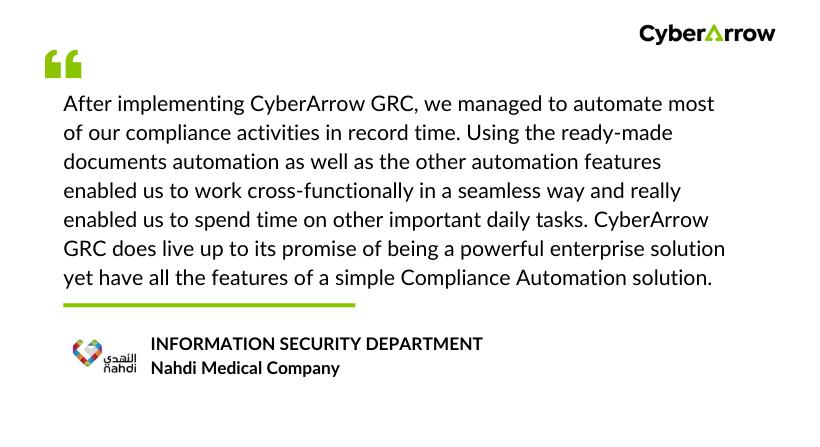
Read how CyberArrow GRC streamlined compliance for Nahdi Medical Company.
See what Nahdi has to say about CyberArrow GRC:
FAQs
What does ePHI stand for?
ePHI stands for electronic Protected Health Information. It refers to any patient health information that is created, stored, transmitted, or received in electronic form and is protected under the HIPAA regulations.
How does ePHI differ from PHI?
PHI, or Protected Health Information, includes all patient health data in any form—whether paper, verbal, or electronic. ePHI specifically refers to PHI that exists in electronic formats, such as digital records or emails containing patient information.
Why is securing ePHI important for healthcare compliance?
Securing ePHI is essential to comply with regulations like HIPAA. It ensures patient privacy, prevents data breaches, and avoids penalties for non-compliance. Strong safeguards and tools like CyberArrow GRC help organizations manage these requirements effectively.
