What is healthcare cyber security? Common healthcare cyber security standards
In healthcare, picture-sensitive patient records, test results, and even medical device data that are all accessed without permission isn’t just a minor issue; it’s a matter of safety, privacy, and trust. With so much sensitive data involved, the healthcare sector has become a top target for cyberattacks. These attacks threaten patient privacy, disrupt healthcare services, and can even put lives at risk. So, what can be done to secure this information?
This guide explains what healthcare cyber security is, why it’s essential, and introduces common standards that keep health data safe. By understanding these standards and how to follow them, healthcare providers can create a safer environment for patients, their data, and their operations.
What is healthcare cyber security?
Healthcare cyber security is the practice of protecting healthcare information and systems from cyber threats. This involves safeguarding electronic health records (EHR), connected devices, and even networks used within hospitals or clinics. Cyber security in healthcare isn’t just about technology; it’s also about creating a culture where everyone—staff, administrators, and IT teams—works together to protect patient data.
In simple terms, healthcare cyber security helps prevent:
- Data breaches: When unauthorized users gain access to patient data.
- Ransomware attacks: Where attackers lock up systems and demand payment to restore them.
- Device tampering: Such as hacking into connected medical devices like pacemakers or insulin pumps.
The healthcare industry is heavily targeted by hackers because it holds valuable personal information. Unlike a stolen credit card that can be replaced, personal health information (PHI) can’t be changed, making it highly valuable on the black market.
Why is healthcare cyber security important?
Healthcare cyber security is crucial because it directly affects:
- Patient privacy: Patients trust healthcare providers with some of their most sensitive information. A breach could expose personal details and medical histories.
- Operational continuity: Hospitals rely on connected devices and digital records. An attack could stop them from delivering care efficiently or even interrupt life-saving services.
- Compliance: The healthcare industry is required to meet strict privacy laws, such as HIPAA. Non-compliance can lead to heavy fines and penalties.
Healthcare cyber security ensures that patient care remains uninterrupted and that private information stays private.
Quick link: GRC software for healthcare
Common healthcare cyber security standards
To help protect data, healthcare organizations must follow certain standards. These standards set guidelines for handling patient data and ensure that providers have solid cyber security practices. Let’s look at some of the key standards in healthcare cyber security.
1. HIPAA (Health Insurance Portability and Accountability Act)
HIPAA is one of the most well-known healthcare regulations in the U.S., and it has strict rules about protecting patient data. Under HIPAA, healthcare providers must take steps to secure electronic health information and control who can access it. HIPAA is mainly known for its Security Rule and Privacy Rule:
- Security rule: Sets standards for protecting health information stored or transmitted electronically.
- Privacy rule: Defines who can access a patient’s medical information.
Non-compliance with HIPAA can result in hefty fines, which makes following these rules essential for healthcare organizations.
2. HITECH Act (Health Information Technology for Economic and Clinical Health Act)
The HITECH Act was introduced to encourage healthcare organizations to adopt electronic health records (EHRs). But with more digital data comes more risk. HITECH supports HIPAA and expands the scope of penalties, ensuring healthcare providers take data protection seriously.
- Key focus: Encourages the secure use of electronic health records.
- Breach notification rule: Under HITECH, organizations must notify affected patients and the government of any breaches affecting more than 500 individuals.
3. ISO 27001
ISO 27001 is an international standard for information security management. While not exclusive to healthcare, it provides a framework that healthcare organizations can use to manage and improve their cyber security practices. ISO 27001 focuses on:
- Risk management: Identifying, assessing, and mitigating risks to information security.
- Information Security Management System (ISMS): This systematic approach helps healthcare organizations manage sensitive data responsibly.
ISO 27001 certification can be a valuable asset for healthcare providers, demonstrating their commitment to information security.
Quick link: What is Operational Security (OPSEC)?
4. NIST CSF (National Institute of Standards and Technology Cybersecurity Framework)
The NIST Cybersecurity Framework provides a guideline for improving cyber security across various sectors, including healthcare. While it’s not legally required, it’s widely respected and used as a basis for cyber security practices. NIST CSF’s five core functions are:
- Identify: Know what assets need protection.
- Protect: Implement safeguards to secure data.
- Detect: Have systems in place to identify threats.
- Respond: Develop a plan to respond to incidents.
- Recover: Have strategies to restore data and services.
NIST CSF allows healthcare organizations to build robust cyber security plans based on risk assessment.
5. GDPR (General Data Protection Regulation)
For healthcare providers operating in or handling data from the EU, GDPR compliance is mandatory. GDPR is a regulation that controls how organizations collect, store, and process personal data. Though it covers many industries, healthcare data is especially sensitive under GDPR rules. GDPR ensures that:
- Data collection: Only necessary data is collected.
- Data consent: Patients understand how their data will be used and give permission.
- Data access: Patients have the right to access their data and know who else has access.
Compliance with GDPR helps healthcare providers build trust with their patients by respecting privacy and securing data.
Key components of a strong healthcare cyber security plan
Implementing healthcare cyber security standards means more than just meeting compliance requirements. It requires a strategic approach. Here are some key elements of an effective healthcare cyber security plan:
- Encryption: Protects data so that only authorized people can read it, making it useless to attackers if accessed.
- Access controls: Only authorized users should have access to specific patient records, and even they should have limited permissions.
- Network security: Includes firewalls, antivirus software, and other security measures to block unauthorized access.
- Regular audits and training: Ensures staff are aware of cyber security risks and compliance requirements.
By combining these practices, healthcare providers can create a robust cyber security framework.
Challenges in healthcare cyber security
The healthcare industry faces unique challenges when it comes to cyber security:
- Aging technology: Many healthcare facilities still use outdated software, which may have vulnerabilities.
- Resource limitations: Smaller clinics may not have the budget or expertise to implement advanced security measures.
- Insider threats: Sometimes, employees accidentally or intentionally expose sensitive data.
Despite these challenges, following standards like HIPAA, ISO 27001, and NIST CSF can help mitigate risks.
Conclusion: Securing healthcare with CyberArrow GRC
The key takeaway here is that a secure healthcare system relies on strict cyber security standards to protect patient data. Meeting these standards, however, can be a complex process. That’s where CyberArrow GRC can help.
With CyberArrow GRC, healthcare providers can:
- Automate Compliance: Stay aligned with standards like HIPAA and GDPR without manual processes.
- Centralize evidence collection: Reduce time spent gathering data by automating documentation for audits.
- Improve security: CyberArrow’s tools help ensure that healthcare organizations maintain compliance and security, even as regulations evolve.
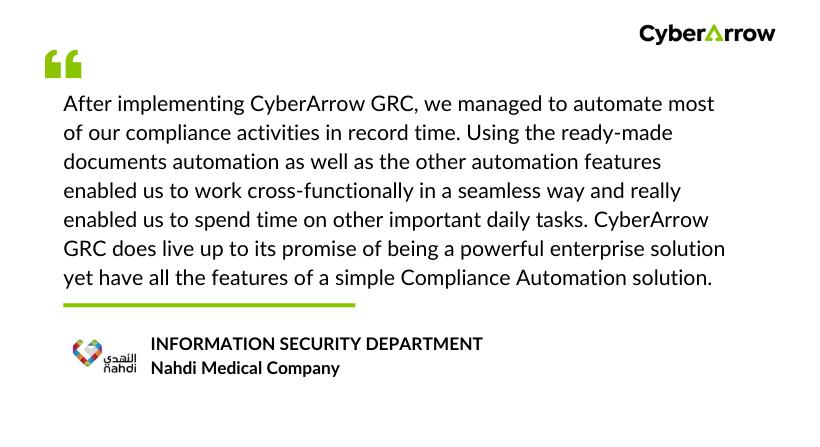
See what Nahdi has to say about CyberArrow GRC: