


What is strategic risk management? A SaaS founder’s guide
Running a SaaS (Software as a Service) company can be exciting, but it also comes with risks. As a founder, you must be prepared to identify, manage, and mitigate risks that could impact your business. This is where strategic risk management becomes essential.
In this blog, we’ll explore what strategic risk management is, why it’s important for SaaS businesses, and how you can implement it in your company to ensure long-term success.
By the end, you’ll also see how tools like CyberArrow GRC can make managing risks easier and more efficient.
What is strategic risk management?
Strategic risk management is the process of identifying, assessing, and mitigating risks that could affect the strategic goals of a business. Unlike operational risks, which are about the day-to-day running of a business, strategic risks involve the bigger picture — they can impact your long-term growth, market position, and business goals.
For SaaS founders, strategic risk management is about making sure that decisions and actions align with both the company’s vision and external market conditions. It helps you avoid costly mistakes, stay competitive, and protect your company from unforeseen challenges.
Why is strategic risk management important?
Every business faces risks, but for SaaS founders, these risks can escalate quickly if not managed properly. Strategic risk management helps ensure that you are prepared for:
- Market changes: The tech landscape is constantly evolving. Strategic risk management helps you navigate market disruptions, technological advancements, and changing customer expectations.
- Competition: SaaS is a competitive space, and not being prepared for new or existing competitors can lead to lost market share. Strategic risk management helps you stay one step ahead.
- Regulatory changes: SaaS companies must comply with various regulations, such as data privacy laws like GDPR. Failure to comply can lead to fines and damage to your reputation.
- Cyber threats: As a SaaS business, your product is online, making you vulnerable to cyberattacks. Strategic risk management ensures you have a plan to handle these threats.
By effectively managing these risks, SaaS founders can not only protect their business but also position it for long-term success.
Types of strategic risks in SaaS
Strategic risks come in many forms, and for SaaS founders, understanding the types of risks your business might face is key to managing them effectively. Below are some common types of strategic risks for SaaS businesses:
1. Market risks
Market risks refer to changes in the market that could affect your business. For SaaS companies, this could mean shifts in customer demand, new competitors entering the space, or changing technology trends.
For example, a new technology might make your current product or service obsolete. Or, a competitor could release a feature that draws customers away from your platform.
2. Financial risks
Financial risks involve anything that could negatively impact your company’s financial health. This could be anything from economic downturns to unexpected expenses or even poor financial planning.
For SaaS businesses, one of the most significant financial risks is cash flow management. Subscription models mean that cash comes in over time, which can create issues if costs aren’t properly managed.
3. Regulatory risks
SaaS businesses must comply with various regulatory risks, such as data privacy laws, intellectual property rules, and tax regulations. Failure to comply with these regulations can result in fines, legal action, and reputational damage.
For example, if your SaaS product collects user data, you must comply with regulations like the General Data Protection Regulation (GDPR) in the EU or the California Consumer Privacy Act (CCPA) in the U.S.
4. Technology risks
SaaS businesses rely heavily on technology, making them particularly vulnerable to technology risks. These risks include system failures, software bugs, and cyber security breaches that can affect your product’s performance and customer trust.
A single security breach could damage your brand and lead to customer loss. Keeping your technology up to date and securing your systems is critical in managing these risks.
5. Reputation risks
Your company’s reputation risk is the risk of losing customers or market value due to negative publicity, poor customer reviews, or a failure to meet customer expectations. Reputation risks are especially important for SaaS companies because negative press or customer reviews can spread quickly online.
One wrong move, such as a major data breach or a poorly handled customer support issue, can lead to long-lasting damage to your brand.
How to implement strategic risk management in your SaaS business
Now that you understand the types of risks your SaaS business might face, let’s look at how to implement an effective strategic risk management plan.
1. Identify potential risks
The first step in strategic risk management is identifying the risks that could affect your SaaS business. Start by considering the different areas of your business — market, technology, finances, and operations.
Here’s how you can identify risks:
- Analyze the market: Look at market trends and identify potential changes that could impact your business.
- Evaluate competitors: Keep an eye on your competitors to see what they’re doing and how they could affect your business.
- Consider regulatory changes: Stay updated on regulations that affect your industry.
- Review technology: Assess your technology infrastructure for potential risks, like system vulnerabilities or outdated software.
2. Assess the impact of risks
Once you’ve identified potential risks, the next step is to assess their potential impact on your business. Not all risks are created equal — some risks could significantly affect your business, while others might have minimal impact.
For each risk, ask:
- How likely is this risk to happen?
- If it does happen, how severe will the impact be?
- Will this risk affect my short-term or long-term goals?
By answering these questions, you can prioritize which risks to focus on first.
3. Develop a risk management plan
After identifying and assessing the risks, it’s time to create a risk management plan. This plan outlines how your business will handle each risk if it occurs. For each identified risk, determine:
- Mitigation strategies: What can you do to reduce the likelihood of the risk occurring?
- Response plan: If the risk happens, what steps will you take to minimize its impact?
- Responsibility: Who in your team is responsible for managing and addressing this risk?
For example, if one of your risks is a cyber security breach, your mitigation strategy could include regular security audits, while your response plan could involve immediate containment and communication with affected customers.
4. Monitor and adjust the plan
Strategic risk management is not a one-time activity. Risks evolve over time, so it’s important to regularly monitor your risk management plan and adjust it as necessary.
Set up regular check-ins to review and update your plan based on any new risks or changes in your business environment.
How CyberArrow GRC can help you manage strategic risks
Managing strategic risks can feel overwhelming, especially for fast-growing SaaS companies. CyberArrow is designed to help businesses automate and streamline their governance, risk, and compliance (GRC) processes, making risk management more efficient and less time-consuming.
Here’s how CyberArrow GRC can assist SaaS founders:
- Automated risk identification: CyberArrow helps identify risks across your organization, from cyber security threats to regulatory compliance, so you can stay ahead of potential issues.
- Real-time risk monitoring: With CyberArrow, you can track risks in real-time, ensuring that you always have up-to-date information on your company’s risk profile.
- Customizable risk management plans: CyberArrow allows you to create and implement tailored risk management plans that align with your strategic goals, helping you mitigate risks before they become a problem.
- Regulatory compliance: CyberArrow helps SaaS businesses comply with various regulations like GDPR, HIPAA, and more, reducing your regulatory risk and helping you avoid fines.
- Streamlined audits and reporting: With CyberArrow, you can easily generate reports and manage audits, saving you time and ensuring that your company remains compliant with relevant laws and regulations.
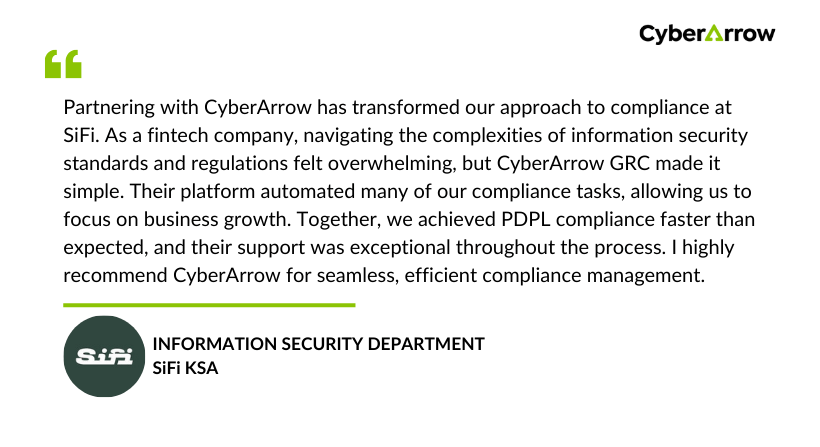
Read how a leading Fintech company SiFi automated PDPL compliance with CyberArrow in no time.
See what SiFi has to say about CyberArrow GRC:
Using advanced tools like CyberArrow GRC can make the process much smoother by automating risk identification, monitoring, and compliance tasks.
