


Top 10 risk management strategies to follow in 2026
Businesses today face several risks. Cybercrime, including malware and ransomware attacks, has become one of the biggest threats in 2026. As companies rely more on technology, the danger of data breaches and disruptions increases, putting sensitive information and operations at risk.
Is your organization secure against cyber risks? Do you have a risk management strategy to mitigate these risks?
Organizations must have strong risk management strategies to tackle these challenges. By identifying and addressing risks early on, you can protect yourself from the harmful effects of cyber threats and stay compliant with regulations.
Before we move on to risk management strategies, let’s discuss the different types of risks organizations face.
Types of risks
Businesses must understand the different risk types before creating an effective risk management strategy. These risks can come from various sources and can impact organizations in different ways.
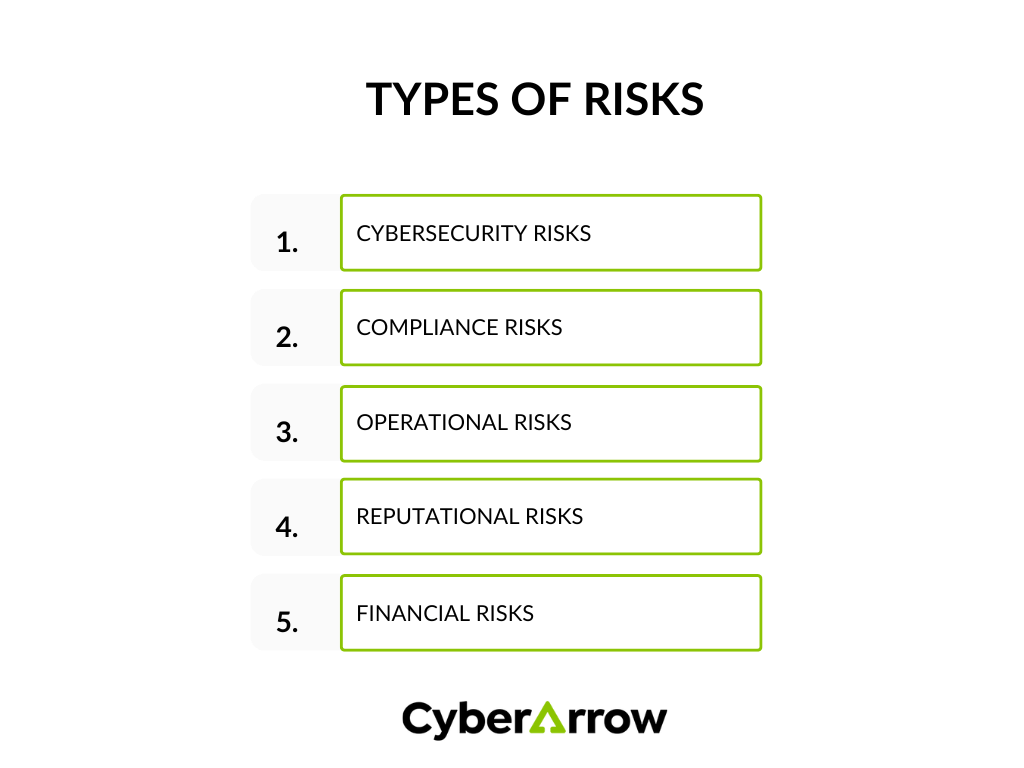
Let’s have a look at these risks:
- Cyber security risks: These risks include threats like hacking, phishing, malware, and ransomware attacks. As businesses become more digital, the potential for cyber-attacks increases.
- Compliance risks: Compliance risks arise when organizations fail to comply with laws, regulations, and industry standards. This can lead to fines, legal penalties, and damage to a company’s reputation.
- Operational risks: Operational risks occur from failures in internal processes, systems, or human errors. These can cause production delays, service disruptions, and financial losses.
- Reputational risks: Damage to a company’s brand or public image is reputational risk. Negative publicity, customer dissatisfaction, or ethical breaches can severely impact a business’s standing in the market.
- Financial risks: These risks are related to the possibility of losing money due to factors like market fluctuations, credit risks, or liquidity issues. Effective financial risk management is crucial for maintaining business stability.
Top risk management strategies
Businesses must follow risk management strategies to protect themselves from several threats, including cyber attacks and regulatory challenges.
Go through the following strategies to mitigate risks, enhance security, and ensure compliance in 2026:
1. Implement a Zero-Trust security model
A Zero-Trust security model is based on the principle “never trust, always verify.” This approach ensures that no one should be automatically trusted, whether inside or outside the network.
- Strict identity verification: Every user and device must be authenticated and authorized before accessing your network. This prevents unauthorized access and reduces the risk of insider threats.
- Continuous monitoring: Regularly monitor and validate all user activities within the network. This helps identify suspicious behavior early on, allowing for quick intervention.
2. Enhance cyber security threat detection and response
You need to have advanced systems in place to detect and respond to threats quickly.
- Advanced threat detection: Invest in AI-powered threat detection systems to identify potential threats in real time. These systems analyze patterns and behaviors to detect anomalies that could indicate a cyber attack.
- Rapid response plan: Develop and regularly update a response plan to address potential cyber incidents. This plan should outline clear steps for containing and mitigating an attack’s impact and minimizing downtime and data loss.
3. Regularly update and patch software
Keep software up-to-date to protect against vulnerabilities.
- Patch management process: Implement a patch management process to ensure that all software, including operating systems and applications, is regularly updated with the latest security patches.
- Automated updates: Where possible, automate updates to ensure that your systems are protected against known threats without delay. This reduces the risk of human error and ensures timely defense against vulnerabilities.
4. Conduct regular compliance audits
Compliance with industry regulations and standards such as ISO 27001 is not only a legal requirement but also a key component of risk management.
- Frequent internal audits: Conduct regular internal audits to ensure your organization meets all regulatory requirements. These audits help identify areas of non-compliance and allow you to address them before they become major issues.
- Stay informed: Keep up with changes in regulations and adjust your compliance strategies accordingly. This approach helps avoid fines, legal penalties, and reputational damage.
Quick link: A CISO’s guide to risk mitigation strategies
5. Develop an incident response plan
An effective incident response plan helps reduce the impact of security breaches and cyber-attacks.
- Detailed procedures: Create a comprehensive incident response plan that outlines specific actions to take during a security breach. This plan should include steps for detection, containment, eradication, and recovery.
- Regular training: Ensure your team is well-versed in executing the incident response plan. Regular training and simulations help prepare your staff to act quickly and effectively when a real attack happens.
6. Strengthen data encryption practices
Encrypt sensitive data to protect it from unauthorized access.
- Data encryption at rest and in transit: Ensure all sensitive data is encrypted both when stored and during transmission to prevent unauthorized access.
- Advanced encryption standards: Implement strong encryption standards, such as AES (Advanced Encryption Standard), and regularly review your encryption policies to ensure they meet the latest security requirements.
7. Enable a culture of cyber security awareness
Build a culture of cyber security awareness among employees to reduce the risk of human error.
- Ongoing training programs: Conduct regular training sessions to educate employees about the latest cyber security threats and best practices. You can also use tools like the CyberArrow Awareness Platform for employee awareness.
- Encourage reporting: Create an environment where employees feel comfortable reporting suspicious activities, which can help prevent potential breaches before they escalate.
8. Implement multi-factor authentication (MFA)
MFA adds an extra layer of security by requiring multiple forms of verification from users.
- Verification methods: Implement MFA across all critical systems and data, and users must provide multiple verification factors, such as a password and a temporary code sent to their phone.
- Regular updates: Review and update authentication methods regularly to ensure they remain effective against evolving threats.
9. Monitor third-party risks
Vendors and partners can introduce vulnerabilities to your organization, making third-party risk management essential.
- Security evaluations: Conduct third-party risk assessments to assess the security practices of your vendors and partners to ensure they meet your security standards.
- Clear contracts: Establish clear guidelines and contracts with third parties that outline their responsibilities for managing risks and ensure they adhere to these agreements.
10. Use continuous monitoring and risk assessments
Continuous monitoring helps identify and respond to risks in real time, keeping your organization secure.
- Monitoring tools: Implement tools like CyberArrow that provide continuous monitoring of your systems, networks, and data, allowing you to detect and respond to enterprise risks as they arise.
- Regular risk assessments: Continuously update your risk assessments to reflect the evolving threat landscape.
Improve your enterprise risk management with CyberArrow
Managing enterprise risks is essential for maintaining a strong reputation, avoiding violations, and ensuring long-term success. CyberArrow GRC platform helps organizations overcome risk management challenges effectively. It empowers businesses to grow faster and make informed decisions by providing real-time risk management capabilities that protect business goals and investments.
Why choose CyberArrow?
- Real-time risk management: Prevent losses and protect business goals by managing compliance risks in real time.
- Flexible audits: Align audits with business objectives and risks, speeding up success and improving collaboration across teams.
- Enhanced compliance: Boost compliance efforts, avoid costly violations, and maintain trust with regulators and stakeholders by staying up-to-date with changing regulations.
- Instant monitoring: Get a clear, integrated view of compliance risks and actively manage them to ensure adherence to rules and regulations.
