


How to achieve ISO 27001 certification: Step-by-step guide
Many businesses find the path to ISO 27001 certification confusing and overwhelming, leading to delays or missed opportunities to protect their data effectively.
Here’s a straightforward solution!
Our step-by-step guide to ISO 27001 certification.
This guide will walk you through each step to achieve the certification. From planning and preparation to the certification process and maintaining your status, we’ll make it simple and clear to help you secure your business and meet industry standards.
Plan and prepare for ISO 27001 certification
The certification process has different phases, the first of which is planning and preparation. Let’s break down the steps for you.
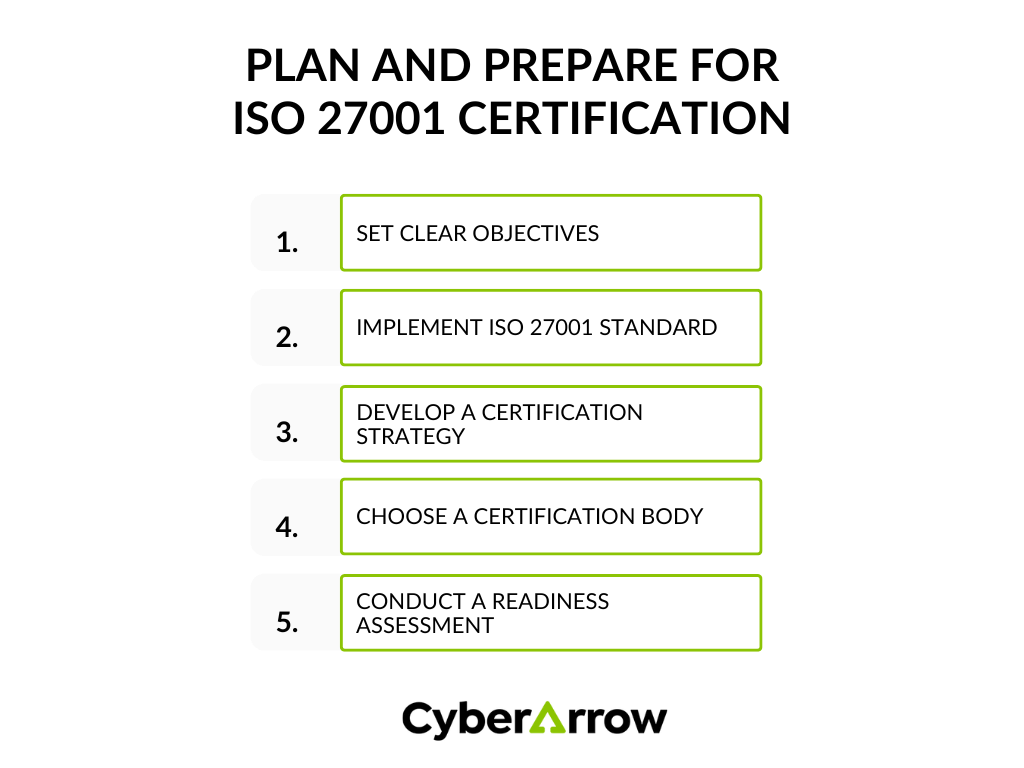
- Set clear objectives: Define what you want to achieve with ISO 27001 certification. This might include improving your information security posture, meeting regulatory requirements, or enhancing customer trust.
- Implement ISO 27001 standard: Apply the ISO 27001 standard within your organization. This involves setting up the necessary ISO 27001 controls, policies, and procedures to meet the standard’s requirements. You can also refer to our detailed ISO 27001 implementation checklist to establish and maintain your Information Security Management System (ISMS).
- Develop a certification strategy: Create a detailed plan outlining your certification approach. Identify the resources, timeline, and key milestones to guide your efforts effectively.
- Choose a certification body: Select an accredited certification body. Look for a reputable auditor with experience in your industry to ensure a smooth and credible certification process.
- Conduct a readiness assessment: Before pursuing certification, assess your current compliance status and identify any gaps between your existing practices and ISO 27001 requirements.
ISO 27001 certification process
Now that you have prepared for the certification process and implemented all the ISO 27001 requirements, let’s check out the steps to achieve ISO 27001 certification.
Stage 1 audit: Documentation review
In this initial stage, the certification body reviews your organization’s policies, procedures, and documentation related to your ISMS. The goal is to ensure that your documentation meets ISO 27001 requirements and effectively outlines how your ISMS operates.
The auditor will check for completeness, clarity, and alignment with the standard’s guidelines. They will provide feedback on necessary improvements before proceeding to the next stage.
Stage 2 audit: On-site assessment
During the stage 2 audit, the auditor visits your organization to assess the actual implementation of your ISMS. This involves thoroughly examining your security controls and practices and their effectiveness in real-world scenarios.
The auditor will also conduct interviews with staff, review operational processes, and verify that your documented procedures are being followed. This assessment ensures that your ISMS functions as intended and complies with ISO 27001 standards.
Address non-conformities
If any issues or non-conformities are identified during the audits, you must address them before certification can be granted. Non-conformities are deviations from ISO 27001 requirements that could affect the effectiveness of your ISMS.
You must provide a corrective action plan detailing how you will resolve these issues. Once implemented, the auditor may review the changes to confirm they adequately address the identified non-conformities.
Quick link: The ROI of automating ISO 27001 compliance
Receive ISO 27001 certification
After the audits are completed and any non-conformities are resolved, the certification body will decide whether to grant ISO 27001 certification. Once approved, you will receive your ISO 27001 certification. This certificate formally recognizes that your organization’s ISMS meets the ISO 27001 standard.
You can expect to receive a certificate document and, often, a digital badge for display on your website or marketing materials. The certification is typically valid for three years, with periodic surveillance audits to ensure ongoing compliance.
How to maintain your ISO 27001 certification?
You need regular surveillance audits to ensure your organization continues to comply with the standard. The certification body conducts these audits annually. During a surveillance audit, the auditor reviews your ISMS to ensure that the implemented controls are still effective and that any changes or updates to your security practices maintain compliance with ISO 27001.
The auditor will check for continual improvement and may focus on specific areas of the ISMS that have undergone significant changes.
Re-certification
To renew its ISO 27001 certification, your organization must undergo a full re-certification audit every three years. This comprehensive audit is similar to the initial certification process, involving both a documentation review and an on-site assessment.
The auditor will thoroughly evaluate your ISMS to verify that it continues to meet ISO 27001 requirements. The re-certification process ensures your ISMS remains effective and up-to-date with any changes in the standard or your organization’s environment.
How the Sharjah Executive Council implemented ISO 27001 using CyberArrow?
Sharjah Executive Council relied on a manual approach for ISO 27001 compliance, which was time-consuming and resource-intensive. They tracked security controls with spreadsheets and conducted assessments via questionnaires and meetings. Also, they wrote security policies from scratch.
CyberArrow automated Sharjah Executive Council’s ISO 27001 compliance process, resulting in significant time and effort savings:
- Automated risk assessment programs.
- Automated security awareness training.
- Continuous monitoring of security controls.
- Automated compliance checks for all IT systems.
- Ongoing compliance with continuous security monitoring.
- Zero-touch audit for ISO 27001 certification through CyberArrow’s auditor network.
- Automated creation and distribution of ISO 27001 security policies and procedures.
The Result:
CyberArrow enabled the Sharjah Executive Council to save over 100 hours and achieve ISO 27001 certification efficiently without needing a physical audit.
Quick link:
Achieve ISO 27001 certification with CyberArrow
Implementing and maintaining ISO 27001 certification can be daunting and requires extensive resources. Manual processes can be time-consuming, prone to errors, and often lead to inefficiencies. But automation tools like CyberArrow can help.
Why choose CyberArrow for ISO 27001 certification?
- CyberArrow automates the creation and distribution of ISO 27001 security policies and procedures, reducing the manual workload and ensuring consistency and accuracy.
- With CyberArrow’s automated risk management technology, you can establish a comprehensive risk assessment program that continuously monitors and evaluates risks.
- CyberArrow enables automatic compliance checks across all IT systems, ensuring that all security controls are effectively implemented and maintained.
- Achieve ISO 27001 certification easily through CyberArrow’s zero-touch audit process, leveraging a network of auditors who conduct assessments directly within the platform, eliminating the need for time-consuming, on-site audits.
- CyberArrow provides continuous security monitoring, helping your organization maintain compliance and quickly address any issues.
Ready to automate your ISO 27001 certification process?
