The ROI of automating ISO 27001 compliance: Cost Vs. value
Achieving and maintaining ISO 27001 compliance, a globally recognized standard for information security management, has become essential for safeguarding sensitive data and ensuring operational integrity. With the growing complexity of cybersecurity threats, organizations are increasingly turning to automating ISO 27001 compliance efforts.
This article explores the Return on Investment (ROI) of automation in ISO 27001 compliance by analyzing the balance between costs and the inherent value it brings.
The rising importance of ISO 27001 compliance
ISO 27001 is an internationally recognized standard that outlines the best practices for establishing, implementing, maintaining, and continually improving an information security management system within an organization’s overall business risks.
Compliance with this standard demonstrates an organization’s commitment to protecting sensitive information, improving stakeholder trust, and ensuring legal and regulatory compliance.
The cost of manual compliance
Manual compliance processes can be time-consuming, error-prone, and resource-intensive. Staff dedicated to manual compliance tasks often divert their efforts from more strategic and value-added activities. Moreover, human errors in documentation, monitoring, and reporting can lead to compliance breaches and potential security vulnerabilities.
Let’s explore the value automating ISO 27001 compliance brings.
- Efficiency and accuracy: Automation significantly reduces the time and effort required for routine compliance tasks. Automated tools can continuously monitor and assess security controls, ensuring that they are consistently implemented and functioning as intended. This reduces the risk of human errors and ensures accuracy in compliance reporting.
- Real-time monitoring and alerts: Automated systems can provide real-time monitoring of security events and incidents, enabling swift responses to potential threats. This proactive approach minimizes the risk of security breaches and enhances incident response effectiveness.
- Consistent documentation: Automation helps maintain consistent and up-to-date documentation, a critical aspect of ISO 27001 compliance. Changes in policies, procedures, and configurations can be automatically updated, ensuring that documentation is always current.
- Resource optimization: By automating routine tasks, organizations can allocate their skilled workforce to more strategic initiatives, maximizing their value contribution to the business.
- Scalability: As organizations grow, manual compliance processes become harder to scale efficiently. Automation allows for seamless scalability without a proportional increase in resource allocation.
Calculating the costs of automating ISO 27001 compliance
While automation offers compelling advantages, it’s essential to recognize the costs of automating ISO 27001 compliance.
- Initial investment: Implementing automation requires an initial financial investment in acquiring and integrating the necessary tools and systems.
- Training and integration: Staff members need training to use automated tools effectively. Integration with existing systems and processes might also require upfront effort.
- Ongoing maintenance: Automated systems require periodic updates, maintenance, and monitoring to ensure their effectiveness and alignment with evolving compliance requirements.
Quantifying the value of automation
The true ROI of automation becomes apparent when examining the value it brings. 52% of companies felt that the cost of achieving ISO 27001 certification was fully justified by the benefits automation delivers.
To assess the ROI of automation in ISO 27001 compliance, consider the following:
- Reduction in manual labor hours and associated costs.
- Decrease in compliance breaches and potential penalties.
- Time saved due to automated monitoring and reporting.
- Enhanced incident response leading to reduced impact and recovery costs.
Companies across diverse industries have experienced notable cost savings and increased operational efficiency. One such instance, namely the Sharjah Executive Council, saved valuable time and thousands of dollars spent to bring additional resources on board to manage compliance by using the CyberArrow Compliance Automation Platform.
This example offers valuable insights into the tangible benefits that can be realized through automating ISO 27001 compliance.
FAQs
What is ISO 27001 compliance, and why is it important for businesses?
ISO 27001 compliance refers to adhering to the internationally recognized standard for information security management. It’s crucial for businesses to protect sensitive data, maintain stakeholder trust, and ensure legal compliance in an increasingly digital world.
How do manual compliance processes impact an organization’s resources and efficiency?
Manual compliance processes are resource-intensive and time-consuming. They often divert valuable staff from strategic tasks, leading to inefficiencies and potential human errors that can compromise compliance.
What role does automation play in ISO 27001 compliance?
Automation streamlines compliance efforts by handling routine tasks like monitoring security controls and updating documentation. It enhances accuracy, efficiency, and real-time monitoring.
What are the benefits of automating ISO 27001 compliance processes?
Automation offers efficiency, accuracy, real-time monitoring, consistent documentation, and resource optimization. It scales easily and improves incident response, reducing the risk of breaches and their associated costs.
Are there any upfront costs associated with implementing automation for compliance?
No – CyberArrow is a SaaS solution that has a yearly fee plan where everything is included! We help you get started including connecting to relevant technologies and support you throughout your compliance journey.
Maximizing ROI by automating ISO 27001 compliance with CyberArrow GRC
Automating ISO 27001 compliance is more than just cutting costs, it’s about boosting security, efficiency, and long-term value for your business. By automating routine tasks, you reduce the burden on your teams and minimize the risk of errors, making compliance smoother and more reliable. This empowers organizations to stay compliant while focusing on strategic growth.
Why choose CyberArrow GRC for ISO 27001 automation?
- Save time: Automate compliance checks, evidence collection, and risk assessments.
- Reduce costs: Cut down manual compliance efforts and avoid costly penalties.
- Improve accuracy: Eliminate human errors through automated workflows and centralized reporting.
- Streamline audits: Stay audit-ready with real-time insights into your compliance status.
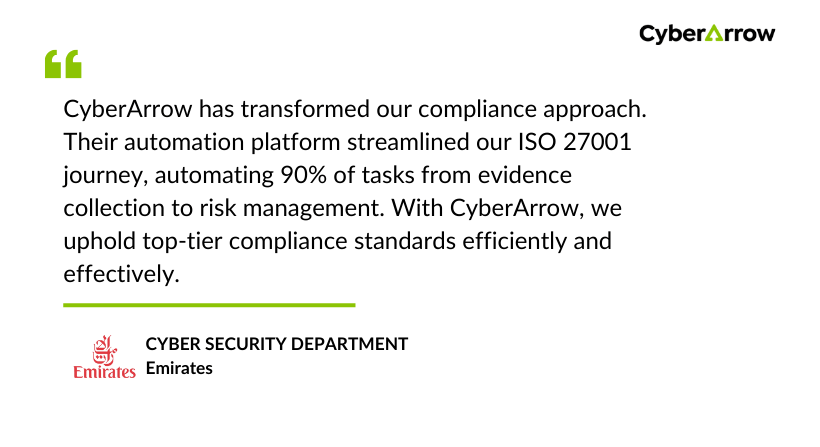
Emirates, a leading global airline, enhanced its information security by automating ISO 27001 compliance with CyberArrow GRC. By leveraging CyberArrow’s automation capabilities, Emirates improved compliance efficiency, reduced manual work, and ensured robust protection of sensitive information.
See what Emirates have to say about CyberArrow GRC: