How to conduct a successful third-party risk assessment
The cyber security landscape is witnessing a stark reality. In 2021, ransomware emerged as the predominant attack in third-party breaches, initiating a staggering 27% of breaches analyzed that year. As organizations today increasingly rely on external partners, vendors, and service providers, conducting an effective third-party risk assessment has never been more critical.
In 2021, software developers remained the most common source of third-party breaches for the third consecutive year, constituting 23% of related incidents.
There’s no room for risks when engaging with a third-party service and entrusting them with your company’s, employees, or customers’ data. Ensuring you collaborate with the most dependable, efficient, and secure solutions becomes essential.
So, how can you safeguard your business while collaborating with third parties?
This article explores various best practices to conduct successful third-party risk assessments and to manage and mitigate third-party risks.
Check out our blog: Top 11 mistakes to avoid when conducting risk assessments.
- Understanding Third-Party Risks
- Best Practices for Conducting a Third-Party Risk Assessment
- 1. Prepare for a Third-Party Risk Assessment
- 2. Establish Assessment Criteria
- 3. Select Third-Party Risk Assessment Methods
- 4. Build a Collaborative Relationship with Third Parties
- 5. Conducting the Third-Party Risk Assessment
- 6. Analyze Assessment Results
- 7. Reporting and Documentation
- 8. Continuous Monitoring and Improvement
- How CyberArrow Can Help with a Third-Party Risk Assessment?
- FAQs
Understanding third-party risks
It’s crucial to analyze the different types of risks vendors pose to understand third-party risks.

Let’s explore them below.
- Cyber security risks: Risks associated with potential cyber threats, unauthorized access, and data breaches. For example, malware attacks, phishing attempts, and network vulnerabilities.
- Compliance risks: Risks related to the failure to comply with laws, regulations, or industry standards. For instance, violations of data protection laws and non-compliance with industry-specific regulations.
- Operational risks: Risks arising from disruptions or failures in the day-to-day operations of third parties. Examples include service interruptions, supply chain disruptions, and business continuity challenges.
Impact of third-party risks on business
Third-party risks can have a severe impact on businesses if they go unnoticed. Here are a few of them:
- Financial implications: The exposure to third-party risks can bring about substantial financial consequences for businesses. Remediation efforts and legal actions can significantly increase costs, demanding significant financial resources for resolution.
- Reputation damage: A critical facet of third-party risks lies in their potential to deteriorate a company’s reputation. The negative consequences can lead to a compromised brand image and loss of customer trust.
- Legal consequences: Non-compliance with laws and regulations triggered by third-party risks may result in severe legal ramifications. Businesses may face fines and penalties for non-compliance with established standards.
- Operational disruption: The ripple effect of third-party risks extends to the operational processes, causing disruptions in regular business activities. Interruptions in day-to-day business operations can cause efficiency and productivity disruptions.
Best practices for conducting a third-party risk assessment

It’s essential to follow some best practices to ensure the success of your third-party risk assessment.
Here are the best practices for conducting a successful vendor-risk assessment:
1. Prepare for a third-party risk assessment
When preparing for a third-party risk assessment, it’s crucial to start by identifying critical third parties. Focus on those directly impacting your business operations, evaluating the significance of the data shared with each entity. Clearly define the assessment scope and objectives to establish the boundaries and focus areas.
Alignment with organizational goals and risk management strategies is key. Allocate resources appropriately, including personnel, time, and financial resources, and make sure the tools and technologies required for a thorough assessment are readily available.
2. Establish assessment criteria
To effectively assess third-party risks, establish criteria that align with compliance standards and regulatory requirements. Ensure the third party complies with industry regulations and legal requirements. Evaluate the effectiveness of security protocols and data protection measures in place.
Assess the third party’s operational resilience and business continuity plans, considering their ability to maintain operations under adverse conditions. Include an evaluation of the financial stability of the third party, making it a factor in the risk assessment.
3. Select third-party risk assessment methods
Choosing the right assessment methods is critical. Develop targeted questionnaires and conduct audits to ensure compliance with established security standards, such as the GDPR, HIPAA, PCI DSS, etc. Scrutinize documentation, policies, and procedures through thorough document reviews.
Implement automated tools for continuous monitoring and real-time alerts to respond to potential risks promptly.
4. Build a collaborative relationship with third parties
Building a strong and collaborative relationship with third parties starts with open communication channels. Foster transparency and open lines of communication to address potential risks effectively.
Clearly communicating security standards and defining specific risk mitigation and compliance requirements is important. Collaboratively develop remediation plans and action plans to address identified risks.
Quick link: What is a risk assessment matrix? A complete guide
5. Conducting the third-party risk assessment
When it comes to conducting the actual assessment, careful planning is essential. Schedule and coordinate the assessment process. Interview key staff members to gain insights into their security practices and procedures.
Thoroughly review documentation and policies to validate their alignment with established standards.
6. Analyze assessment results
Once the third-party risk assessment is complete, the focus shifts to analyzing the results effectively. Identify high-risk areas by categorizing and prioritizing findings based on severity and potential impact.
Provide constructive feedback to third parties highlighting necessary improvements. Determine and collaboratively develop remediation plans to address identified risks promptly and comprehensively.
7. Reporting and documentation
Reporting and documentation are crucial aspects of the assessment process. Create a comprehensive report that includes all assessment findings. Outline areas of vulnerability, strengths, and recommended actions.
Consider this report as the ultimate guide for all stakeholders, including top executives and different departments. Be transparent and straightforward when presenting the results. Make sure everyone gets what’s at stake and understands the suggested actions. Keep the communication lines open and straightforward.
8. Continuous monitoring and improvement
The commitment to security doesn’t end with the assessment. It’s important to establish continuous monitoring strategies to keep track of third-party activities. Conduct regular reassessments to ensure that security measures remain effective and aligned with the latest risks.
Stay up-to-date with emerging trends and adjust risk management strategies to adapt to changing risks and the threat landscape.
How CyberArrow can help with a third-party risk assessment?
To assess your vendor’s security controls, CyberArrow can help reduce the time spent on assessing third parties’ security by automating the process.
Leveraging automated risk management, CyberArrow employs cutting-edge algorithms to streamline the assessment process. Our platform supports third-party risk management methodologies and frameworks, providing a robust foundation for comprehensive evaluations.
To further facilitate the assessment process, CyberArrow comes preloaded with a comprehensive library of 3000+ risks and corresponding mitigations. This pre-mapped information ensures that risk assessments are efficient and adhere to industry best practices.
Ready to enhance your third-party risk assessments? Schedule a free demo with CyberArrow today!
FAQs
How do you do a third-party risk assessment?
Conducting a third-party risk assessment involves several key steps. Start by identifying critical third parties, defining the scope and objectives of the assessment, and obtaining stakeholder buy-in. Establish assessment criteria, choose appropriate assessment methods (e.g., questionnaires, audits), and build a collaborative relationship with third parties.
How would you measure the success of a third-party risk program?
The success of a third-party risk program can be measured through key performance indicators (KPIs) such as the timely completion of assessments, the effectiveness of risk mitigation strategies, and the reduction of high-risk areas. Improvements in cyber security, stakeholder confidence, and compliance can measure success.
Why is a third-party risk assessment important?
Third-party risk assessment is crucial for safeguarding your organization against threats from external partners. It helps identify and mitigate risks associated with third-party relationships. By managing these risks, businesses can protect sensitive data, maintain regulatory compliance, uphold their reputation, and ensure continuity of operations.
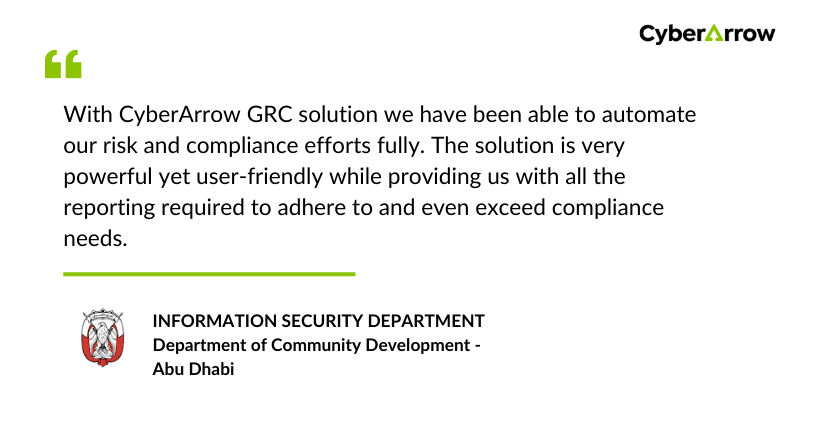
Read how CyberArrow GRC improved risk assessments across departments for the DCD – Abu Dhabi.
See what DCD – Abu Dhabi has to say about CyberArrow GRC: