

What is DNS poisoning? How to prevent It?
The internet is an essential part of our daily lives, but many people don’t realize how much it relies on the Domain Name System (DNS). DNS acts like a phonebook for the internet, translating human-friendly website names (like google.com) into IP addresses that computers understand. However, cybercriminals have found ways to manipulate DNS and redirect users to fake or malicious websites. This attack is known as DNS poisoning.
DNS poisoning can lead to serious risks, such as data theft, financial losses, malware infections, and phishing scams. Even well-known websites can be targeted, putting millions of users at risk.
To protect your business and employees from DNS poisoning, cyber security awareness is key. Attackers often trick people into clicking on fake links, and without proper training, employees can fall into these traps. This is where CyberArrow Awareness Platform helps. It transforms your employees into human firewalls, making them aware of cyber threats and reducing the risk of attacks.
In this guide, we will explain what DNS poisoning is, how it works, and the best ways to prevent it.
- What is DNS poisoning?
- Real-World Examples of DNS Poisoning
- How to prevent DNS poisoning?
- 1. Use secure DNS servers
- 2. Implement DNSSEC (DNS Security Extensions)
- 3. Keep systems and software updated
- 4. Monitor network traffic for unusual activity
- 5. Train employees on cyber security awareness
- 6. Enable HTTPS and SSL/TLS Encryption
- 7. Restrict DNS access in your network
- 8. Use Multi-Factor Authentication (MFA)
- Why CyberArrow Awareness Platform is the best solution
- Final thoughts
What is DNS poisoning?
DNS poisoning (also called DNS spoofing) is a cyberattack that corrupts the DNS system, redirecting users to fraudulent websites without their knowledge. Instead of reaching a legitimate site, users are sent to a malicious one controlled by hackers.
How does DNS poisoning work?
DNS poisoning works by injecting false information into a DNS server. Here’s how an attacker does it:
- Intercepting a DNS request: When you enter a website name in your browser, your computer asks a DNS server for the correct IP address.
- Injecting fake DNS data: The hacker tricks the DNS server into storing a wrong IP address for that website.
- Redirecting users to a malicious site: The next time someone tries to visit that website, they are sent to the hacker’s fake site instead.
- Stealing data or spreading malware: The fake site may look exactly like the real one, tricking users into entering passwords, credit card details, or other sensitive data.
This type of attack is dangerous because it happens at the network level, meaning that even if your device is secure, you can still be redirected to harmful sites.
Real-World Examples of DNS Poisoning
Many organizations and individuals have suffered from DNS poisoning attacks. Here are some notable cases:
- Brazilian banks attack (2018): Hackers poisoned DNS servers, redirecting customers of several Brazilian banks to fake banking websites, leading to massive financial fraud.
- Google Vietnam attack (2015): Attackers hijacked the DNS records of Google’s Vietnam site, redirecting users to a webpage controlled by hackers.
- China’s great firewall: The Chinese government has been known to use DNS poisoning to block access to restricted websites by redirecting users to incorrect addresses.
These attacks show that no one is completely safe from DNS poisoning, making prevention a top priority.
How to prevent DNS poisoning?
Preventing DNS poisoning requires a combination of technical security measures and employee awareness. Here’s how businesses can protect themselves:
1. Use secure DNS servers
- Businesses should use trusted and secure DNS providers like Google Public DNS (8.8.8.8), Cloudflare (1.1.1.1), or OpenDNS to reduce the risk of DNS poisoning.
- These providers use advanced encryption and authentication to detect and block poisoned DNS records.
2. Implement DNSSEC (DNS Security Extensions)
- DNSSEC is a security protocol that adds digital signatures to DNS records.
- This ensures that DNS data cannot be altered by hackers and prevents fake entries from being injected into the system.
3. Keep systems and software updated
- Hackers often exploit outdated software to launch DNS poisoning attacks.
- Regularly updating operating systems, browsers, and security software reduces vulnerabilities.
4. Monitor network traffic for unusual activity
- Businesses should use Intrusion Detection Systems (IDS) to detect unusual DNS behavior.
- If a DNS request is redirected to an unknown or suspicious site, the system can alert security teams before damage occurs.
5. Train employees on cyber security awareness
- Most DNS poisoning attacks involve phishing, where employees are tricked into clicking fake links.
- CyberArrow Awareness Platform helps businesses train employees to recognize suspicious links, emails, and websites, reducing human errors that lead to cyberattacks.
6. Enable HTTPS and SSL/TLS Encryption
- Websites should use HTTPS (SSL/TLS certificates) to ensure secure communication between users and the website.
- This prevents hackers from altering website content or stealing login credentials.
7. Restrict DNS access in your network
- Only allow trusted users and devices to modify DNS settings.
- Restrict DNS access to prevent unauthorized changes.
8. Use Multi-Factor Authentication (MFA)
- Even if hackers trick someone into entering their password on a fake site, MFA (such as SMS or app-based authentication) can prevent unauthorized access to accounts.
Quick link: What to do if you click on a phishing link?
Why CyberArrow Awareness Platform is the best solution
While technical measures help reduce DNS poisoning risks, the biggest weakness in cyber security is human error. Many attacks succeed because employees click on phishing emails, visit fake websites, or enter credentials into malicious pages.
CyberArrow Awareness Platform provides:
Automated security awareness training: Educates employees on phishing, DNS poisoning, and other cyber threats.
Real-time phishing simulations: Tests employees with fake phishing attacks to see how they respond.
Detailed reports & analytics: Tracks progress and identifies employees who need more training.
Easy integration with your business: Works with all major platforms to provide seamless security training.
By using CyberArrow Awareness Platform, companies can transform their employees into human firewalls, reducing the risk of DNS poisoning and other cyberattacks.
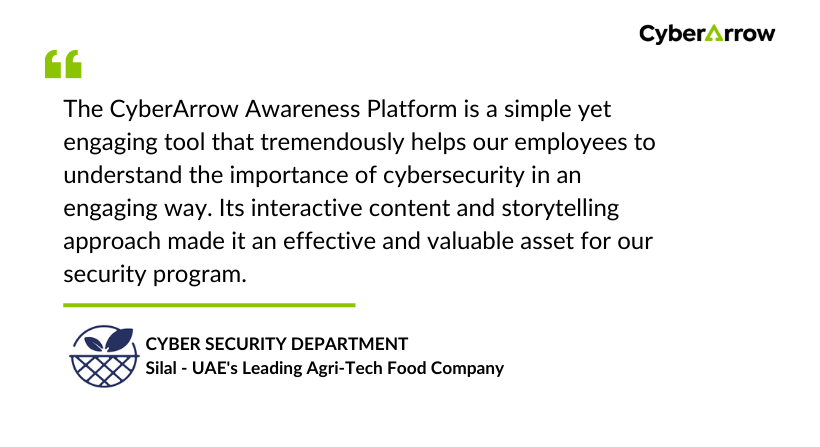
Read how CyberArrow awareness platform increased security awareness among Silal’s employees.
See what Silal has to say about CyberArrow Awareness Platform:
Final thoughts
DNS poisoning is a serious cyber security threat that can lead to data theft, financial losses, and company-wide disruptions. Attackers manipulate the internet’s domain name system to redirect users to fake websites, where they steal personal and business data.
To protect against DNS poisoning, businesses must use secure DNS providers, implement DNSSEC, monitor network activity, and keep systems updated. However, technology alone is not enough. Cybercriminals often target employees through phishing and social engineering, making security awareness training essential.
This is why CyberArrow Awareness Platform is the best solution. It helps businesses train employees, prevent phishing scams, and build a strong security culture. Investing in cyber security training is the best way to reduce human errors and keep your organization safe.
Don’t let your business fall victim to cyberattacks.
