What is a human firewall? Transform your employees into human firewalls
Cyber security threats are at an all-time high. Hackers and cybercriminals are constantly finding new ways to attack businesses and steal sensitive information. While technology such as firewalls, antivirus software, and encryption helps protect organizations, one of the most effective tools is often overlooked: the human firewall.
But what exactly is a human firewall, and how can you transform your employees into one?
In this blog, we’ll break down the concept of a human firewall, explore why it’s essential for your organization, and provide steps to build a strong line of defense. We’ll also discuss how CyberArrow Awareness Platform can help automate training programs that make employees more cyber-aware.
What is a human firewall?
A “human firewall” refers to the role that your employees play in protecting your organization from cyberattacks. Instead of relying solely on software and IT systems, a human firewall focuses on training staff to be aware of cyber threats and respond appropriately. This could include spotting phishing emails, using strong passwords, avoiding suspicious websites, and reporting potential security incidents.
The idea behind a human firewall is that employees become the first line of defense against cyber threats. When properly trained, they can help prevent attacks that might bypass traditional security measures.
Why is a human firewall important?
Many cyberattacks target human vulnerabilities rather than technological ones. Social engineering attacks, such as phishing or spear-phishing, trick employees into revealing sensitive information or clicking on malicious links. Even the most advanced cyber security software can’t prevent all attacks if an employee unknowingly lets a hacker in.
A strong human firewall:
- Reduces the risk of human error: Mistakes, such as opening a malicious attachment or falling for a phishing scam, are often the root cause of a security breach.
- Increases awareness of cyber threats: When employees are educated on what threats look like, they are more likely to spot them before damage is done.
- Protects sensitive data: Employees who understand the importance of cyber security are more likely to handle data securely and follow security protocols.
- Saves costs associated with breaches: Preventing a cyberattack is far more cost-effective than dealing with the aftermath of a breach.
Key steps to build a human firewall
Building a human firewall in your organization requires commitment, planning, and regular training. Here are some important steps to get started:
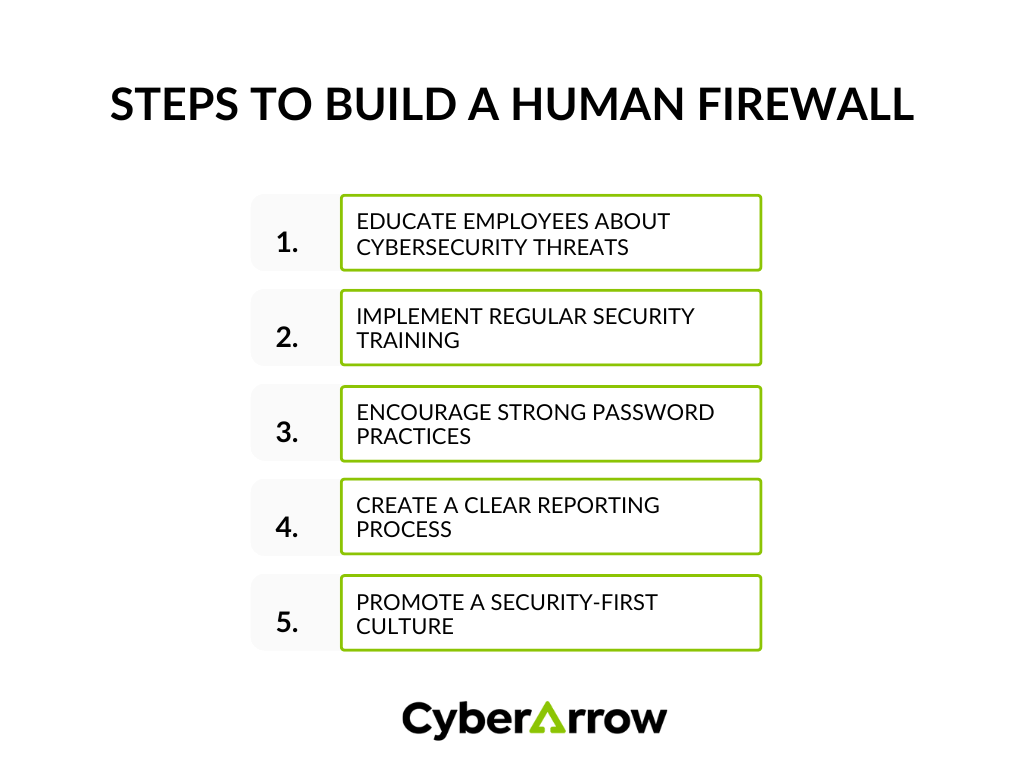
1. Educate employees about cyber security threats
One of the first steps to building a human firewall is educating your employees about common cyber security threats. These threats include:
- Phishing: Fake emails designed to trick the recipient into sharing sensitive information or clicking on a malicious link.
- Malware: Malicious software that can infect a computer and cause harm, such as stealing data or locking systems.
- Ransomware: A type of malware that encrypts data and demands payment to restore access.
Training employees to recognize these threats helps them avoid falling victim to attacks.
2. Implement regular security training
Cyber security training shouldn’t be a one-time event. Ongoing training ensures that employees stay up-to-date on the latest threats and best practices. By incorporating cyber security training into your regular employee development programs, you create a culture of security awareness.
These training programs should cover topics like:
- How to identify phishing attempts
- Proper password management
- Safe web browsing habits
- Social engineering tactics
- Reporting suspicious activities
3. Encourage strong password practices
Weak passwords are one of the easiest ways for hackers to gain unauthorized access. Educating employees on strong password practices is an important part of your human firewall.
Best practices for password security include:
- Using long, complex passwords with a mix of letters, numbers, and symbols
- Not reusing passwords across different platforms
- Enabling two-factor authentication (2FA) whenever possible
4. Create a clear reporting process
Employees should know what to do if they encounter a potential cyber security threat. Setting up a clear reporting process allows your team to react quickly and prevent a security incident from escalating.
For example, if an employee receives a suspicious email or notices unusual activity on their computer, they should know exactly who to contact and what steps to take. Make sure this reporting process is easy to follow and well-communicated across your organization.
5. Promote a security-first culture
Building a human firewall isn’t just about training, it’s about creating a culture where cyber security is taken seriously by everyone. This means ensuring that employees at all levels, from entry-level staff to executives, understand their role in protecting the organization from cyber threats.
Encourage a security-first mindset by rewarding employees for following security protocols, sharing success stories of how security awareness has prevented breaches, and keeping cyber security a top priority in company communications.
Common cyber security threats targeting employees
Several types of cyber threats specifically target employees. Here are some of the most common threats that your human firewall will help guard against:
1. Phishing attacks
Phishing is the practice of sending fraudulent emails that appear to be from legitimate sources to trick recipients into revealing sensitive information. By training employees to recognize the signs of a phishing email—such as misspelled words, suspicious attachments, or requests for sensitive information—your organization can avoid data breaches.
2. Social engineering
Social engineering attacks manipulate employees into revealing confidential information by impersonating trusted sources, such as a colleague or a manager. These attacks often happen over email, phone calls, or even in person.
3. Spear phishing
A more targeted form of phishing, spear phishing focuses on specific individuals within an organization, such as executives or employees with access to sensitive information. These emails are often tailored to the recipient, making them harder to detect.
4. Weak passwords
Even with advanced security systems in place, weak passwords can provide hackers with easy access to your organization’s systems. Educating employees on strong password practices and encouraging the use of password managers can significantly reduce this risk.
5. Insider threats
Not all cyber security threats come from outside the organization. Sometimes, current or former employees with access to sensitive data can become security risks, whether intentionally or accidentally. A strong human firewall can help mitigate insider threats by promoting the secure handling of data and emphasizing the importance of following security protocols.
Transform your employees into human firewalls
Building a human firewall takes ongoing effort, training, and dedication. However, keeping employees vigilant against cyber threats is key to protecting your organization. With cyberattacks growing more sophisticated, automating your security training program can ensure that your team stays ahead of potential risks.
This is where CyberArrow Awareness Platform comes into play. By automating employee training, CyberArrow makes it easier for organizations to turn their workforce into human firewalls. The platform provides engaging, interactive content that keeps cyber security top of mind for your staff. With CyberArrow, you can simplify training and ensure that your employees are prepared to defend against even the most advanced threats.
Transform your employees into your first line of defense: your human firewall by using CyberArrow Awareness Platform to build a security-first culture that protects your business.
See what Silal has to say about CyberArrow Awareness Platform: