What is a DNS spoofing attack? How to prevent it?
Cybercriminals use many tricks to steal data, disrupt networks, and spy on users. One of the most dangerous and often unnoticed attacks is DNS spoofing. This attack manipulates the Domain Name System (DNS) to redirect users to fake websites without them realizing it.
Imagine typing a bank’s website URL into your browser, but instead of reaching the real site, you land on a fake version that looks identical. You enter your username and password, but instead of logging into your account, hackers steal your credentials. This is exactly how DNS spoofing works.
DNS spoofing is a serious security risk because it allows attackers to intercept communications, steal login information, and even spread malware. Businesses and individuals must understand DNS spoofing and take steps to prevent it.
With CyberArrow Awareness Platform, companies can automate employee training to help them recognize cyber threats like DNS spoofing. CyberArrow’s phishing simulation module also helps businesses test their security by mimicking real attacks in a safe environment.
This guide explains what DNS spoofing is, how it works, its risks, and how to protect yourself and your organization.
What is DNS spoofing?
DNS spoofing (also called DNS cache poisoning) is a type of cyber attack where hackers alter DNS records to redirect users to malicious websites.
The Domain Name System (DNS) acts like the internet’s phonebook, translating human-readable website addresses (like www.google.com) into IP addresses that computers understand. DNS spoofing corrupts this process, making users visit fake websites instead of the real ones.
How does DNS spoofing work?
DNS spoofing happens when an attacker poisons the DNS cache by inserting false information. When users request a website, their device relies on cached DNS records for speed. If an attacker has manipulated this cache, users are unknowingly sent to fake websites instead of legitimate ones.
Here’s a simple breakdown of how a DNS spoofing attack occurs:
- A hacker infects a DNS server with fake IP addresses.
- When a user types in a legitimate website (like www.bank.com), the compromised DNS server redirects them to a fake site that looks exactly like the original.
- The user enters their login credentials, credit card details, or other sensitive information.
- The attacker steals the data for fraud, identity theft, or further cyberattacks.
Because these fake websites often look identical to the real ones, many victims don’t realize they have been tricked until it’s too late.
Types of DNS spoofing attacks
DNS spoofing can happen in multiple ways, and each method poses unique risks. Here are the most common types:
1. DNS cache poisoning
- Attackers insert malicious data into the cache of a DNS resolver.
- The DNS resolver then returns fake IP addresses when users request websites.
2. Man-in-the-Middle (MitM) DNS spoofing
- Hackers intercept communication between the user and the DNS server.
- The attacker modifies the response, sending users to a malicious website.
3. Compromised DNS server
- A hacker gains control of a DNS server and changes its settings.
- All users relying on this server are redirected to fraudulent sites.
These attacks often go unnoticed because DNS responses happen in the background, without user interaction.
Risks of DNS spoofing
DNS spoofing is dangerous because it deceives both individuals and businesses. Here are some key risks:
1. Data theft
- Hackers can steal usernames, passwords, and financial information.
- Login credentials can be sold or used for identity theft.
2. Malware distribution
- Fake websites may install malware on users’ devices.
- Ransomware or spyware can steal sensitive business data.
3. Financial loss
- Victims may transfer money to fake accounts, believing they are dealing with a real company.
- Businesses may suffer reputation damage if customers fall victim to these attacks.
4. Corporate espionage
- Attackers may use DNS spoofing to spy on business activities.
- Competitors or cybercriminals can steal intellectual property.
Because DNS spoofing attacks can be difficult to detect, businesses must take proactive steps to defend against them.
Quick link: Spoofing vs phishing
How to prevent DNS spoofing attacks
Organizations and individuals can reduce the risk of DNS spoofing by implementing strong security measures.
1. Use secure DNS servers
- Choose reputable DNS providers that use security measures against spoofing.
- Google Public DNS and Cloudflare DNS offer better protection than default ISP DNS servers.
2. Enable DNSSEC (Domain Name System Security Extensions)
- DNSSEC adds an extra layer of security by using cryptographic signatures.
- It ensures that DNS responses are verified and not altered by attackers.
3. Regularly flush DNS cache
- Flushing the DNS cache removes outdated and possibly poisoned records.
- Users can do this by running a simple command:
- Windows: ipconfig /flushdns
- Mac: sudo killall -HUP mDNSResponder
4. Train employees on cyber security risks
- Many cyberattacks start with human error.
- CyberArrow Awareness Platform helps organizations train employees to spot phishing and spoofing attacks.
5. Monitor DNS traffic
- Use network monitoring tools to detect suspicious DNS requests.
- Unusual traffic patterns may indicate an ongoing attack.
6. Implement Multi-Factor Authentication (MFA)
- Even if hackers steal login credentials, MFA prevents unauthorized access.
- Users must provide an additional verification step, making it harder for attackers to succeed.
Businesses must stay one step ahead of cybercriminals by using automated security solutions like CyberArrow.
Quick link: Spear phishing vs phishing
How CyberArrow Awareness Platform helps prevent DNS spoofing attacks
Cyber threats like DNS spoofing are constantly evolving, making it crucial for businesses to have strong security training programs.
CyberArrow Awareness Platform offers:
- Automated security awareness training: Educate employees about cyber threats, including DNS spoofing.
- Phishing simulation module: Test employees by simulating real phishing and spoofing attacks.
- Real-time reporting: Get detailed insights into employee awareness levels and security vulnerabilities.
With CyberArrow, businesses can reduce the risk of cyberattacks and protect sensitive data.
Read how CyberArrow awareness platform increased security awareness among Silal’s employees.
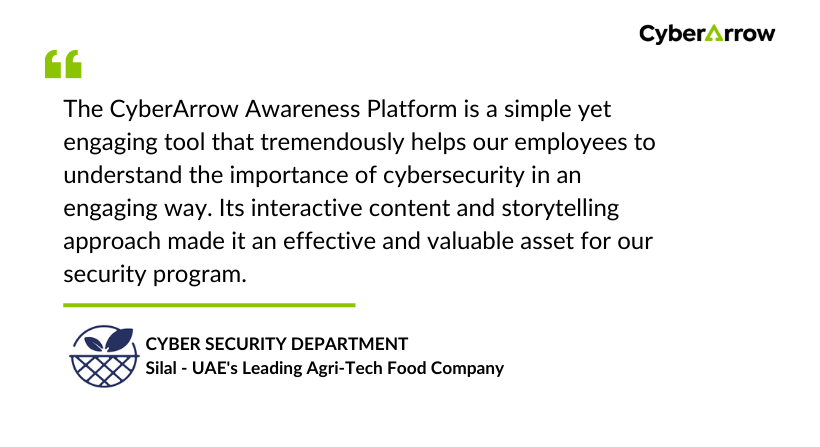
See what Silal has to say about CyberArrow Awareness Platform: