What is supply chain security? 5 common supply chain security risks
Supply chain security has become a critical focus for businesses, especially with increasing reliance on technology and digital platforms. The global nature of supply chains means that any vulnerability can have far-reaching consequences.
So, how do companies secure their supply chains, and what are the most common risks?
In this blog, we’ll cover:
Let’s dive in!
What is supply chain security?
Supply chain security refers to the measures and strategies a business implements to protect the integrity and safety of its supply chain processes. A supply chain comprises all the steps and parties involved in creating and delivering products or services to the end customer—from sourcing raw materials to logistics and distribution.
The goal of supply chain security is to protect each part of the process from threats like cyberattacks, theft, fraud, and disruptions. As organizations work with third parties, such as suppliers, vendors, and logistics providers, any weak link can compromise the entire system.
Supply chain security focuses on identifying and mitigating risks to prevent these threats from harming the business.
Why supply chain security is important
Imagine your business relies on a third-party supplier for a key component in your product. If that supplier is compromised, it could lead to delays, data breaches, or even financial loss. A breakdown in your supply chain might affect your customers, reputation, and profitability.
Supply chain security helps:
- Avoid disruptions.
- Prevent costly data breaches.
- Protect intellectual property.
- Ensure that goods and services reach customers without issues.
Securing the supply chain ensures that your business runs smoothly and continues to deliver on its promises.
Top 5 common supply chain security risks
Despite best efforts, certain risks can still affect a company’s supply chain. Below are the five most common supply chain security risks businesses face:
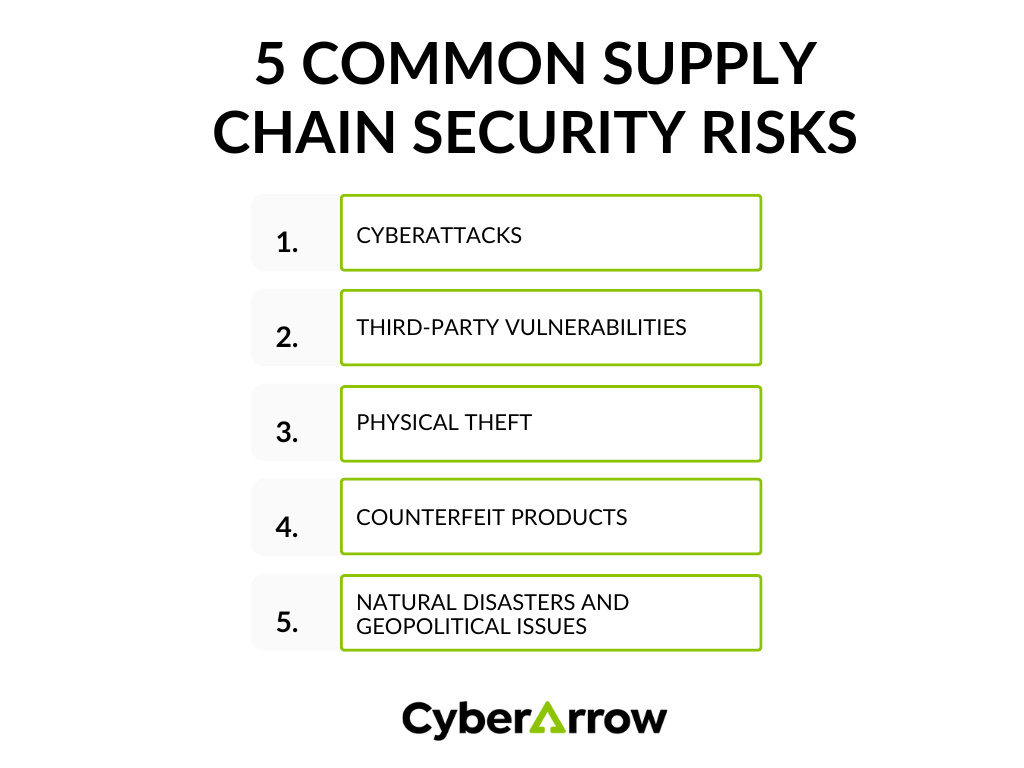
1. Cyberattacks
The risk: Cyberattacks target the digital systems used in supply chains, such as software and cloud platforms. Hackers can gain access to sensitive data or disrupt operations by infecting systems with malware.
Impact: Cyberattacks can lead to data breaches, intellectual property theft, and service interruptions.
2. Third-party vulnerabilities
The risk: Many companies work with external suppliers, manufacturers, or logistics providers. If a third party lacks proper security measures, it becomes a weak link in the supply chain.
Impact: Third-party vulnerabilities can expose your business to security risks like data leaks or compliance violations.
3. Physical theft
The risk: During the transportation and delivery phases, goods can be physically stolen. High-value items are especially vulnerable.
Impact: Physical theft disrupts the supply chain and can lead to financial loss and delays in product deliveries.
4. Counterfeit products
The risk: Counterfeit products can enter the supply chain when suppliers are not thoroughly vetted. These products might not meet quality standards or may pose safety risks.
Impact: Counterfeit goods can damage your brand’s reputation and put customers at risk.
5. Natural disasters and geopolitical issues
The risk: Events like hurricanes, earthquakes, or political instability in certain regions can severely disrupt global supply chains.
Impact: These disruptions can lead to delays, increased costs, or even complete halts in production and delivery.
Best practices for supply chain security
To protect your supply chain, it’s essential to implement a comprehensive security strategy. Here are some key practices to help you safeguard your supply chain:
Vendor risk management
Regularly assess your vendors’ security policies and practices. Ensure they meet your organization’s security standards to avoid third-party risks.
Implement cyber security solutions
Invest in robust cyber security measures, including firewalls, encryption, and secure cloud systems. Keep your software and systems updated to prevent vulnerabilities from being exploited.
Conduct regular audits and testing
Periodically audit your supply chain and test your security measures through vulnerability assessments and penetration testing. This helps you identify weak points in your processes and take corrective actions.
Provide employee training
Ensure employees within your organization and at your partners are trained in cyber security best practices and how to recognize potential threats.
Disaster recovery and incident response plans
Develop a disaster recovery plan to ensure business continuity in case of natural disasters or major disruptions.
Recent supply chain breaches: What we’ve learned
Several high-profile supply chain breaches in recent years have highlighted the importance of supply chain security. For example:
- Solarwinds: In one of the most notorious supply chain attacks, hackers compromised SolarWinds’ software, affecting over 30,000 organizations, including government agencies and businesses.
- Kaseya attack: In 2021, IT management company Kaseya suffered a ransomware attack that affected over 1,500 businesses globally, emphasizing the dangers of third-party vulnerabilities.
These breaches demonstrate how quickly a supply chain can be compromised if security measures are not up to par. Businesses must take proactive steps to protect their supply chain from such risks.
Automating supply chain risk management with CyberArrow GRC
With threats like cyberattacks, third-party vulnerabilities, and natural disasters looming, organizations must be vigilant and proactive. Implementing strong security measures is key, but managing all the risks associated with supply chains can be overwhelming.
CyberArrow GRC’s Third Party Risk (TPR) module automates your risk management processes, making it easier to monitor and manage potential threats to your supply chain.
With CyberArrow GRC, you can track risks in real time, streamline your risk assessments, and ensure your supply chain is protected against emerging threats. Let CyberArrow GRC help you secure your supply chain and focus on what matters most—delivering quality products and services to your customers.
See what our clients have to say about CyberArrow GRC: