

What is social engineering? Understanding the basics
In today’s world, cyber threats are everywhere. You might think hackers only use technology to break into systems, but the truth is, they often use something much simpler—people. One of the biggest tricks hackers use is called social engineering.
In this blog, we’ll break down what social engineering is, how it works, the different types of social engineering attacks, and most importantly, how you can protect yourself and your organization.
By the end, you’ll understand why CyberArrow Awareness Platform is a must-have tool to train your team and build strong human firewalls to protect against these types of attacks.
What is social engineering?
Social engineering is a method used by cybercriminals to manipulate people into giving up confidential information or performing actions that compromise security. Unlike other forms of cyberattacks, which rely on breaking into systems using technical skills, social engineering attacks focus on tricking individuals into making mistakes.
It’s like a con artist who gets you to trust them and share something valuable, only for them to use that trust to hurt you later. Social engineering can happen through emails, phone calls, text messages, or even in person.
How does social engineering work?
The main goal of a social engineer is to exploit human behavior. People are often the weakest link in a security system because they may be tricked into making wrong decisions.
Here’s how social engineering works:
- Gathering information: Hackers do their homework. They find out everything they can about you, your job, or your organization. This could include checking social media profiles, company websites, or public records.
- Creating a sense of urgency: Attackers may create fake situations that make you feel like you have to act quickly. For example, they might say there’s an urgent problem that needs fixing or that you’ve won something.
- Tricking you: Once they’ve gained your trust and attention, they ask for sensitive information like passwords, credit card numbers, or personal details, or get you to click on malicious links or download harmful files.
- Exploiting the information: After receiving the information, the hacker uses it for malicious purposes, such as stealing money, spreading malware, or damaging a company’s reputation.
Types of social engineering attacks
Social engineering can happen in many different ways. Here are the most common types of attacks to be aware of:
1. Phishing
Phishing is one of the most common forms of social engineering. In a phishing attack, the attacker sends fraudulent emails that appear to come from trustworthy sources, like a bank or an online service. The goal is to get you to click on a link, download an attachment, or provide sensitive information.
Example: You receive an email that looks like it’s from your bank, asking you to reset your password. The email contains a link that leads to a fake website designed to steal your login information.
2. Spear phishing
Spear phishing is a more targeted version of phishing. The hacker customizes the email to a specific person or organization, making it seem even more legitimate.
Example: A hacker might send an email to a company’s CEO pretending to be the HR department, asking for sensitive information like payroll details or company passwords.
3. Vishing (Voice phishing)
Vishing is phishing over the phone. Hackers call you and pretend to be someone from your bank, a government agency, or another trusted source. They ask for sensitive information or try to convince you to act, like transferring money.
Example: A hacker calls pretending to be from your credit card company, saying there’s a problem with your account and asking for your account number to fix it.
4. Baiting
Baiting involves offering something enticing to get the victim to take the bait. This could be in the form of free software, music, or a prize, but once you take the bait, you’re tricked into installing malware or giving away personal information.
Example: A hacker might leave a USB drive labeled “Confidential” in a public place. If someone picks it up and plugs it into their computer, the drive installs malicious software.
5. Pretexting
Pretexting is when a hacker creates a fake story or scenario to get you to share information. The hacker may pretend to be someone you trust, like a colleague or government official, and ask you for personal information or access to secure systems.
Example: A hacker might call and say they need your help with a project. To gain access, they ask for your login credentials or other sensitive data.
6. Tailgating
Tailgating is a physical type of social engineering attack. It involves someone following an authorized person into a secure building or area without the proper clearance.
Example: A hacker might wait outside an office building and follow an employee through a security door, hoping to gain access to sensitive areas.
Why is social engineering dangerous?
Social engineering attacks are dangerous because they target human weaknesses, not just technical vulnerabilities. Even with the best firewalls, encryption, and other security measures, if a person is tricked into revealing sensitive information or performing unsafe actions, the entire system can be compromised.
The impact of a social engineering attack can include:
- Loss of sensitive data: Hackers can steal passwords, bank details, or personal information.
- Financial loss: Hackers can use the stolen information to commit fraud or steal money.
- Reputation damage: A company’s reputation can be destroyed if it falls victim to a social engineering attack, especially if customers’ data is exposed.
- Malware installation: Social engineering is often used to trick victims into downloading malware that can damage systems or steal more information.
How to protect yourself from social engineering
While hackers are becoming more clever, there are steps you can take to protect yourself and your organization from social engineering attacks.
1. Be skeptical of unsolicited requests
If you get an unexpected phone call, email, or message asking for personal information, always question it. Real businesses don’t ask for sensitive data in this way.
2. Verify the source
Before clicking on any link or downloading an attachment, make sure it’s from a trusted source. When in doubt, contact the organization directly using their official contact details.
3. Keep personal information private
Limit what you share on social media or websites. The more information hackers have, the easier it is for them to trick you.
4. Educate your employees
Many social engineering attacks succeed because employees are not aware of the risks. Regular training can help your team spot phishing emails, fake phone calls, and other social engineering techniques.
5. Use strong passwords
Make sure you use strong, unique passwords for every account, and consider using two-factor authentication (2FA) to add an extra layer of security.
6. Install anti-phishing software
Anti-phishing software can help detect suspicious emails and websites. It’s an essential tool for protecting against phishing attacks.
How CyberArrow Awareness Platform helps protect against social engineering
The best way to defend against social engineering is by training your team to recognize and respond to potential threats. That’s where the CyberArrow can help.
Automated cyber security awareness training
The CyberArrow Awareness Platform provides automated, engaging training that teaches employees how to spot social engineering attacks. With real-time learning and continuous updates, your employees will stay ahead of new threats.
Build human firewalls
People are often the first line of defense in a social engineering attack. CyberArrow helps turn your employees into human firewalls — educated, alert, and ready to stop attacks before they succeed.
Real-time simulations
CyberArrow’s simulated attacks give employees hands-on experience in a safe environment. They can test their skills against real-world threats, learning from their mistakes without any risk to the company.
Track progress
With CyberArrow, you can monitor your employees’ training progress and identify areas that need improvement. This helps ensure that everyone is fully prepared.
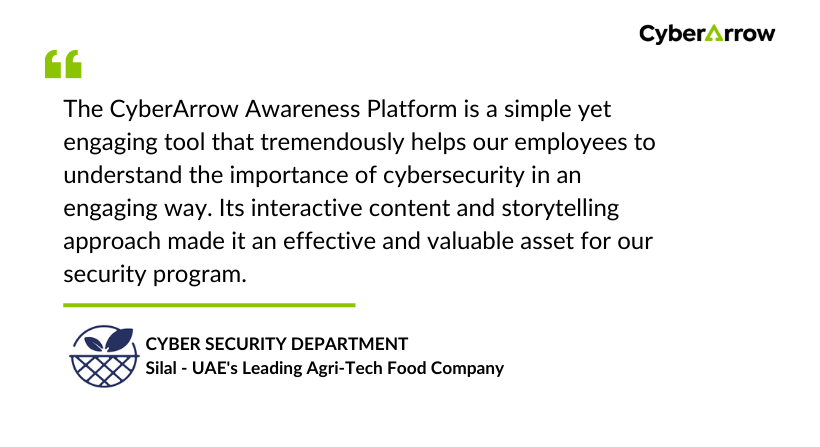
Read how CyberArrow awareness platform increased security awareness among Silal’s employees.
See what Silal has to say about CyberArrow Awareness Platform:
Conclusion
Social engineering is one of the most effective tactics used by hackers to breach security. By understanding how it works and staying vigilant, you can protect yourself, your team, and your organization from falling victim to these types of attacks.
CyberArrow’s automated cyber security awareness training is the best way to build a strong defense. Equip your team with the knowledge they need to recognize and prevent social engineering threats, making your organization more secure against cyber attacks.
