What are pretexting scams? How to prevent them?
Cybercriminals are constantly looking for new ways to trick people and steal valuable information. One common method they use is called pretexting. Pretexting scams are based on creating a false story or pretense to gain someone’s trust. Once the scammer earns the victim’s trust, they manipulate them into sharing sensitive information, such as passwords, credit card numbers, or personal details.
In this blog, we’ll dive into what pretexting scams are, how they work, and how you can protect yourself and your business from falling victim to them.
What are pretexting scams?
A pretexting scam is a form of social engineering attack where the scammer pretends to be someone else to trick their target. The attacker typically creates a fake story or “pretext” to gain the victim’s trust. This pretext could be pretending to be a company representative, a colleague, a government official, or even a family member.
Once the attacker builds trust, they ask the victim for confidential information. Unlike phishing attacks, which rely on urgency or fear, pretexting scams are often more sophisticated and rely on creating a believable situation to manipulate the victim.
How do pretexting scams work?
Pretexting scams follow a few key steps that allow attackers to fool their targets. Here’s a breakdown of how these scams usually unfold:
1. Research: The attacker starts by researching the victim. They gather information from public sources like social media, company websites, and other online databases. The goal is to learn enough about the target to craft a believable story.
2. Create a pretext: Once they have enough information, the scammer creates a fake story, or pretext, that fits the victim’s situation. For example, they might pose as someone from the victim’s bank or a trusted company, using real details to make the interaction seem more genuine.
3. Make contact: The attacker contacts the victim, usually through phone calls, emails, or text messages. They use the pretext to establish trust and legitimacy, often referencing personal or professional details to make the conversation seem real.
4. Manipulate the victim: Once the scammer has gained the victim’s trust, they ask for sensitive information. This might include passwords, account numbers, or other confidential data. They often make the request seem harmless, such as asking for verification or confirming account details.
5. Exploit the information: After obtaining the information, the scammer uses it to carry out malicious activities, such as accessing the victim’s accounts, stealing money, or committing identity theft.
Quick link: What is doxing?
Examples of pretexting scams
Pretexting scams can take many forms, but here are some common examples:
- Bank fraud: A scammer pretends to be a bank representative and asks for verification of your account details, claiming there’s been suspicious activity.
- IT department scam: An attacker impersonates a company’s IT department, asking for your login credentials to fix a technical issue.
- Tax scams: A fraudster poses as a government official, such as someone from the IRS, demanding personal information to resolve a tax issue.
- Fake emergency scams: A scammer pretends to be a relative or friend in trouble, asking for money or sensitive information to resolve a fake emergency.
Why are pretexting scams dangerous?
Pretexting scams are particularly dangerous because they rely on trust and manipulation. Unlike phishing emails, which often contain suspicious links or attachments, pretexting is harder to detect because the scammer creates a believable and personal interaction.
Moreover, the information that scammers seek in pretexting scams can be highly sensitive, such as social security numbers, financial details, or company secrets. If the scam is successful, the consequences can be severe, leading to:
- Financial loss: Attackers can steal money directly from accounts, make fraudulent purchases, or commit identity theft.
- Data breach: If the victim shares company login details, attackers can access company networks, leading to a data breach.
- Reputation damage: If a company is involved in a pretexting scam, it could face significant damage to its reputation and customer trust.
How to prevent pretexting scams
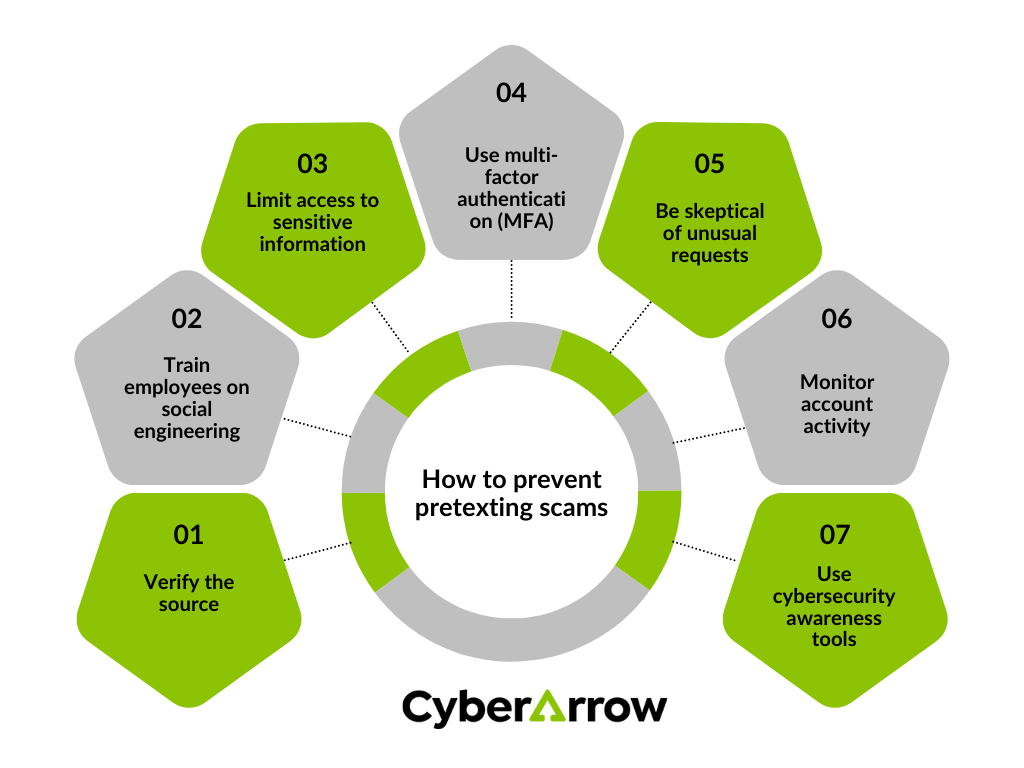
Now that you understand how pretexting scams work, it’s crucial to take steps to protect yourself and your business. Here are some effective strategies for preventing pretexting scams:
1. Verify the source
Always verify the identity of the person or organization contacting you before sharing any sensitive information. Don’t rely on caller ID, email addresses, or phone numbers, as these can be easily spoofed. If you’re unsure, call the company or individual back using an official contact number.
2. Train employees on social engineering
Pretexting scams often target employees within companies, especially those with access to sensitive information. Regular training on social engineering techniques can help employees recognize and avoid pretexting scams.
3. Limit access to sensitive information
Only give access to sensitive information to employees who absolutely need it. The fewer people with access, the smaller the risk of a pretexting attack succeeding.
4. Use multi-factor authentication (MFA)
Implementing MFA adds an extra layer of security to your accounts. Even if a scammer gains access to your login credentials, they won’t be able to log in without the second factor, such as a text message code or authentication app.
5. Be skeptical of unusual requests
If someone asks for sensitive information in an unusual or unexpected way, be cautious. Scammers often try to create a sense of urgency, but it’s important to slow down and assess the situation before responding.
6. Monitor account activity
Regularly monitoring your accounts for unusual or unauthorized activity can help you catch potential scams early. Set up alerts to notify you if there are any suspicious login attempts or transactions.
7. Use cyber security awareness tools
Educating employees about pretexting and other social engineering scams can significantly reduce the risk. Use tools that simulate these attacks and provide ongoing education about how to recognize and prevent them.
Quick link: How can you protect your home computer?
Use cases: Real-life scenarios of pretexting scams
Here are a few real-world scenarios where pretexting scams were used to target individuals and businesses:
- CEO fraud: In this type of pretexting scam, attackers pose as a company’s CEO and contact an employee in the finance department, asking for a wire transfer to an unknown account. The employee, thinking it’s a legitimate request from their boss, complies without verifying.
- Healthcare scams: Attackers pretend to be insurance companies or healthcare providers, asking patients for personal and medical information. This data is then used for medical identity theft, where the scammer fraudulently uses the victim’s insurance benefits.
- Vendor impersonation: A scammer poses as a company’s trusted vendor and requests payment information to update records. Without proper verification, the company could end up paying a fake invoice.
How CyberArrow Awareness Platform can help prevent pretexting scams
CyberArrow offers a comprehensive Awareness Platform designed to help businesses defend against social engineering attacks like pretexting. By raising awareness and training employees, CyberArrow helps build a strong line of defense.
Here’s how CyberArrow Awareness Platform can help:
- Interactive training modules: CyberArrow offers interactive training that educates employees on recognizing and responding to pretexting scams.
- Simulated social engineering attacks: The platform provides simulated attacks, allowing employees to experience real-world scenarios in a controlled environment.
- Customizable learning paths: Each employee can receive customized training based on their role and access level, ensuring everyone is properly prepared.
- Automated reporting: CyberArrow tracks employee progress and reports on areas that may need more attention, helping businesses focus their training efforts where they’re most needed.
See what Silal has to say about CyberArrow Awareness Platform: