


What is employment identity theft and how can it occur?
Identity theft is a well-known crime, but many people are unaware of employment identity theft, which can have serious consequences for both individuals and businesses. This type of fraud happens when someone uses another person’s identity to gain employment, pass background checks, or commit financial fraud. Unlike credit card fraud, employment identity theft can go unnoticed for months or even years. It is often only discovered when tax issues arise or the real person applies for a job and finds out their identity has been misused.
For businesses, employment identity theft is a major security risk. A fraudulent hire can lead to compliance violations, security breaches, and financial losses. Employers who fail to verify identities properly may unknowingly hire individuals with criminal backgrounds or false qualifications.
Understanding how employment identity theft occurs and how to prevent it is crucial. This article explores the various ways identity theft happens, what businesses can do to safeguard employee data, and how the CyberArrow Awareness Platform helps organizations train employees to recognize and prevent these threats.
What is employment identity theft?
Employment identity theft occurs when someone fraudulently uses another person’s Social Security number (SSN), tax ID, or personal details to secure a job. The most common reasons criminals engage in employment identity theft include:
- Avoiding background checks: Individuals with criminal records may use a stolen identity to pass employment screenings.
- Evading taxes: Fraudsters may use someone else’s identity to earn income without reporting it.
- Bypassing immigration laws: Some individuals use stolen identities to work in countries where they are not legally authorized to be employed.
- Committing financial fraud: Criminals can use employment identity theft to gain access to corporate financial systems and commit fraud.
The impact of employment identity theft can be severe. Victims may face IRS issues due to unreported income, difficulty getting jobs due to false employment records, and even legal troubles if their identity is linked to criminal activity.
Businesses that unknowingly employ identity thieves can face serious compliance penalties and reputation damage. If sensitive company data is compromised, it can lead to financial and legal consequences.
How can employment identity theft occur?
There are several ways criminals obtain and misuse personal information to commit employment identity theft. Here are the most common methods:
Phishing scams
Cybercriminals often use phishing emails to trick employees into providing personal information. They pose as government agencies, HR departments, or payroll services, asking for sensitive details like Social Security numbers, passwords, or tax information. Once obtained, this data is used to apply for jobs or commit fraud.
Data breaches
If a company fails to secure employee records, hackers can steal sensitive data and sell it on the dark web. Cybercriminals then use this information to create fake employment records or payroll accounts, leading to tax fraud and other financial crimes.
Insider threats
Not all identity theft is committed by outsiders. Dishonest employees with access to HR databases can steal co-workers’ personal information and sell it to fraudsters. This type of insider threat is particularly dangerous because it can go undetected for long periods.
Fake job applications
Fraudsters often use stolen identities to submit fake job applications. If companies fail to conduct thorough background checks, they might hire someone using fraudulent credentials, putting their organization at risk.
Malware and keyloggers
Cybercriminals use malware to steal personal information from company devices. For example, keyloggers record everything an employee types, including Social Security numbers and login credentials. This data is then used to commit identity theft.
Dumpster diving
Some criminals search through trash bins to find discarded job applications, tax forms, and pay stubs. These documents contain valuable personal data that can be used for fraudulent employment.
How to prevent employment identity theft?
Preventing employment identity theft requires both employees and businesses to take security measures.
For employees
- Protect your Social Security Number (SSN): Do not share it unless absolutely necessary.
- Monitor your tax records: Check your IRS tax transcript for any unreported income.
- Avoid phishing scams: Never enter personal details on suspicious websites.
- Secure your devices: Use strong passwords and multi-factor authentication.
- Destroy sensitive documents: Shred old pay stubs, tax documents, and job applications before discarding them.
For businesses
- Verify employee identities: Use government databases to validate Social Security numbers.
- Secure employee records: Encrypt HR data and limit access to sensitive information.
- Train employees on cyber security risks: Educate them on phishing, data protection, and fraud detection.
- Monitor for insider threats: Regularly audit who accesses employee data.
- Use a Cyber security Awareness Platform: Implement an automated training program to keep employees updated on security threats.
How CyberArrow Awareness Platform helps prevent identity theft
One of the best ways to prevent employment identity theft is through continuous cyber security awareness training. The CyberArrow Awareness Platform helps businesses train employees to recognize, prevent, and respond to cyber threats.
Key features of CyberArrow Awareness Platform
- Interactive cyber security courses: Employees can take engaging security training that covers phishing, social engineering, and identity theft prevention.
- Progress tracking: Each user gets a clear overview of their learning progress and scores.
- Company-wide monitoring: Employers can track training completion rates for each department or user.
- Automated phishing simulations: Businesses can launch phishing tests to see how well employees can detect scams.
- Customizable reporting: Companies can generate detailed reports on cyber security awareness levels and export them in CSV or PDF format.
- Automated reminders: The system sends reminders to employees who haven’t completed their training.
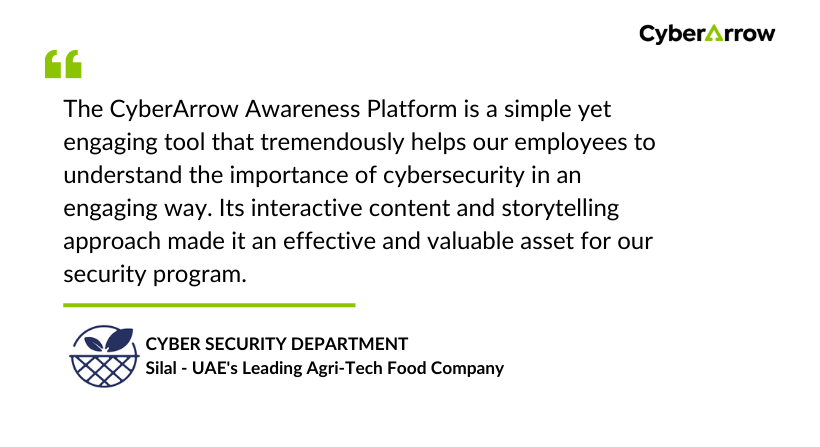
Read how CyberArrow awareness platform increased security awareness among Silal’s employees.
See what Silal has to say about CyberArrow Awareness Platform:
Final thoughts
Employment identity theft is a serious threat that affects both individuals and businesses. Criminals use stolen identities to get jobs, commit fraud, and bypass background checks. If not detected early, this type of fraud can cause IRS issues, financial loss, and legal trouble.
However, with the right security measures, businesses can prevent employment identity theft. Verifying employee identities, securing sensitive data, and educating staff on cyber security threats are essential steps in reducing this risk.
The CyberArrow Awareness Platform is a powerful solution that helps organizations train employees, monitor security awareness, and prevent identity-related fraud. With interactive training modules, phishing simulations, and automated reporting, businesses can ensure that their workforce is always prepared to defend against cyber threats.
Would you like to see how CyberArrow Awareness Platform can protect your business from employment identity theft?
