What is continuous monitoring in cyber security?
As businesses and individuals rely on the internet for daily activities, protecting sensitive information has become a major challenge. This is why businesses need continuous monitoring of their systems and cyber security controls. But what is continuous monitoring in cyber security, and why is it essential for modern businesses?
In this blog, we’ll break down the concept of continuous monitoring, explain its importance, and discuss how it helps organizations maintain a strong security posture. We’ll also touch on how CyberArrow GRC can assist in automating continuous monitoring efforts.
What is continuous monitoring?
Continuous monitoring is an ongoing process used in cyber security to detect, assess, and respond to potential threats in real time. Instead of relying on periodic audits or manual checks, continuous monitoring uses automated tools to keep track of security controls and systems at all times. This allows organizations to identify vulnerabilities, security breaches, or other risks as soon as they occur, reducing the chances of data breaches or attacks.
Why is continuous monitoring important?
Cyber attacks are becoming more sophisticated and frequent. Hackers are constantly looking for vulnerabilities to exploit, and they often succeed when organizations are slow to detect threats. Continuous monitoring helps businesses stay ahead of these attackers by providing real-time visibility into their systems. This means that issues are detected immediately, allowing for faster responses and minimizing damage.
Here are some reasons why continuous monitoring is crucial:
1. Early detection of threats
Without continuous monitoring, a cyber attack could go unnoticed for weeks or even months. By the time the breach is discovered, significant damage may have already been done. Continuous monitoring ensures that threats are detected and addressed early on, helping to prevent data loss, financial damage, and reputational harm.
2. Real-time responses
With traditional security measures, organizations often rely on periodic scans or audits, which might leave security gaps. Continuous monitoring provides real-time alerts, allowing security teams to respond to potential threats as they happen.
3. Compliance with regulations
Many industries have strict compliance requirements, such as HIPAA, GDPR, or PCI DSS. Continuous monitoring helps organizations ensure they remain compliant by automatically tracking and reporting on security controls. This reduces the risk of fines or legal issues due to non-compliance.
4. Enhanced risk management
Continuous monitoring gives organizations a better understanding of their overall security posture. By constantly monitoring their systems, businesses can identify vulnerabilities or weaknesses and address them before they become significant threats.
Key components of continuous monitoring
To understand how continuous monitoring works, it’s essential to know the key components that make it effective. These elements ensure that an organization can maintain constant vigilance over its security systems:
Automation
Continuous monitoring relies heavily on automation. Automated tools scan networks, servers, and systems in real time to identify any changes or abnormalities. This allows for a much faster detection and response time compared to manual checks.
Real-time alerts
Once a potential threat is detected, the system sends real-time alerts to security teams. These alerts contain detailed information about the threat, allowing for immediate action to be taken.
Dashboards and reports
Continuous monitoring tools typically provide dashboards and reports that summarize the organization’s security posture. These visual aids help security teams understand where the vulnerabilities are and track improvements over time.
Risk scoring
Many continuous monitoring solutions include a risk-scoring feature. This assigns a score to different threats based on their severity, allowing security teams to prioritize their responses.
How continuous monitoring works
Continuous monitoring typically involves the following steps:
- Data Collection
The monitoring tools gather data from various sources, such as servers, network devices, and applications. This data includes information on system performance, user activity, and potential security threats.
- Analysis
Once the data is collected, it is analyzed to identify any patterns or abnormalities that may indicate a security threat. This analysis is usually done automatically, with the system comparing the current data to established baselines.
- Alerting
If a potential threat is detected, the system generates an alert and notifies the security team. The alert includes details about the threat, such as its type, severity, and location, allowing for quick action.
- Response
The security team then takes steps to neutralize the threat. This might involve blocking an IP address, isolating an infected system, or patching a vulnerability.
- Reporting
Continuous monitoring tools generate reports that summarize the detected threats and the actions taken to address them. These reports help organizations track their security posture and ensure they remain compliant with regulations.
Benefits of continuous monitoring
Continuous monitoring provides several key benefits for organizations:
1. Improved security posture
By continuously monitoring their systems, businesses can maintain a strong security posture and prevent attacks before they occur.
2. Reduced downtime
With real-time threat detection and response, continuous monitoring helps minimize downtime caused by cyber attacks or system failures.
3. Cost savings
Preventing cyber attacks through continuous monitoring can save organizations money in the long run by avoiding the costs associated with data breaches, legal fees, and regulatory fines.
4. Better compliance
Continuous monitoring helps organizations maintain compliance with industry regulations, reducing the risk of legal issues or penalties.
5. Increased customer trust
Customers expect their data to be protected. By implementing continuous monitoring, businesses can demonstrate their commitment to security, which can increase customer trust and loyalty.
CyberArrow GRC: Your solution for continuous monitoring
Implementing continuous monitoring can seem like a daunting task, especially for organizations with limited resources or expertise.
CyberArrow GRC automates the entire process of security controls monitoring, helping businesses maintain compliance and security without the need for manual efforts.
Here’s how CyberArrow GRC can help:
- Ongoing security monitoring: CyberArrow automates the collection of security evidence, eliminating the need for manual spreadsheets. It supports over 60 integrations and provides pre-approved document templates to streamline the monitoring process.
- Automatic cyber security audits: CyberArrow continuously scans your infrastructure to ensure compliance with cyber security regulations. This keeps your organization secure and helps avoid costly data breaches.
- Security KPI monitoring: With CyberArrow GRC, you can easily monitor your security posture and receive automated reports on the effectiveness of your security controls. The platform sends alerts when controls are not meeting certain thresholds, helping you stay on top of your security efforts.
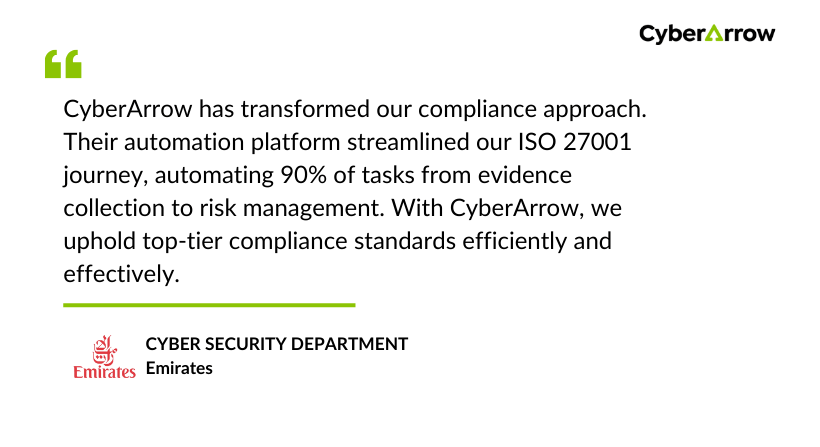
Read How Emirates enhanced Information Security by automating ISO 27001 with CyberArrow GRC.
See what Emirates has to say about CyberArrow GRC: