What is an ISO 27001 nonconformity?
Achieving ISO 27001 certification is a major milestone, but maintaining it can be even more challenging. One of the primary obstacles that organizations face is an ISO 27001 nonconformity—instances where the organization’s practices or systems fall short of the standard’s requirements. If left unaddressed, these nonconformities can put sensitive data at risk and jeopardize an organization’s compliance status.
So, what exactly is an ISO 27001 nonconformity, and how can you prevent it from undermining your security efforts?
In this article, we’ll break down what nonconformities mean for your Information Security Management System (ISMS), explore common causes, and walk through practical steps to resolve them.
What is an ISO 27001 nonconformity?
An ISO 27001 nonconformity is a gap or issue found during an audit showing that part of your information security management system (ISMS) does not meet the standard’s requirements. These gaps can arise due to documentation errors, procedural issues, or even lapses in security practices. Nonconformities are recorded during internal or external audits and must be resolved to achieve or maintain ISO 27001 certification.
Examples of nonconformities include the following:
- Failure to meet a requirement of the standard, such as not implementing required information security controls or following the organization’s information security policies and procedures
- Lack of necessary documentation or required records
- Breakdown or inadequacy in a process or procedure, including unresolved minor nonconformities that reveal larger issues within a process or element of the management system
- Accumulation of minor nonconformities that collectively indicate a broader problem
- Misuse of certification marks, which may mislead customers
- Failure to conduct regular risk assessments and apply appropriate risk treatment measures
- Inadequate change management processes for changes that impact information security
- Insufficient allocation of resources, such as budget, training, or personnel, to support the information security management system
Also read: A Guide to ISO 27001 Statement of Applicability
Types of ISO 27001 nonconformities
Nonconformities are generally categorized into two types:
1. Major nonconformity
This occurs when a significant issue is found that directly impacts the effectiveness of the ISMS. If not corrected, major nonconformities could prevent you from obtaining certification or result in suspension.
2. Minor nonconformity
This is a less critical issue that does not necessarily impact the overall effectiveness of your ISMS. While less severe, minor nonconformities still need to be addressed, as they can accumulate and become major concerns over time.
Common causes of ISO 27001 nonconformities
ISO 27001 nonconformities can arise from various sources. Here are some of the most common causes:
- Inadequate documentation: Missing or incomplete documentation, such as policies, procedures, and records, is a frequent source of nonconformity.
- Failure to implement controls: ISO 27001 requires organizations to implement specific controls to protect information. If any controls are missing or not properly implemented, it may result in a nonconformity.
- Lack of awareness or training: Employees must be aware of and trained on ISO 27001 requirements. Without adequate training, they may unknowingly violate standards.
- Outdated risk assessments: ISO 27001 requires regular risk assessments. An organization failing to update its risk assessment as needed could lead to an ISO 27001 nonconformity.
- Internal audit issues: ISO 27001 requires regular internal audits. Nonconformities can arise if these audits are not thorough or do not cover all necessary areas.
- Missing incident response plans: Incident response is critical in managing information security risks. A lack of documented incident response procedures or improper handling of incidents can result in a nonconformity.
How to identify ISO 27001 nonconformities
ISO 27001 nonconformities are generally identified through internal audits and external certification audits. Here’s how each type of audit helps in spotting nonconformities:
- Internal audits: Internal audits help organizations assess their ISMS before the external audit. These audits identify gaps in the system and allow teams to address issues proactively.
- External certification audits: Certification bodies conduct external audits to verify compliance with ISO 27001 standards. During these audits, the auditors assess various aspects of your ISMS, documentation, and implementation. Any discrepancies found may result in nonconformities.
Steps to address ISO 27001 nonconformities
Once an ISO 27001 nonconformity is identified, addressing it as soon as possible is essential to maintain your ISMS compliance. Here’s a list of steps to address nonconformities:
1. Identify the root cause
Analyze the underlying reason for the nonconformity. Understanding why the nonconformity occurred is essential, as it helps prevent similar issues from arising in the future. This analysis should consider factors like process gaps, lack of training, or failure to follow established protocols. Engaging relevant team members in this analysis can provide valuable insights.
2. Develop a corrective action plan
Once the root cause is identified, create a corrective action plan. This plan should outline specific steps to resolve the nonconformity, including what needs to change, who will be responsible, and the timeline for completion. The corrective action plan serves as a roadmap for addressing the issue and ensuring all involved parties understand their roles.
3. Implement corrective actions
Execute the steps outlined in the corrective action plan to address the nonconformity. This may involve updating or creating new documentation, providing additional training to employees, or implementing new controls to prevent similar issues. Ensure that all changes align with ISO 27001 requirements and that all stakeholders are informed of the updates.
4. Monitor and review
After implementing corrective actions, monitor their effectiveness to ensure the nonconformity is resolved. Conduct follow-up checks and periodic reviews to confirm that the issue does not recur. If necessary, make further adjustments to the corrective actions based on ongoing observations or feedback from team members.
5. Update documentation
Ensure all documentation related to the nonconformity and the corrective actions taken is updated, detailed, and securely stored for future reference. Accurate documentation is essential for audits and future reviews, as it demonstrates compliance efforts and can help prevent similar nonconformities in the future.
Also read: ISO 27001 checklist: Implementation guide + free ISO 27001 checklist
Preventing ISO 27001 Nonconformities
Prevention is always better than correction when it comes to ISO 27001 nonconformities. Here are some key steps to help prevent these issues:
- Regular training and awareness programs: Ensure employees understand ISO 27001 requirements and their roles in maintaining compliance.
- Routine internal audits: Regular internal audits help identify potential nonconformities before they become bigger issues.
- Effective documentation practices: Keep all ISMS documentation, including policies and procedures, accurate and up to date.
- Ongoing risk assessments: Conduct risk assessments frequently to keep up with evolving threats and ensure the ISMS addresses new challenges.
- Implement continuous improvement processes: ISO 27001 encourages a cycle of continuous improvement. Regularly review and improve your ISMS to prevent nonconformities.
How CyberArrow GRC can help manage ISO 27001 nonconformities
ISO 27001 certification maintenance can be challenging, especially when managing and resolving nonconformities. Fortunately, using a GRC (Governance, Risk, and Compliance) platform like CyberArrow can make this process smoother and more efficient. CyberArrow offers a range of features to help organizations streamline compliance and effectively manage ISO 27001 requirements.
Here’s how CyberArrow can help:
- Automated documentation: CyberArrow enables automated documentation, ensuring that all records, policies, and procedures are easily maintained and updated.
- Centralized compliance management: With CyberArrow, you can manage all compliance requirements, nonconformities, and corrective actions in one centralized platform.
- Real-time auditing: CyberArrow’s platform includes real-time auditing capabilities, allowing organizations to identify and address potential nonconformities before they become larger issues.
- Task and workflow automation: CyberArrow helps automate tasks and workflows related to compliance management, reducing manual work and minimizing the risk of human error.
- Continuous monitoring: The platform offers continuous monitoring of your ISMS, helping you stay proactive in identifying and resolving nonconformities as they arise.
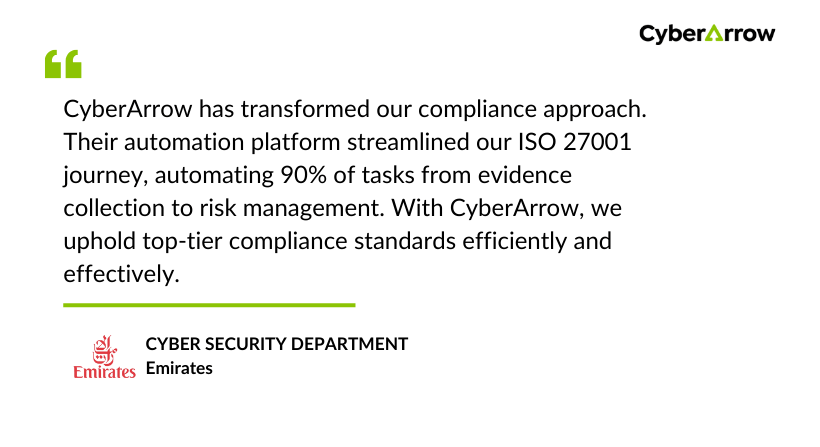
Don’t take our word for it; see what companies like Emirates say about CyberArrow: