What is a compliance audit? Experience zero touch audits with CyberArrow GRC
Compliance audits are a critical part of maintaining security, trust, and legality in businesses, especially in industries that handle sensitive data. Whether it’s meeting regulations like ISO 27001, PCI DSS, HIPAA, SOC 2, or NCA ECC, a compliance audit ensures your company is adhering to the necessary standards.
But what if you could conduct these audits without the hassle of paperwork, endless emails, or in-person meetings? That’s where zero-touch audits come in, and with tools like CyberArrow GRC, achieving compliance has never been easier.
In this guide, we’ll break down what a compliance audit is, the key standards you need to know, and how CyberArrow GRC can help you experience seamless, zero-touch audits.
What is a compliance audit?
A compliance audit is a formal review to ensure that a company follows specific laws, regulations, and standards relevant to its industry. The goal is to verify that your organization is compliant with rules designed to protect customers, data, and business operations. These audits are often required for certifications such as ISO 27001, PCI DSS, HIPAA, and SOC 2.
In a compliance audit, an auditor or a team of auditors reviews your policies, procedures, and systems to ensure they meet the required standards. They may look at various aspects of your business, such as data security, privacy protocols, financial reporting, and operational controls.
Why are compliance audits important?
Compliance audits are important for several reasons:
- Legal protection: Compliance ensures that your business follows laws and regulations, helping to avoid fines, legal trouble, and reputational damage.
- Security: Many compliance standards are designed to protect sensitive data. Regular audits can help prevent data breaches and other security threats.
- Trust and credibility: Being compliant shows your customers, partners, and stakeholders that your business takes security and regulatory requirements seriously.
- Operational efficiency: Compliance audits can also highlight areas where your business can improve its processes, making you more efficient in the long run.
Types of compliance standards you should know
There are several important compliance standards that different businesses must adhere to, depending on their industry and location. Let’s take a look at some of the most common ones:
1. ISO 27001
ISO 27001 is an international standard for information security management systems (ISMS). It helps businesses ensure that their data is safe from breaches, hacking, and other threats. ISO 27001 is particularly relevant for businesses handling sensitive information, such as SaaS companies, banks, and healthcare providers.
2. PCI DSS
PCI DSS (Payment Card Industry Data Security Standard) applies to any company that processes, stores, or transmits credit card information. The goal of PCI DSS is to protect cardholder data and prevent fraud. Non-compliance with PCI DSS can lead to fines, penalties, or even the loss of the ability to process credit cards.
3. HIPAA
HIPAA (Health Insurance Portability and Accountability Act) is a U.S. regulation that protects the privacy and security of health information. Healthcare providers, health insurers, and companies handling patient data must comply with HIPAA. Failure to comply can result in hefty fines and legal action.
4. SOC 2
SOC 2 (System and Organization Controls) is a standard for managing and safeguarding customer data, especially in the cloud computing industry. SOC 2 audits focus on five key principles: security, availability, processing integrity, confidentiality, and privacy. SaaS companies are often required to complete SOC 2 audits to show that they are properly managing customer data.
5. NCA ECC
The NCA ECC (National Cybersecurity Authority Essential Cybersecurity Controls) is a regulatory standard specific to Saudi Arabia. It sets the minimum cyber security requirements for organizations to protect their systems and data. Companies in the country are required to adhere to NCA ECC for cyber security compliance.
What is a zero-touch audit?
A zero-touch audit is a new approach to compliance audits that eliminates the need for extensive manual effort. Traditionally, compliance audits require a lot of documentation, communication, and time-consuming processes. Auditors often need to visit the company’s offices, review countless records, and go through various back-and-forths to gather information.
Zero-touch audits aim to streamline this process by automating much of the work. With the right tools, such as CyberArrow GRC, you can manage compliance tasks, track necessary documentation, and generate audit reports without needing an auditor to be physically present or engaging in excessive manual processes.
How do zero-touch audits work?
Zero-touch audits rely on automation and advanced technology to simplify the compliance process. Here’s how they work:
- Automated data collection: Instead of manually gathering information, zero-touch audits automatically pull relevant data from your systems and ensure it is in the correct format for auditors.
- Real-time monitoring: Tools like CyberArrow GRC monitor your compliance status in real time, allowing you to address any gaps or issues before they become problems during the audit.
- Automated reports: With zero-touch audits, compliance reports are automatically generated, reducing the need for manual reporting and ensuring the auditor gets the information they need quickly.
- Collaboration tools: Auditors can review your compliance status remotely, ask questions, and verify documents through the system without needing to visit your office.
By automating these steps, zero-touch audits can save businesses time, reduce the stress of audits, and ensure that you remain compliant with minimal manual intervention.
Benefits of zero-touch audits
Zero-touch audits offer several advantages for businesses:
- Efficiency: Automating the audit process reduces the time and effort required to complete an audit.
- Cost savings: By reducing the need for manual processes and in-person visits, zero-touch audits can lower the cost of compliance audits.
- Real-time compliance: Instead of scrambling to prepare for an audit, zero-touch audits allow you to maintain continuous compliance, reducing last-minute surprises.
- Reduced errors: Automation ensures that all relevant data is collected and formatted correctly, reducing the risk of human error.
How CyberArrow GRC simplifies compliance audits
CyberArrow GRC is a powerful tool designed to simplify the entire compliance process, from data collection to audit preparation. With CyberArrow GRC, you can experience zero-touch audits and manage your compliance needs more efficiently.
Here’s how CyberArrow GRC can help with your compliance audits:
- Automated compliance monitoring: CyberArrow GRC monitors your organization’s compliance status in real time, helping you identify and address gaps before they become major issues during an audit.
- Seamless audit preparation: With automated documentation and reporting features, CyberArrow GRC allows you to prepare for audits without the headache of manual processes.
- Support for multiple standards: Whether you’re working toward ISO 27001, PCI DSS, HIPAA, SOC 2, or NCA ECC, CyberArrow GRC supports compliance across various standards, making it easy to manage all your compliance needs in one place.
- Collaboration and communication: CyberArrow GRC makes it easy to collaborate with auditors remotely, reducing the need for in-person visits and making the audit process more efficient.
- Continuous compliance: With CyberArrow GRC, compliance is not a one-time event. The platform helps you maintain continuous compliance, so you’re always ready for audits, whether scheduled or unexpected.
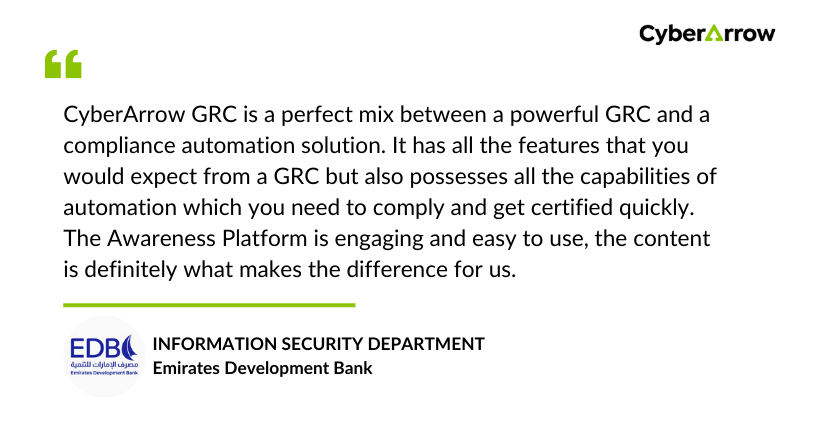
See what the Emirates Development Bank has to say about CyberArrow GRC: