Top 5 risk assessment tools in 2026
Risk management is a crucial aspect of any business strategy. In 2026, the increasing complexity of cyber threats, compliance requirements, and operational risks make using cutting-edge risk assessment tools essential. These tools help organizations identify potential risks, assess their impact, and implement effective mitigation strategies.
This blog will explore the top 5 risk assessment tools available in 2026, focusing on the features that set them apart from the competition.
Whether you’re managing cyber risks, financial risks, or operational risks, these tools are designed to help businesses navigate the unpredictable landscape of modern risk management.
1. CyberArrow ERM: Your automated Enterprise Risk Management software
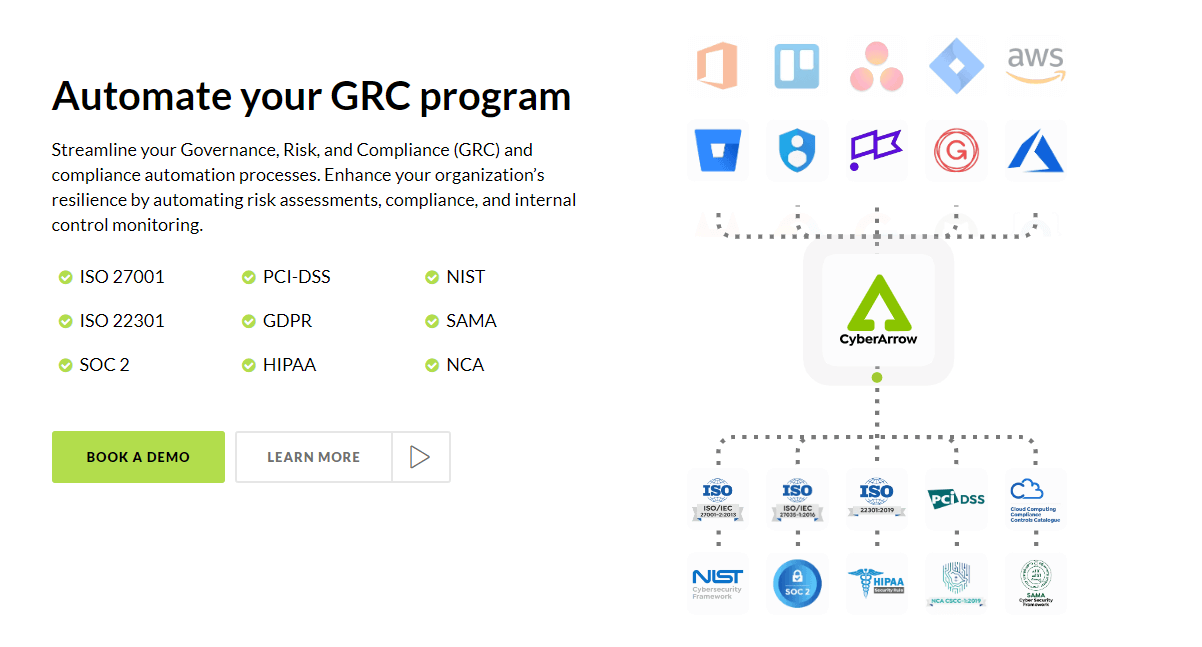
At the top of our list is CyberArrow ERM, a comprehensive risk management platform that revolutionizes how enterprises handle risk. This tool offers powerful automation features that simplify and streamline risk assessment processes, making it one of the best risk assessment tools in 2026.
Why choose CyberArrow ERM?
CyberArrow ERM eliminates the need for manual risk assessments, replacing them with automation that spans the entire risk management lifecycle.
Here’s why CyberArrow ERM stands out:
- Automated risk assessments: CyberArrow ERM automates risk identification, assessment, and mitigation, saving valuable time and resources.
- Proactive risk intelligence: Gain real-time insights into potential risks across all business units, helping you act quickly before threats escalate.
- Predictive risk analytics: CyberArrow ERM provides predictive metrics and indicators, helping you anticipate and respond to potential incidents.
- Dedicated virtual risk manager: Access expert guidance and personalized risk management strategies through an AI-powered virtual assistant.
- Collaboration and communication: Streamline workflows by facilitating communication among key stakeholders, ensuring that risk management processes align with business objectives.
- Cost-efficiency: By automating the risk management process, CyberArrow ERM reduces both the time and financial resources needed for comprehensive risk assessments.
Use case example:
Imagine a large financial institution that needs to assess operational risks across multiple departments. CyberArrow ERM enables the institution to automatically gather risk data from each department, assess the potential impact on business operations, and develop a unified mitigation strategy. With real-time insights, the institution can make better decisions and reduce the likelihood of disruptions.
Quick link: What is CyberArrow GRC?
2. LogicGate Risk Cloud
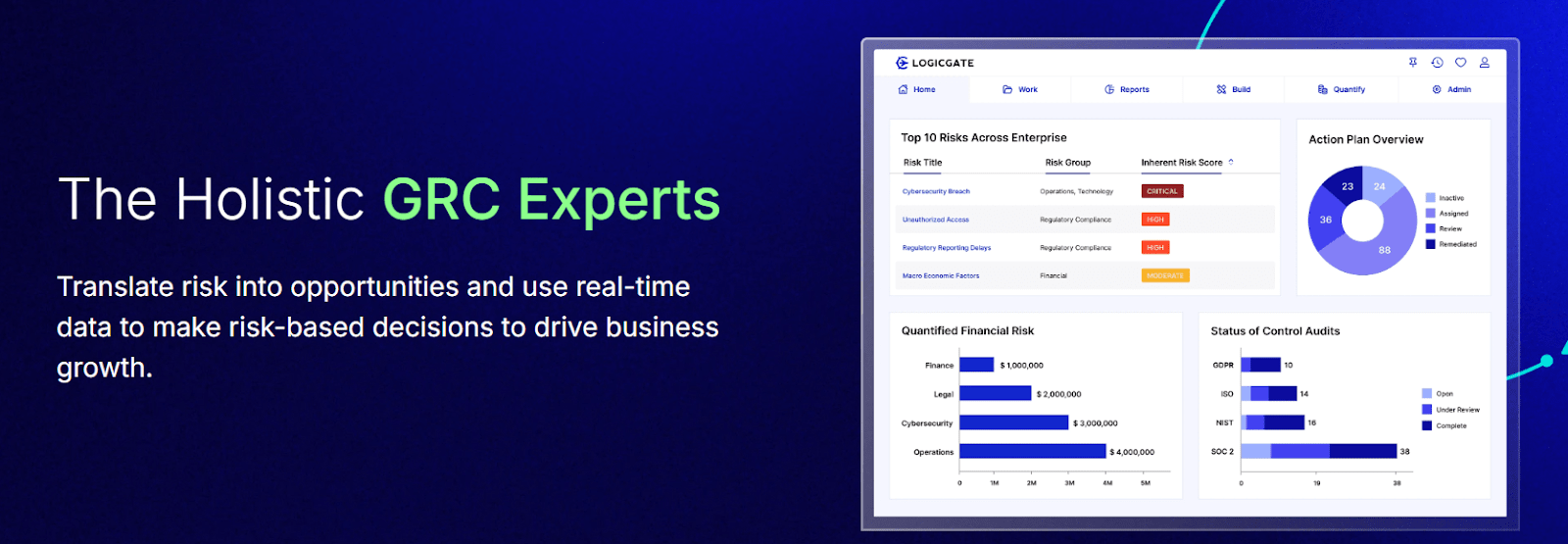
LogicGate Risk Cloud is another top-tier tool that provides a flexible and highly customizable platform for managing risks. It allows users to design workflows, automate assessments, and visualize risk data in a way that suits their specific needs.
Key features:
- Customizable risk frameworks: Risk Cloud allows businesses to build custom workflows for risk assessment and mitigation.
- Integration capabilities: It integrates seamlessly with existing enterprise software, enabling smooth data sharing and risk reporting.
- Automated risk monitoring: LogicGate offers automated monitoring and alerts, helping businesses stay proactive about emerging risks.
- Risk visualization: With interactive dashboards and reports, you can visualize your risk landscape for a clearer understanding.
Use case example:
A healthcare organization can use LogicGate to automate risk assessments for patient data privacy. The platform enables compliance with HIPAA by automating audit trails and generating real-time alerts when a potential breach is detected.
3. Resolver

Resolver is a risk assessment and incident management tool that focuses on simplifying compliance and risk management for large organizations. It offers real-time risk insights and comprehensive reporting capabilities to help businesses stay ahead of potential threats.
Key features:
- Incident and risk management: Resolver offers a complete risk management suite that includes incident tracking, risk assessments, and mitigation planning.
- Compliance automation: It automates compliance tasks to ensure adherence to regulations and standards like ISO, GDPR, and NIST.
- Custom risk models: Organizations can build their own risk models based on industry standards, making Resolver a versatile tool for risk management.
- Centralized data: Resolver centralizes all risk-related data, making it easy to track incidents and their potential impacts in one place.
Use case example:
A large retail chain can use Resolver to track physical security incidents and assess the risk of theft or fraud at different locations. With Resolver’s centralized data, the company can identify high-risk locations and adjust its security protocols accordingly.
4. Archer (RSA)
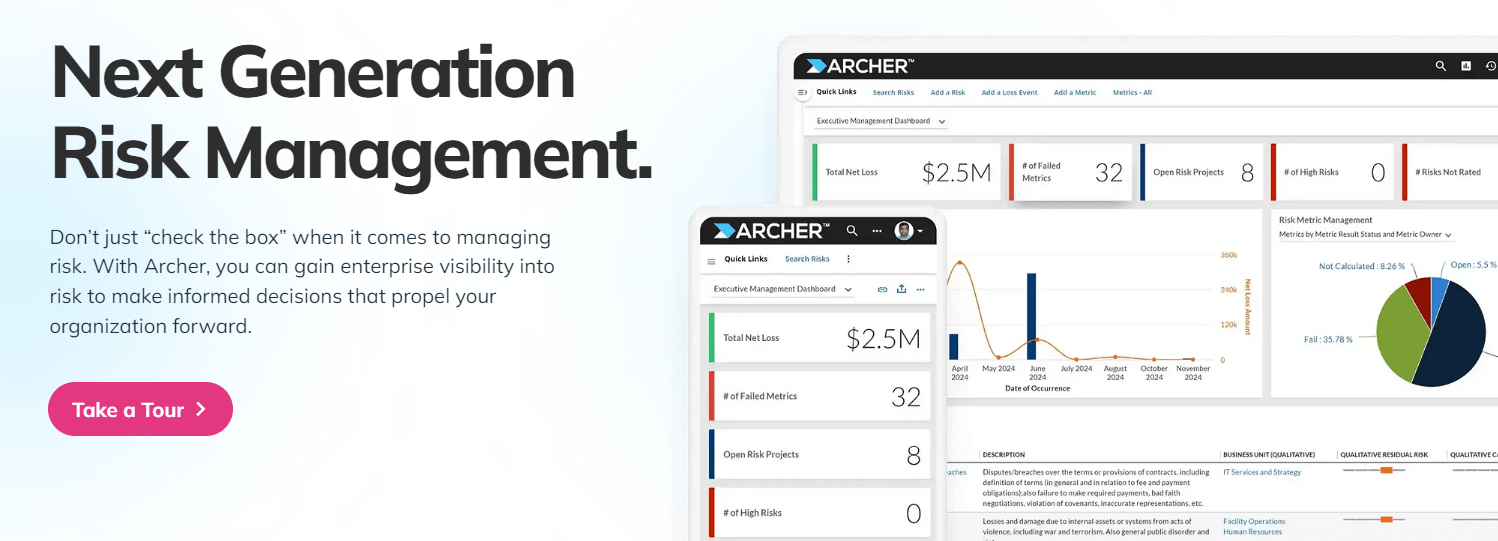
Archer, developed by RSA, is one of the most widely used risk management tools in the market. It offers a robust platform for risk, compliance, and governance, providing businesses with all the necessary tools to manage risks effectively.
Key features:
- Unified risk management platform: Archer offers a single platform for managing enterprise risk, operational risk, and compliance.
- Third-party risk management: It provides specialized tools for managing risks related to third-party vendors.
- Automated assessments: The platform automates risk assessments and provides a comprehensive view of risk data through customizable dashboards.
- Risk governance: Archer offers risk governance capabilities that ensure proper risk accountability across the enterprise.
Use case example:
A manufacturing company can use Archer to automate supplier risk assessments. By evaluating third-party risks such as supply chain disruptions or quality control issues, Archer helps ensure that the company’s operations remain smooth and uninterrupted.
5. MetricStream
MetricStream is a powerful platform known for its risk, compliance, and governance solutions. It helps organizations manage complex risk landscapes by offering real-time analytics, dashboards, and automated risk reporting.
Key features:
- Real-time risk insights: MetricStream’s platform provides real-time analytics to help businesses stay ahead of emerging risks.
- Governance and compliance: The platform includes tools to ensure compliance with global regulations, including GDPR and SOX.
- Risk aggregation: MetricStream aggregates risk data from various sources, giving you a complete view of the organization’s risk exposure.
- Integrated reporting: With detailed reports and dashboards, MetricStream makes it easy to communicate risk data to stakeholders.
Use case example:
A multinational corporation can use MetricStream to assess the risks associated with its global operations. By aggregating data from all regions, the platform helps the company create a comprehensive risk profile and develop mitigation strategies for each region.
Choose CyberArrow ERM for seamless risk management
In 2026, businesses need more than just manual processes to stay on top of their risk management efforts. CyberArrow ERM leads the pack when it comes to automating and simplifying enterprise risk management.
Here’s why CyberArrow ERM is your best option for risk assessment:
- Automated risk identification and mitigation: Streamline your entire risk assessment process with automation, saving time and reducing human error.
- Proactive risk monitoring: Stay ahead of potential risks with real-time insights and predictive analytics, ensuring you’re prepared for any eventuality.
- Seamless integration: CyberArrow ERM integrates with your existing tools, providing a unified view of risks across all business sectors.
- Virtual risk manager: Access personalized guidance and expert strategies through an AI-powered virtual risk manager.
- Cost-efficiency: Reduce the time and expenses spent on manual risk assessments, allowing your team to focus on strategic decision-making.
See what DCD – Abu Dhabi has to say about CyberArrow GRC: