Role of Data Protection Officer (DPO) in GDPR compliance
The General Data Protection Regulation (GDPR), a law introduced by the European Union, requires businesses to protect the personal data of EU citizens. One critical role in ensuring that organizations comply with this regulation is the Data Protection Officer (DPO).
Understanding the responsibilities of a DPO and how they help in GDPR compliance can help businesses manage data security effectively.
In this blog, we’ll explore the role of a Data Protection Officer (DPO), why it’s essential for GDPR compliance, and how businesses can leverage automation to simplify their GDPR journey.
What is a Data Protection Officer (DPO)?
A Data Protection Officer (DPO) is a professional responsible for ensuring that a company processes the personal data of its staff, customers, or other individuals in compliance with the GDPR. The appointment of a DPO is mandatory for certain organizations under the GDPR, such as:
- Public authorities or bodies
- Companies that engage in large-scale processing of personal data
- Organizations that process sensitive data like health records, financial information, or criminal records
The DPO acts as the watchdog for data protection, ensuring the organization implements proper safeguards to protect personal data.
Responsibilities of a Data Protection Officer (DPO)
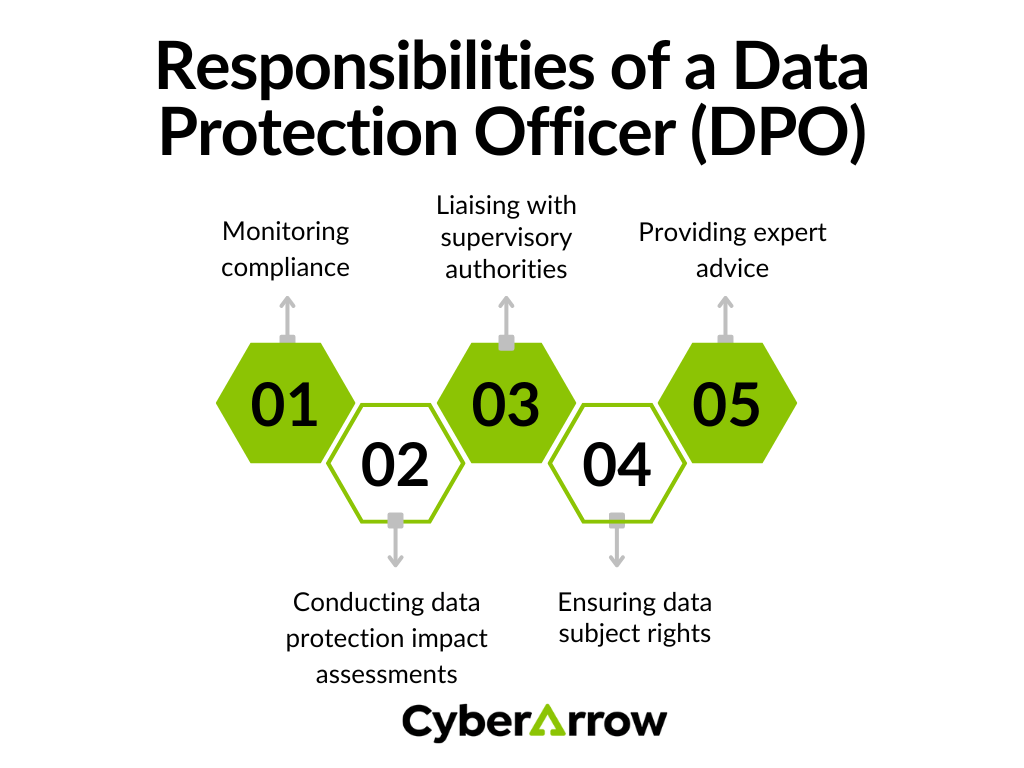
The DPO plays a critical role in making sure a company follows the GDPR guidelines. Some key responsibilities include:
1. Monitoring compliance
The DPO is responsible for overseeing the company’s data processing activities and ensuring they align with the requirements of GDPR. This includes checking that the organization’s data protection policies and procedures are being followed. They also have to make sure that employees are trained in handling data properly.
2. Conducting Data Protection Impact Assessments (DPIAs)
Whenever a business plans to introduce new technology or data processing activities, a Data Protection Impact Assessment (DPIA) is required. The DPO leads this process to assess risks to personal data and ensure appropriate safeguards are in place to minimize those risks.
3. Liaising with supervisory authorities
The DPO serves as the primary contact between the organization and the Supervisory Authorities (government bodies responsible for overseeing GDPR compliance). If there is a data breach or any other compliance issue, the DPO must inform the authorities and provide updates.
4. Ensuring data subject rights
One of the most crucial aspects of GDPR is protecting the rights of individuals, also known as data subjects. The DPO ensures that individuals can exercise their GDPR rights, such as requesting access to their data, asking for corrections, or even having their data deleted.
5. Providing expert advice
The DPO provides expert advice on all matters related to GDPR compliance. This includes reviewing contracts, advising on data-sharing practices, and helping the company manage risks associated with data processing. The DPO is also available to offer guidance on whether certain actions may lead to breaches of GDPR.
Importance of a DPO for GDPR compliance
Appointing a DPO is critical for several reasons:
1. Ensures accountability
A DPO ensures the company is accountable for its data processing practices. With their knowledge of GDPR, the DPO can help avoid breaches, penalties, and legal issues that could arise from non-compliance.
2. Builds customer trust
Having a DPO in place signals to customers that their data is being handled responsibly. This builds trust with customers, which is particularly important in today’s market where data breaches are common. Ensuring compliance with GDPR is a key part of developing a trustworthy brand.
3. Reduces risk of data breaches
A well-trained and competent DPO helps reduce the risk of data breaches. By regularly monitoring data processing activities, conducting DPIAs, and providing expert advice, they help ensure that personal data is well protected from cyber threats.
4. Helps avoid heavy fines
GDPR violations can result in hefty fines, sometimes up to €20 million or 4% of a company’s global revenue, whichever is higher. By ensuring the company complies with GDPR, the DPO helps mitigate the risk of financial penalties.
Related: PCI DSS vs. GDPR
Key qualities of an effective DPO
To fulfill the role effectively, a DPO must possess the following skills:
- In-depth knowledge of GDPR: A thorough understanding of the GDPR and its requirements is essential.
- Strong communication skills: A DPO needs to communicate data protection issues clearly to both employees and authorities.
- Problem-solving abilities: The DPO must be proactive in finding solutions to complex data protection challenges.
- Legal and IT knowledge: As GDPR involves both legal and technical aspects, a strong background in both fields is beneficial.
How CyberArrow GRC can help automate GDPR compliance
Managing GDPR compliance can be overwhelming, especially for businesses without dedicated resources. This is where automation comes in. CyberArrow GRC offers a comprehensive solution to simplify GDPR compliance. It helps companies automate up to 90% of their compliance tasks, saving time and ensuring accuracy.
Features of CyberArrow GRC for GDPR compliance:
- Automated evidence collection: CyberArrow automates the collection and management of evidence needed for GDPR controls.
- Quick implementation: Reduce the time needed to implement GDPR by automating repetitive tasks and ensuring nothing is missed.
- Cross-standard mapping: With CyberArrow, you can easily map GDPR requirements with other standards, like ISO 27001, to streamline compliance efforts.
- Risk management: CyberArrow helps manage and assess risks associated with data processing, making sure you’re always ahead of potential threats.
- User-friendly dashboards: Get real-time insights into your GDPR compliance status with intuitive dashboards.
- Third-party assessments: Easily invite third-party assessors to conduct GDPR readiness assessments through the CyberArrow platform.
See what our clients have to say about CyberArrow GRC: