


Understanding GRC team roles & responsibilities
Governance, Risk, and Compliance (GRC) is critical for any organization aiming to manage risks, stay compliant, and achieve sustainable growth. However, behind every successful GRC program is a dedicated team that works to ensure the organization operates within its legal, ethical, and risk-tolerance boundaries.
In this guide, we’ll explore the key roles within a GRC team, their responsibilities, and how their collaboration drives the organization toward success.
- Why GRC teams are essential
- Key roles in a GRC team
- 1. Board of Directors
- 2. Chief Financial Officer (CFO)
- 3. Chief Information Security Officer (CISO)
- 4. Data Protection Officer (DPO) or Legal Counsel
- 5. GRC Lead
- 6. Operations Managers
- 7. Representatives from Relevant Departments
- 8. Contract Managers
- 9. Cyber security Analyst(s)
- 10. Compliance Analyst(s)
- 11. Risk Analyst(s)
- 12. IT Security Specialist(s)
- How GRC teams work together
- Automating GRC with CyberArrow
- FAQs
Why GRC teams are essential
Every organization faces risks whether from cyber security threats, regulatory changes, or operational inefficiencies. A strong GRC team ensures these risks are identified, mitigated, and managed effectively.
Companies risk financial penalties, operational disruptions, and even reputational damage without a cohesive team. Each role within a GRC team plays a vital part in building a strong governance structure and addressing compliance challenges.
Key roles in a GRC team
1. Board of Directors
The board of directors is the backbone of an organization’s governance. They provide oversight and ensure the GRC program aligns with overall business objectives.
Responsibilities:
- Define the organization’s risk appetite.
- Approve governance and compliance frameworks.
- Oversee progress and ensure strategic alignment.
2. Chief Financial Officer (CFO)
The CFO is critical in managing financial risks and aligning the GRC strategy with the organization’s financial goals.
Responsibilities:
- Monitor compliance with financial regulations.
- Manage financial reporting and audits.
- Ensure that financial planning accounts for risk management.
3. Chief Information Security Officer (CISO)
The CISO is in charge of cyber security governance. They ensure the organization’s IT infrastructure is secure and compliant.
Responsibilities:
- Develop and enforce cyber security policies.
- Protect sensitive data and IT systems.
- Respond to security incidents and threats.
4. Data Protection Officer (DPO) or Legal Counsel
In the era of strict data protection regulations like GDPR, the DPO or legal counsel ensures the organization remains compliant.
Responsibilities:
- Oversee data protection policies and practices.
- Conduct impact assessments for data privacy.
- Act as the point of contact for regulatory authorities.
5. GRC Lead
The GRC lead is responsible for ensuring all governance, risk, and compliance efforts are coordinated across the organization.
Responsibilities:
- Develop and implement the GRC framework.
- Monitor the progress of GRC initiatives.
- Collaborate with all departments to maintain compliance.
6. Operations Managers
Operations managers from relevant departments ensure that GRC policies are seamlessly integrated into daily operations.
Responsibilities:
- Implement GRC policies within their teams.
- Identify and report operational risks.
- Facilitate training and awareness programs.
7. Representatives from Relevant Departments
Representatives act as intermediaries between the GRC team and their departments, ensuring seamless communication and collaboration.
Responsibilities:
- Provide insights into department-specific risks.
- Support compliance initiatives within their teams.
- Ensure policies are adhered to at the ground level.
8. Contract Managers
Contract managers handle third-party agreements and ensure external vendors meet organizational compliance standards.
Responsibilities:
- Review contracts for compliance risks.
- Monitor vendor performance.
- Mitigate third-party risks.
9. Cyber security Analyst(s)
Cyber security analysts identify potential threats and protect the organization’s digital assets.
Responsibilities:
- Conduct vulnerability assessments.
- Monitor for and respond to cyber security incidents.
- Collaborate with IT security specialists to strengthen defenses.
10. Compliance Analyst(s)
Compliance analysts ensure the organization meets all regulatory and legal requirements.
Responsibilities:
- Perform audits and risk assessments.
- Track regulatory changes and update policies.
- Educate employees on compliance standards.
11. Risk Analyst(s)
Risk analysts evaluate potential risks to the organization and devise strategies to mitigate them.
Responsibilities:
- Analyze risk trends and patterns.
- Develop mitigation plans for identified risks.
- Report findings to senior management and the GRC lead.
12. IT Security Specialist(s)
IT security specialists focus on protecting the organization’s IT infrastructure from potential threats.
Responsibilities:
- Implement security measures to safeguard IT systems.
- Ensure compliance with IT security standards.
- Collaborate with cyber security analysts to maintain defenses.
How GRC teams work together
The success of a GRC program depends on collaboration across these roles. Each team member contributes unique expertise, ensuring risks are identified and managed, compliance is maintained, and the organization’s governance structures remain robust.
By working together, the GRC team creates a unified approach to managing the complexities of today’s business environment.
Automating GRC with CyberArrow
While a dedicated GRC team is essential, the complexities of modern governance, risk, and compliance programs can overwhelm even the best teams.
CyberArrow automates key GRC tasks, such as risk assessments, compliance tracking, and policy management, freeing your team to focus on strategic goals. With intuitive tools and robust reporting features, CyberArrow ensures your GRC program runs smoothly and efficiently.
Key benefits of CyberArrow GRC:
- Automates repetitive tasks to save time.
- Provides real-time insights into risks and compliance.
- Enhances collaboration across departments.
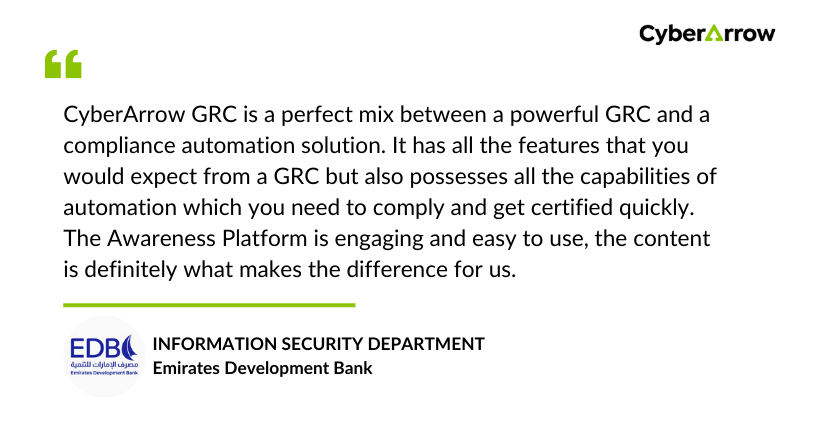
See what EDB has to say about CyberArrow GRC:
FAQs
What is a GRC team, and why is it important?
A GRC team is a group of professionals responsible for managing governance, risk, and compliance within an organization. They ensure the organization operates ethically, mitigates risks, and adheres to regulations, safeguarding its reputation and long-term success.
Who are the key members of a GRC team?
Key members include the board of directors, CFO, CISO, DPO or legal counsel, GRC lead, operations managers, representatives from relevant departments, contract managers, cyber security analysts, compliance analysts, risk analysts, and IT security specialists. Each plays a vital role in managing governance, risk, and compliance.
How can CyberArrow help GRC teams?
CyberArrow simplifies GRC management by automating tasks like risk assessments, compliance tracking, and policy management. This helps GRC teams save time, improve efficiency, and focus on strategic initiatives. Book a free demo to see how CyberArrow can enhance your GRC efforts.
