How to implement the COSO framework for better governance and control
Strong governance and internal controls are the foundation of any well-managed organization. Yet, many businesses still struggle with fragmented risk management practices, inconsistent reporting, and unclear accountability.
The COSO framework offers a structured way to fix that, but the real value lies not in understanding what COSO is, but in knowing how to implement it effectively.
In this article, we’ll walk through a practical step-by-step guide to help you implement the COSO framework across your organization for stronger control, better governance, and smarter risk management.
- What is the COSO framework?
- How to implement the COSO framework
- Step 1: Assess your current control environment
- Step 2: Define risk management objectives
- Step 3: Conduct a comprehensive risk assessment
- Step 4: Design and implement control activities
- Step 5: Strengthen information and communication systems
- Step 6: Establish continuous monitoring and improvement
- Step 7: Integrate COSO into business strategy
- Benefits of a well-implemented COSO framework
- Implement COSO controls faster with CyberArrow
What is the COSO framework?
The Committee of Sponsoring Organizations of the Treadway Commission developed the COSO framework. It provides a model for establishing and maintaining effective internal controls and enterprise risk management (ERM) programs.
It helps organizations ensure that their operations are efficient, financial reporting is reliable, and compliance obligations are met. COSO is based on five key components:
- Control environment
- Risk assessment
- Control activities
- Information and communication
- Monitoring
How to implement the COSO framework
Here are the steps to implement the COSO framework in your organization.
Step 1: Assess your current control environment
Understand the foundation of your organization’s control environment: its culture, structure, and leadership approach.
Ask questions like:
- Does leadership set the right ethical tone?
- Are roles and responsibilities clearly defined?
- Is accountability built into your processes?
Conduct interviews or internal surveys to gauge how well governance values are understood across teams. Review audit reports, employee handbooks, and management oversight practices to identify existing gaps in these areas.
Example:
A financial services firm might find through internal reviews that managers approve transactions but lack a second-level check, an issue that weakens segregation of duties. Recognizing this early helps shape better control design later.
Step 2: Define risk management objectives
Clear objectives give direction to your internal control efforts. They should reflect your business goals and be categorized under operational, reporting, and compliance objectives.
- Operational: Ensuring processes run efficiently and resources are used responsibly.
- Reporting: Guaranteeing that financial and non-financial data are accurate and timely.
- Compliance: Adhering to legal and regulatory requirements.
Example:
A SaaS provider may define objectives like maintaining 99.9% uptime (operational), providing error-free monthly financial reports (reporting), and staying compliant with SOC 2 or GDPR (compliance). Once these objectives are clear, you can design internal controls that directly support them.
Step 3: Conduct a comprehensive risk assessment
With your objectives set, the next step is identifying and assessing risks that could prevent you from achieving them. This should include both internal and external risks.
Start with a risk register. List potential threats, rate them based on likelihood and impact, and prioritize accordingly. You can use a simple risk matrix to visualize and score these risks.
Example:
A healthcare organization might assess risks such as unauthorized access to patient data, system downtime, or delayed regulatory reporting. Each of these would be rated for severity and assigned an owner for mitigation.
Documenting this process creates transparency and provides the foundation for your control design.
Step 4: Design and implement control activities
Control activities are the policies and procedures that help mitigate identified risks. They can be preventive (to stop an issue before it happens) or detective (to catch it after it occurs).
Consider control types across three categories:
- Manual controls: Approvals, reconciliations, and policy reviews.
- Automated controls: System validations, alerts, and access restrictions.
- Hybrid controls: A mix of manual oversight and automated triggers.
Example:
To reduce financial reporting errors, an organization could implement automated data validation rules in accounting software combined with manual review by the finance team before submission.
When implementing controls, ensure documentation is clear and responsibilities are well-assigned. This helps internal auditors and managers track performance more easily.
Step 5: Strengthen information and communication systems
For COSO to work effectively, everyone involved, from leadership to front-line teams, must have access to accurate and timely information.
Set up communication channels that ensure relevant data reaches the right people at the right time.
- Centralize control documentation in one platform.
- Use dashboards or reporting tools to share compliance metrics.
- Encourage employees to report control failures or emerging risks.
Example:
A compliance department could use a governance, risk, and compliance (GRC) platform to manage evidence collection, map controls to risks, and notify stakeholders about upcoming audits.
Good communication also means feedback flows upward. Leadership should regularly review and update policies based on frontline input.
Step 6: Establish continuous monitoring and improvement
Controls lose effectiveness over time if not monitored. Regular evaluation helps you spot issues early and make adjustments before they grow into compliance failures.
You can achieve this through:
- Ongoing monitoring using automated alerts, dashboards, or system logs.
- Periodic evaluations, such as quarterly audits or internal reviews.
- External audits to validate the objectivity of your control assessments.
Example:
An organization can track overdue risk mitigation actions through an automated compliance dashboard. If a control isn’t functioning as intended, alerts can trigger follow-ups from the responsible department.
The goal is to build a loop of continuous improvement: detect, assess, correct, and enhance.
Step 7: Integrate COSO into business strategy
To sustain long-term value, COSO should not operate as a side project. Integrate it directly into your business strategy, risk management, and operational planning.
Link control activities to key business objectives, whether it’s entering new markets, scaling operations, or adopting AI technologies.
Example:
When expanding into new regions, a company could use its COSO risk assessment framework to evaluate country-specific compliance risks before launching operations.
Embedding COSO into strategic decision-making ensures governance and risk management remain relevant, adaptive, and value-driven.
Benefits of a well-implemented COSO framework
When effectively implemented, COSO delivers tangible benefits:
- Improved governance: A well-implemented COSO framework establishes clear roles, responsibilities, and reporting lines across all levels of the organization. It strengthens accountability and ensures management decisions are supported by transparent oversight and ethical practices.
- Enhanced risk visibility: COSO helps organizations identify, assess, and prioritize risks in a structured and repeatable way. With better visibility into potential threats, teams can proactively mitigate issues before they disrupt operations or compliance efforts.
- Stronger compliance posture: By aligning internal controls with regulatory requirements, COSO simplifies audit preparation and ongoing compliance management. It ensures consistent policy documentation and makes it easier to demonstrate compliance to auditors and stakeholders.
- Better decision-making: The framework provides accurate and reliable information through well-defined control systems. This allows leadership to make data-driven decisions, balancing risk and performance more effectively.
- Increased operational efficiency: COSO promotes process standardization and eliminates redundant activities. Over time, it streamlines workflows, reduces manual oversight, and enables teams to focus on strategic priorities.
Quick link: What is the GRC maturity model?
Implement COSO controls faster with CyberArrow
Implementing COSO manually can be complex, as it involves managing evidence, tracking risks, and maintaining continuous monitoring. CyberArrow simplifies this process through automation and real-time insights.
With the CyberArrow compliance automation platform, you can:
- Map and monitor COSO controls automatically.
- Collect and manage evidence in real time.
- Centralize audit trails and compliance documentation.
- Visualize performance metrics through dashboards.
CyberArrow helps you turn the COSO framework from a static document into a dynamic governance system that scales with your business.
Streamline your internal controls, enhance governance, and stay audit-ready all with CyberArrow. Schedule a free demo to learn more.
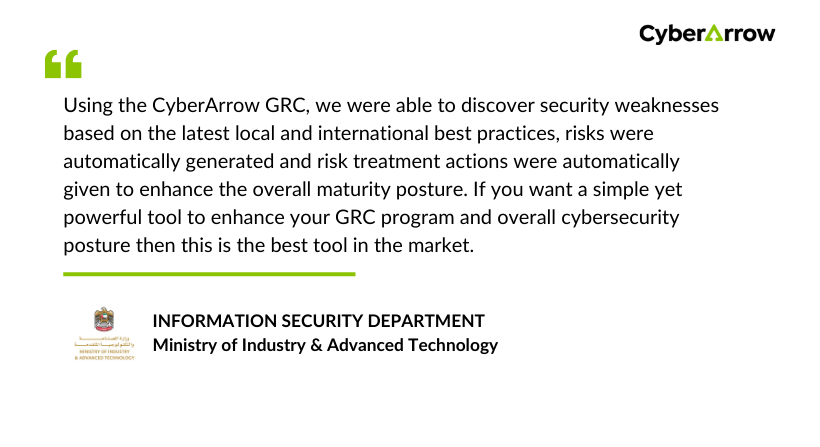
See what our clients have to say about CyberArrow GRC: