What is UpGuard? Features, benefits, and everything you need to know
Cyber security risk management has become a critical priority for organizations of all sizes. As businesses rely more on third-party vendors and cloud-based systems, the risk of data exposure, misconfigurations, and security incidents increases significantly.
UpGuard is a cyber security platform that helps organizations identify and manage these risks. It provides real-time visibility into the security posture of your systems and the vendors you rely on. From external attack surface monitoring to vendor risk assessments and data leak detection, UpGuard offers a focused solution for organizations looking to strengthen their cyber resilience.
This article explores what UpGuard is, how it works, its key features and benefits, and the types of businesses that can benefit most from using it.
What is UpGuard?
UpGuard is a cyber security platform that helps organizations monitor and improve their security posture by assessing risk across internal systems and third-party vendors. It’s best known for its security ratings, vendor risk assessment tools, and continuous monitoring capabilities, helping companies proactively identify and remediate weaknesses before they lead to breaches.
The platform is commonly used by IT security teams, compliance professionals, and procurement departments to assess and manage the risk of working with external vendors or partners. It’s invaluable for organizations that need to maintain strong security standards in regulated industries like finance, healthcare, and SaaS.
Quick read: What is Phished? Why you need CyberArrow Awareness Platform
Key features of UpGuard
UpGuard’s platform includes a set of integrated tools designed to help businesses understand and reduce cyber risk. Below are its main features:
1. Security ratings
UpGuard assigns an A–F rating to an organization’s public-facing digital assets based on how well they adhere to security best practices. This includes checks on SSL configurations, DNS security, email authentication, open ports, and more.
Why it matters:
These ratings give businesses an at-a-glance view of their cyber security posture as well as that of vendors or partners they may work with.
2. Third-party risk management
Organizations can monitor the security of their vendors and receive alerts if something changes. UpGuard allows you to track the risk scores of hundreds of vendors over time, send security questionnaires, and collect attestations.
Why it matters:
A single vulnerable vendor can open the door to a data breach. UpGuard helps companies stay ahead by continuously tracking these risks.
3. Vendor questionnaires and risk assessments
UpGuard streamlines the process of sending and reviewing vendor security assessments. You can use pre-built templates or customize your own based on regulatory needs or internal policies.
Why it matters:
This feature reduces the time spent on manual due diligence and standardizes how your organization evaluates vendor risks.
4. BreachSight
BreachSight scans the internet (and dark web) for leaked data associated with your organization. This includes exposed credentials, data leaks, or misconfigured cloud storage.
Why it matters:
By detecting data leaks early, companies can take quick action to mitigate the damage and avoid reputational or legal fallout.
5. Attack surface management
UpGuard continuously monitors your attack surface by scanning IPs, domains, and cloud assets associated with your business. It identifies vulnerable services, misconfigurations, or outdated technologies.
Why it matters:
It gives your IT team a comprehensive view of what systems may be exposed and helps prioritize security fixes.
Quick read: What is Guardey? Why you need CyberArrow Awareness platform?
Common use cases of UpGuard
UpGuard is a flexible platform used across multiple industries and functions. Here are a few common scenarios:
- Vendor due diligence: Before onboarding a new vendor, companies can check their UpGuard rating and request a risk assessment.
- Continuous monitoring: Organizations track risk scores for hundreds of vendors in real time to ensure ongoing compliance.
- Data leak detection: UpGuard alerts companies when sensitive information (e.g., passwords or employee emails) is found online.
- Security benchmarking: IT teams use UpGuard scores to compare their cyber security hygiene against industry averages or competitors.
Quick read: What is NINJIO? Why you need CyberArrow Awareness Platform
Benefits of using UpGuard
UpGuard simplifies the complex process of cyber risk management. Here are some of the key benefits:
1. Proactive risk identification
UpGuard helps detect issues like open ports, weak encryption, or misconfigured cloud services before attackers can exploit them.
2. Vendor oversight at scale
Managing dozens or even hundreds of vendors is much easier when you can automate risk scoring, monitoring, and questionnaires.
3. Reduced data breach exposure
With features like BreachSight and continuous monitoring, UpGuard helps detect potential leaks and vulnerabilities early.
4. Faster audits and assessments
Security questionnaires and pre-built templates make audit prep and vendor reviews more efficient for both internal and external stakeholders.
5. Easy to use and non-intrusive
Because UpGuard relies largely on external scans and public data, it doesn’t require heavy installations or intrusive access to internal systems.
Things to keep in mind
While UpGuard is a powerful tool for external risk monitoring, it’s not designed as a complete GRC (Governance, Risk, and Compliance) solution. For example, it doesn’t include features like compliance automation, policy management, or internal security training.
That said, it can be a valuable addition to a larger cyber security or GRC strategy, particularly for organizations that work with a high volume of third parties.
Looking for a complete GRC platform?
If you’re seeking a more comprehensive solution that goes beyond third-party monitoring and includes:
- Risk assessments and KPIs.
- Policy and control management.
- Employee awareness and phishing simulations.
- A Virtual CISO for expert guidance.
You may want to explore CyberArrow GRC.
Key features of the platform include:
Virtual CISO (vCISO)
Get expert cyber security guidance through a dedicated virtual CISO, available via chat or scheduled calls to support your compliance and risk management efforts.
Automated compliance management
Streamline compliance with frameworks like ISO 27001, SOC 2, GDPR, and more using automated evidence collection, pre-built templates, and task tracking.
Security awareness training
Deliver engaging, localized, and role-based training modules, along with phishing simulations and user-level progress tracking.
Asset inventory and management
Maintain a centralized inventory of your hardware, software, and digital assets, helping improve visibility and reduce shadow IT.
Third-party risk management
Evaluate and monitor the security posture of vendors with automated assessments and customizable questionnaires.
Whether you’re aiming for ISO 27001, SOC 2, or need to track security training across departments, CyberArrow combines automation and expert support to keep you on track.
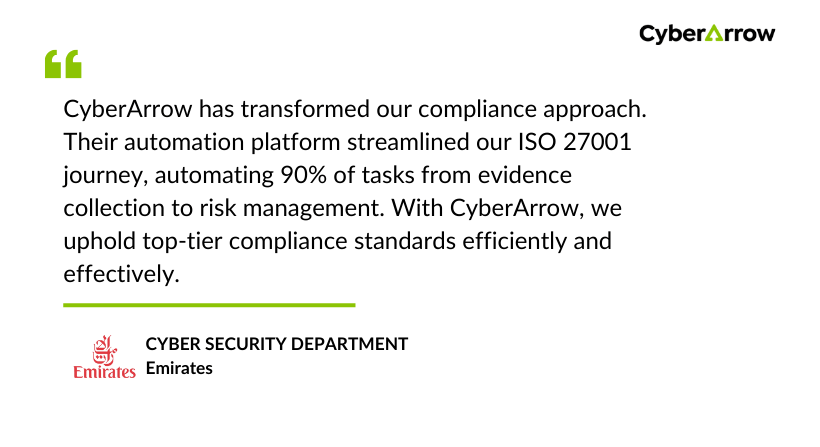
See what global brands like Emirates has to say about CyberArrow GRC: