


What is baiting in cyber security?
Cybercriminals are smart. They know how to use human curiosity and temptation to trick people into giving away sensitive data or infecting systems. One of the oldest and sneakiest tricks they use is called baiting.
In this blog, we will explain what baiting is in cyber security, how it works, real-life examples, types of baiting attacks, and most importantly, how to protect yourself and your organization from it.
We’ll also share how the CyberArrow Awareness Platform can help your company build a strong human firewall with automated training. Let’s dive in.
- What is baiting in simple words?
- How does baiting work?
- Why is baiting so dangerous
- Real-life example of baiting
- Types of baiting attacks
- Signs you might be facing a baiting attack
- How to protect yourself and your organization from baiting
- Why CyberArrow Awareness Platform is the best defense against baiting
- Final thoughts
What is baiting in simple words?
Baiting is a social engineering attack where cybercriminals trick people by offering something tempting or interesting, the “bait,” in exchange for access to their computer, network, or personal data.
The bait could be:
- A free USB drive.
- A fake software download.
- A video or file that promises something exciting.
- A job offer or a free prize.
However, once the person takes the bait, their system gets infected with malware or ends up on a fake website that steals their credentials.
How does baiting work?
The baiting attack usually follows this pattern:
- Temptation: The attacker offers something that looks attractive, like free software, music, or devices.
- Interaction: The target clicks a link, downloads a file, or plugs in a USB stick.
- Infection or theft: Malware is installed, or the user is asked to give up login info.
- Access gained: The attacker now has control of the data to cause damage or spread more attacks.
It’s like putting cheese in a mousetrap. The mouse thinks it’s a snack—but it’s actually a trick.
Why is baiting so dangerous
Baiting works so well because it uses human emotions, curiosity, greed, urgency, or helpfulness. Even smart people fall for baiting attacks if they aren’t trained.
Here’s why it’s dangerous:
- Malware can spread quickly once the device is connected to the network.
- Attackers can steal passwords, financial data, or company secrets.
- It’s hard to detect without proper training or protection tools.
- It often opens the door for bigger attacks like ransomware or data breaches.
Real-life example of baiting
One famous case of baiting happened when cyber security researchers dropped USB sticks in parking lots outside corporate offices. Each USB had malicious software inside.
Shockingly, over 60% of employees plugged the USB into their work computers just to see what was inside.
In many of those cases, the fake USB could have given hackers full access to internal systems.
This shows how a small mistake by one employee can lead to a big cyber security disaster.
Quick link: What is adware in cyber security?
Types of baiting attacks
There are different forms of baiting. Let’s look at the most common ones.
1. Physical baiting
- Involves physical devices like USB drives, CDs, or DVDs.
- Often dropped in public places like lobbies, bathrooms, elevators, or parking lots.
- Once inserted into a computer, they install malware silently.
Example: A USB labeled “2025 Employee Bonuses” found in a break room.
2. Digital baiting
- Delivered through emails, websites, ads, or pop-ups.
- Offers fake downloads, games, or videos in exchange for access.
Example: A pop-up says, “Download this free antivirus software.” But the software is actually a virus.
3. Online giveaways or free trials
- Looks like a promotion or gift, but it’s a trick to install malware or steal data.
- Common on fake websites or scam emails.
Example: “Win a new iPhone—just click here!” You click, and a keylogger is installed.
4. Job or investment baiting
- Targets people on platforms like LinkedIn or WhatsApp.
- Offers fake job interviews or investment opportunities that lead to phishing or malware.
Example: “Get paid $500 per day working from home. Download our app to start.”
Signs you might be facing a baiting attack
Knowing what to look for can save you or your company. Watch out for:
⚠️ Suspicious “free” offers with no clear source.
⚠️ USB devices lying around in public areas.
⚠️ Pop-ups asking to download unknown software.
⚠️ Unexpected emails with attachments or strange links.
⚠️ People asking you to plug something into your computer.
⚠️ Websites offering gifts that seem “too good to be true”.
If it feels shady or too generous, it probably is a trick.
How to protect yourself and your organization from baiting
Here are simple but powerful ways to protect against baiting attacks:
Never plug in unknown devices
Always treat unknown USB drives or other storage devices as dangerous, even if they seem harmless.
Don’t download from untrusted sources
Use official app stores or vendor websites. Avoid free software that pops up in ads.
Use endpoint protection tools
Install antivirus software and firewall protection on every device.
Block USB ports (if not needed)
On corporate devices, IT teams can disable USB ports or use USB access control tools.
Train your team with CyberArrow Awareness Platform
CyberArrow Awareness Platform helps employees learn about social engineering, phishing, baiting, and more through automated cyber security awareness training.
Quick link: What is a Trojan? Types & prevention
Why CyberArrow Awareness Platform is the best defense against baiting
Technology alone can’t stop baiting. You need a trained team that knows how to recognize and avoid social engineering tricks. That’s where CyberArrow Awareness Platform comes in.
It’s designed to build “human firewalls” for your employees who can protect your company from inside.
With CyberArrow Awareness Platform, you get:
- Automated cyber security awareness training: Engaging videos and bite-sized lessons for employees at all levels.
- Simulated phishing and baiting tests: Send fake baiting attacks and track who falls for them. Great for learning.
- Real-time reporting & risk scoring: Know how ready your team is and where improvements are needed.
- Role-based learning paths: Train your IT staff, HR, finance, and execs with content that fits their job.
- Multilingual support: Train teams across different regions and languages.
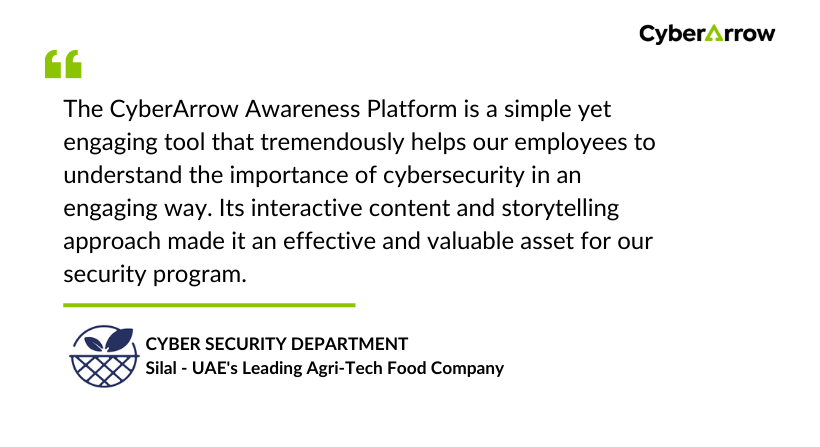
Read how CyberArrow awareness platform increased security awareness among Silal’s employees.
See what Silal has to say about CyberArrow Awareness Platform:
Final thoughts
Baiting is one of the most deceptive tricks in cyber security. It plays on human emotions to sneak into systems and cause serious damage. Whether it’s a USB drive left in a hallway or a free download online, baiting can affect anyone, not just tech users.
The good news? Training and awareness are your best protection. That’s why more and more companies are using CyberArrow Awareness Platform to protect their teams and build strong, cyber-aware cultures.
With the right knowledge, your employees become your first line of defense, not your weakest link.
