

What is the US Data Privacy Framework (USDP)? How to achieve USDP certification?
Data privacy is one of the biggest concerns for businesses and individuals in today’s digital world. With increasing cyber threats and stricter regulations, organizations must comply with data privacy laws to ensure personal information is collected, stored, and processed securely.
The US Data Privacy Framework (USDP) is a system that helps businesses follow privacy standards and protect customer data. It aligns with key global privacy laws such as the General Data Protection Regulation (GDPR) and the California Consumer Privacy Act (CCPA).
In this guide, we’ll explore what the USDP is, why it matters, and how businesses can achieve USDP certification. We’ll also explain how CyberArrow GRC can help automate compliance and simplify the certification process.
What is the US Data Privacy Framework (USDP)?
The US Data Privacy Framework (USDP) is a set of guidelines designed to help organizations protect consumer data and follow privacy regulations. It provides a structured approach to handling personal information, ensuring businesses comply with both US and international privacy laws.
USDP helps companies manage data securely while maintaining transparency, accountability, and legal compliance. Organizations that follow this framework build customer trust and reduce the risk of regulatory fines.
Who needs to follow the USDP?
Any organization that collects, processes, or stores personal data of US consumers should comply with the USDP framework. This includes businesses in:
- Technology and software
- Healthcare and pharmaceuticals
- Finance and banking
- E-commerce and retail
- Marketing and advertising
USDP applies to both small businesses and large enterprises that deal with sensitive customer information.
Key Principles of USDP
The US Data Privacy Framework is based on several core principles that businesses must follow:
1. Transparency
Organizations must clearly explain their data collection and usage policies to consumers. This includes disclosing what data is collected, why it’s collected, and how it will be used.
2. Data security
Businesses must apply strong security measures to protect sensitive data. This includes encryption, access controls, and regular security audits.
3. Accountability
Organizations are responsible for ensuring that employees and third-party vendors comply with USDP guidelines. Regular monitoring and reporting are required.
4. Consumer rights
Consumers must have the right to:
- Access their personal data.
- Request corrections to inaccurate data.
- Delete their personal information if needed.
5. Data minimization
Companies should only collect the data they actually need to avoid unnecessary risks.
Steps to achieve USDP certification
USDP certification proves that a company follows strict data privacy practices. Here’s how businesses can achieve certification:
Step 1: Conduct a privacy audit
Before applying for certification, businesses must review their current data privacy policies and identify any gaps in compliance. A privacy audit helps determine:
- What personal data is collected?
- How is data stored and protected?
- Who has access to consumer data?
Step 2: Implement privacy policies and security measures
Organizations must establish strong privacy policies that align with USDP guidelines. This includes:
- Updating privacy notices to clearly explain data usage.
- Applying encryption and access controls to secure sensitive information.
- Creating a data breach response plan to handle security incidents.
Step 3: Train employees on data privacy
Employees must be trained on:
- Handling customer data safely.
- Recognizing privacy risks.
- Following proper data protection protocols.
Regular training sessions ensure that all staff members understand their role in protecting user data.
Step 4: Conduct a Privacy Impact Assessment (PIA)
A Privacy Impact Assessment (PIA) helps businesses identify and reduce risks associated with data processing. This includes:
- Reviewing data collection practices.
- Identifying potential security weaknesses.
- Implementing corrective measures.
Step 5: Work with a USDP certification body
Organizations must undergo a formal audit conducted by a recognized certification body. The audit includes:
- Reviewing compliance policies.
- Testing security controls.
- Verifying adherence to USDP principles.
Once the organization meets all USDP requirements, it will receive an official USDP certification.
Step 6: Maintain ongoing compliance
USDP compliance is an ongoing process. Organizations must:
- Monitor privacy policies regularly.
- Update security practices to match evolving threats.
- Conduct periodic audits to ensure continued compliance.
How CyberArrow GRC simplifies USDP compliance
Achieving and maintaining USDP compliance manually can be time-consuming and complex. CyberArrow GRC simplifies the process by providing an automated compliance management solution.
Why choose CyberArrow GRC?
- Automated compliance management: CyberArrow GRC automates compliance tracking, risk assessments, and reporting.
- Cross-framework compliance: Manage multiple frameworks (ISO 27001, ISO 27701, PCI DSS, GDPR, SOC 2, etc.) alongside USDP.
- Real-time risk monitoring: Detect privacy risks before they become security threats.
- Security awareness training: Train employees on data privacy best practices using CyberArrow’s built-in awareness platform.
- Fast implementation: Businesses can quickly set up compliance measures with minimal effort.
Hundreds of global brands trust CyberArrow GRC for managing their compliance needs.
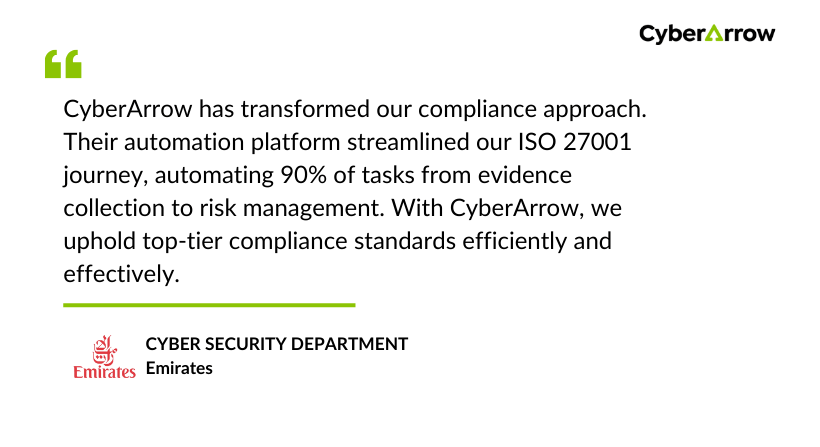
See what global brands like Emirates have to say about CyberArrow GRC:
Conclusion
The US Data Privacy Framework (USDP) is essential for organizations that handle consumer data. Achieving USDP certification proves that a business follows strong data privacy practices, helping build customer trust and regulatory compliance.
However, managing compliance manually can be challenging. With CyberArrow GRC, businesses can automate the entire USDP certification process and ensure long-term compliance with multiple frameworks, including ISO 27001, ISO 27701, PCI DSS, GDPR, and SOC 2.
FAQs
Is USDP certification mandatory for businesses?
No, USDP certification is not legally required, but it is highly recommended for organizations handling consumer data. It helps businesses demonstrate compliance with privacy laws, build customer trust, and avoid potential legal issues.
How long does it take to achieve USDP certification?
The time required for USDP certification depends on the organization’s existing data privacy practices. On average, it can take a few weeks to several months, depending on factors like policy implementation, employee training, and audit preparation.
How does USDP compare to GDPR?
USDP and GDPR both focus on data privacy and security, but GDPR is a European regulation with stricter requirements, such as the right to be forgotten and data portability. USDP aligns with GDPR principles but is tailored for organizations operating in the United States.
