What is tailgating in cyber security? Prevent physical breaches
In a world where online threats capture most headlines, many organizations overlook a significant security risk that starts right at the front door: tailgating. This seemingly innocent act can lead to serious consequences.
Tailgating in cyber security refers to the unauthorized entry of individuals into secure areas by closely following someone who has legitimate access. This can lead to data breaches, theft, or damage to sensitive information. Many employees may not even realize they’re putting their organization at risk by being too trusting of others.
In this blog, we’ll explore what tailgating is, how it poses a threat to cyber security, and what measures you can implement to prevent it. By understanding and addressing this issue, you can help protect your organization and maintain a secure environment.
What is tailgating in cyber security?
In cyber security, tailgating refers to an attack where someone gains physical access to a restricted area by following closely behind an authorized person. The unauthorized individual typically tricks or takes advantage of the authorized person’s access without their knowledge or permission. Unlike high-tech hacks, tailgating doesn’t require any complex tools or skills, making it a simple but highly effective method for breaching an organization’s security.
How does tailgating work?
A common scenario of tailgating involves an attacker pretending to forget their access card and politely asking someone to hold the door open for them. Once inside, they can access sensitive areas, steal equipment, or infect networks with malware.
Attackers often look for opportunities where:
- Employees are distracted
- Security protocols aren’t strictly enforced
- There is trust in the physical environment
Tailgating relies on human error and social engineering. This makes it difficult to detect and prevent, especially in workplaces where employees may not be trained to question someone’s access.
Why is tailgating a security risk?
Tailgating poses a significant threat to cyber security because it bypasses all the high-tech defenses that organizations put in place, such as firewalls, encryption, and intrusion detection systems. The attacker’s goal is often to gain access to a secure network or system, either by stealing devices or installing malware.
Key risks include:
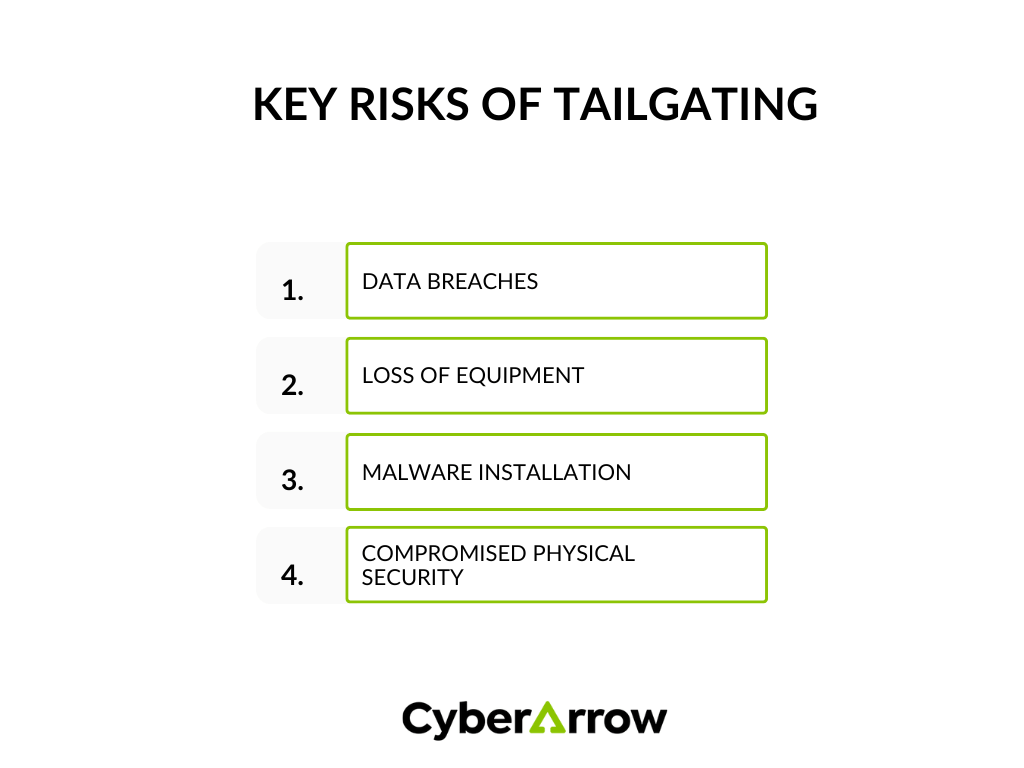
- Data breaches: Once inside, attackers can access sensitive customer or company data.
- Loss of equipment: Expensive devices, laptops, or even servers can be physically stolen.
- Malware installation: Attackers might plug in USB devices containing malware to infect networks.
- Compromised physical security: Once inside, an attacker can explore the entire facility, leading to long-term security weaknesses.
Common tailgating scenarios
Here are some real-world examples where tailgating could occur:
- Office entrances: An attacker waits by the front door of an office and follows an employee in after they unlock the door.
- Parking lots: Someone follows a company employee through a gated parking entrance and parks without proper authorization.
- Restricted areas: In hospitals or government buildings, tailgating into areas that house sensitive data can give attackers access to critical information.
The impact of tailgating on businesses
The impact of a tailgating incident can be devastating for businesses. Financial losses, legal consequences, and damage to reputation are just a few examples. Additionally, businesses may face regulatory penalties if data is compromised due to poor security practices.
For example:
- Financial loss: Stolen devices, compromised data, or ransomware infections can lead to significant financial loss. A single incident can cost a business thousands, if not millions, in damage.
- Regulatory penalties: Many industries, like healthcare and finance, are required to comply with strict security standards. A tailgating incident that leads to a breach may result in heavy fines under regulations like GDPR, HIPAA, or PCI DSS.
- Reputation damage: Customers and partners may lose trust in your business if they believe their data isn’t safe, which can harm long-term business relationships.
Effective strategies to prevent tailgating
To prevent tailgating, businesses need to combine strong physical security with comprehensive training for employees. Here are some of the most effective strategies:
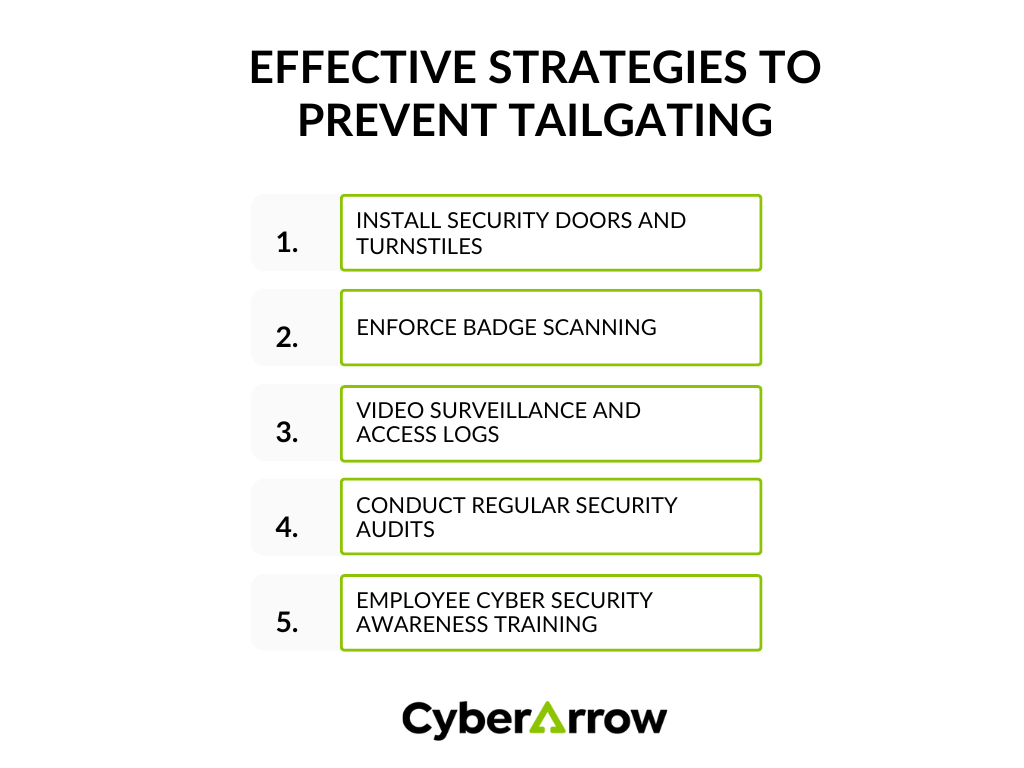
1. Install security doors and turnstiles
One of the easiest ways to prevent tailgating is to install security doors, turnstiles, or mantraps. These systems only allow one person to pass through at a time and require proper authentication.
2. Enforce badge scanning
Make it a policy that every individual must scan their badge or identification before entering a secure area, even if the door is held open for them. Remind employees never to hold doors open for others unless they can confirm the person is authorized.
3. Video surveillance and access logs
Cameras near entry points can help monitor tailgating activity. Additionally, keep detailed access logs that track who enters and exits each secure area.
4. Conduct regular security audits
Perform regular audits to assess the effectiveness of your security systems. These audits should include reviewing logs, checking camera footage, and testing physical barriers to ensure they are working as expected.
5. Employee cyber security awareness training
Train employees on the importance of physical security as part of your overall cyber security strategy. They should be educated on:
- Recognizing tailgating attempts
- Understanding the risks of allowing unauthorized access
- Reporting suspicious activity
Tailgating prevention starts with awareness, and employees are your first line of defense against these attacks.
Automating cyber security awareness with CyberArrow
Preventing tailgating attacks and other physical security threats requires constant vigilance and training. With CyberArrow Awareness Platform, you can automate your security training programs, ensuring your employees are always aware of the latest threats, including tailgating.
Why choose CyberArrow Awareness Platform?
- Automate security training: Run ongoing training programs with minimal effort.
- Real-time reports: Monitor employee progress and identify gaps in awareness.
- Comprehensive modules: Phishing simulations, tailgating awareness, and more.
- Easy integration: Seamlessly integrate CyberArrow Awareness Platform into your existing systems.
A leading financial services firm implemented CyberArrow Awareness Platform to educate employees on preventing tailgating attacks. With automated training and phishing simulations, the firm saw a 70% decrease in security incidents and significantly improved compliance with internal policies.
See what our clients have to say about CyberArrow Awareness Platform: