

What is FinTech compliance? How to maintain it?
Fintech compliance is an increasingly important aspect of the financial industry. As the fintech industry continues to grow and evolve, so does the need for regulatory compliance. Fintech companies were initially under-regulated in many countries, but regulations have been adapted to cater to their unique needs as they became more mainstream.
However, with fintech typically operating across multiple jurisdictions and subject to the same intense regulation as traditional financial institutions, compliance can be a challenge. This is especially true for banks and credit unions that partner with fintech to access innovative technology.
In this article, we’ll explore fintech compliance, why it matters, and some best practices every financial professional should know to ensure their fintech partnerships comply with new and old regulations.
Quick link: What is penetration testing?
What is FinTech compliance?
Fintech compliance is the adherence to regulatory laws that govern new business models and technologies in the financial industry. It refers to the processes and policies fintech companies implement to ensure their operations comply with applicable laws, regulations, and industry standards. This may involve managing risks associated with data privacy, cyber security, and consumer protection.
Two widely recognized industry standards that apply to fintech companies are the Payment Card Industry Data Security Standard (PCI DSS) and the General Data Protection Regulation (GDPR).
- PCI DSS – outlines security requirements for companies that handle credit card data.
- GDPR – governs the collection, use, and storage of personal data for companies operating in the European Union.
Here are some key reasons why fintech compliance matters:
- Legal & regulatory requirements: Fintech companies are subject to a range of legal and regulatory requirements, such as the GDPR, which vary by jurisdiction. Compliance ensures companies adhere to these requirements and avoid costly fines and penalties.
- Data privacy: Protecting data privacy is crucial in fintech development, as non-compliance with fintech data privacy regulations can result in hefty fines of up to 4% of a company’s revenue in some European Union countries. Therefore, fintech companies must implement robust security measures to prevent data breaches and maintain regulatory compliance.
- Cyberattacks: Both traditional banks and fintech companies are prime targets for cyberattacks. Regulatory bodies have developed fintech-centric laws like PCI DSS to protect consumers and promote secure financial transactions. In addition to implementing strong cyber security measures, fintech companies must comply with these laws to maintain regulatory compliance.
- Maintaining trust: Compliance with regulatory requirements is a key factor in maintaining the trust of customers and investors. By demonstrating a commitment to compliance and responsible business practices, fintech companies can build a strong reputation and attract new customers and investors.
Best practices to maintain compliance in FinTech industry
Here are some of the best practices to maintain Fintech Compliance:
- Stay updated on regulatory requirements. Stay informed about the regulatory changes and updates to ensure you stay updated with the latest rules and guidelines. This can be achieved by joining industry associations, attending conferences, and following regulatory updates.
- Establish a compliance program: Have a compliance program outlining policies, procedures, and controls to ensure compliance with regulations. The program should be comprehensive and address all risks associated with the business.
- Conduct risk assessments: Run regular risk assessments to identify risk areas and develop strategies to mitigate those risks. Risk assessments should be conducted on an ongoing basis and consider the changing nature of the business and the regulatory environment.
- Implement strong data privacy and security practices: If you handle sensitive data, you must have strong data privacy and security practices to protect customer information. These practices should include data encryption, secure storage, and access controls.
- Train employees on compliance: All employees should receive training on compliance requirements and the importance of following them. Ensure conducting ongoing training so that your employees stay updated with the latest compliance requirements.
- Conduct internal audits: Regular internal audits can help you identify areas of non-compliance and develop strategies to address them. Audits should be conducted by an independent third party to ensure objectivity.
- Partner with compliance experts: You can also partner with compliance experts or invest in an automated compliance platform like CyberArrow to navigate the complex regulatory landscape. Such platforms make it easy for you to manage fintech compliance.
Quick link: 6 cyber security challenges in FinTech
FAQs
What is meant by compliance in fintech?
Compliance in fintech refers to the processes and policies that fintech companies implement to ensure their operations comply with applicable laws, regulations, and industry standards. This may involve managing data privacy, cyber security, and consumer protection risks.
What areas of compliance should fintech companies consider?
The areas of compliance fintech companies should consider include the following.
- The General Data Protection Regulation (GDPR)
- Data security compliance
- PCI DSS
What are the 4 major risks in fintech?
Fintech companies face unique risks in four major areas: regulation, cyber security, financial and business, and reputation. They must navigate a complex regulatory environment, anticipate cyber security threats, balance innovation with operational risks, address investor risks, and manage reputational risks to preserve consumer confidence. Compliance with cyber risk management frameworks can make fintech companies and their customers more secure.
Automate FinTech compliance with CyberArrow GRC
As the regulatory landscape in the financial technology sector continues to evolve, staying compliant can be both complex and time-consuming. In this blog, we’ve explored the importance of maintaining compliance and the key components every FinTech business must focus on.
However, manually managing compliance processes can slow down operations and increase the risk of errors. That’s where CyberArrow GRC can make a difference, providing an automated and efficient solution for FinTech compliance.
Why choose CyberArrow GRC for FinTech compliance?
- Automated compliance: CyberArrow automates up to 90% of compliance activities, making it easier to meet standards like PCI DSS, GDPR, and others relevant to FinTech.
- Cross-standard integration: Simplify your compliance with various frameworks by mapping and integrating across multiple standards using one platform.
- Real-time monitoring: Track your compliance status in real-time, ensuring you stay ahead of any regulatory changes or requirements.
- Audit-ready documentation: Automatically collect and organize the necessary documentation, simplifying the audit process and reducing manual effort.
See what Emirates have to say about CyberArrow GRC:
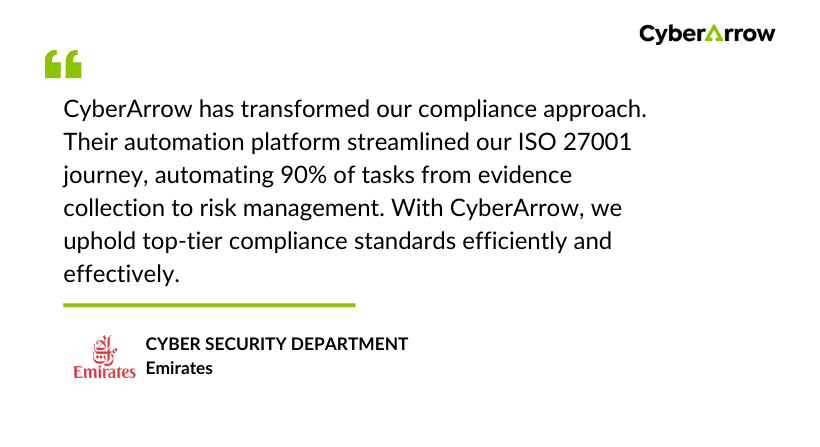
A FinTech company successfully used CyberArrow GRC to automate its compliance with PCI DSS and GDPR, reducing manual work by 80%. The automated system not only tracked compliance in real-time but also provided detailed audit-ready reports, ensuring the company was always prepared for external assessments.
