


What is corporate governance? Governance meaning
In the world of business, corporate governance plays a key role in shaping how companies operate. But what exactly is corporate governance, and why is it important? If you’re looking to understand the concept and its benefits, this blog will guide you through the essentials of corporate governance.
By the end, you’ll also discover how tools like CyberArrow GRC can simplify corporate governance processes and ensure compliance.
What is corporate governance?
Corporate governance is the system of rules, practices, and processes used to direct and control a company. It defines how decisions are made, who makes them, and how the interests of all stakeholders such as shareholders, employees, and customers are protected.
Simply put, corporate governance ensures that a company is run ethically, transparently, and responsibly.
Key elements of corporate governance
Corporate governance is built on four core principles:
- Accountability: Companies must be answerable to their stakeholders for their actions and decisions.
- Transparency: Open communication and accurate reporting are vital to gaining stakeholder trust.
- Fairness: Treating all stakeholders equally ensures balanced decision-making.
- Responsibility: Organizations must act in the best interests of their stakeholders and society.
Quick link: What is corporate compliance?
Why is corporate governance important?
Good corporate governance is essential for businesses of all sizes. Here’s why:
1. Builds trust
Strong governance demonstrates accountability and transparency, which builds trust among stakeholders.
2. Reduces risk
Clear rules and ethical practices minimize the chances of fraud, corruption, or mismanagement.
3. Attracts investors
Investors are more likely to support companies with strong governance systems.
4. Improves decision-making
Governance ensures decisions are based on accurate information and ethical practices.
5. Strengthens reputation
Companies with strong governance gain a positive reputation, helping them stand out in the market.
Key components of corporate governance
Corporate governance involves several components that work together to create a framework for ethical and effective management.
1. Board of directors
The board is responsible for overseeing the company’s operations and ensuring management aligns with stakeholder interests.
2. Shareholder rights
Corporate governance protects the rights of shareholders and ensures they have a voice in important decisions.
3. Regulatory compliance
Companies must adhere to laws and regulations to maintain ethical practices.
4. Risk management
A strong governance framework identifies and manages risks effectively.
5. Internal controls
These ensure financial reporting is accurate and that operational processes are efficient.
Corporate governance in practice
Corporate governance isn’t just about theory, it’s about applying principles in real-world scenarios.
Example: Good governance
A company that holds regular board meetings, discloses financial data transparently, and allows shareholders to vote on key decisions showcases strong corporate governance.
Example: Poor governance
A company that hides financial details, avoids regulatory compliance, or prioritizes profits over ethics is an example of poor governance, which can lead to scandals and financial losses.
Benefits of corporate governance
When implemented effectively, corporate governance provides several benefits:
- Financial growth: Transparent reporting attracts investors, leading to better access to capital.
- Reduced legal issues: Compliance with laws and regulations minimizes penalties and lawsuits.
- Employee satisfaction: A fair and ethical workplace culture improves employee morale and retention.
- Customer loyalty: Ethical practices and transparency strengthen customer trust.
Challenges in corporate governance
While corporate governance has many benefits, it also comes with challenges:
- Complex regulations: Adhering to different laws across regions can be difficult.
- Costly implementation: Setting up governance frameworks may require significant investment.
- Resistance to change: Some companies struggle to adopt new governance practices.
How CyberArrow GRC simplifies corporate governance
Managing corporate governance manually can be time-consuming and prone to errors. This is where tools like CyberArrow GRC come in.
CyberArrow GRC offers automated solutions for governance, risk, and compliance, helping companies streamline their governance practices.
Key features of CyberArrow GRC:
- Automated compliance tracking: Monitor compliance with regulations in real time, reducing the risk of non-compliance.
- Centralized governance dashboard: Manage all governance tasks from a single platform, ensuring transparency and accountability.
- Risk assessment tools: Identify, analyze, and mitigate risks efficiently.
- Customizable reporting: Generate reports to meet stakeholder and regulatory requirements effortlessly.
- Collaboration features: Engage stakeholders and ensure everyone is on the same page with integrated communication tools.
Why Choose CyberArrow GRC?
- Save time and resources: Automate governance processes to focus on strategic goals.
- Ensure compliance: Stay up to date with regulatory changes without the hassle of manual tracking.
- Improve decision-making: Access accurate data and insights for better governance.
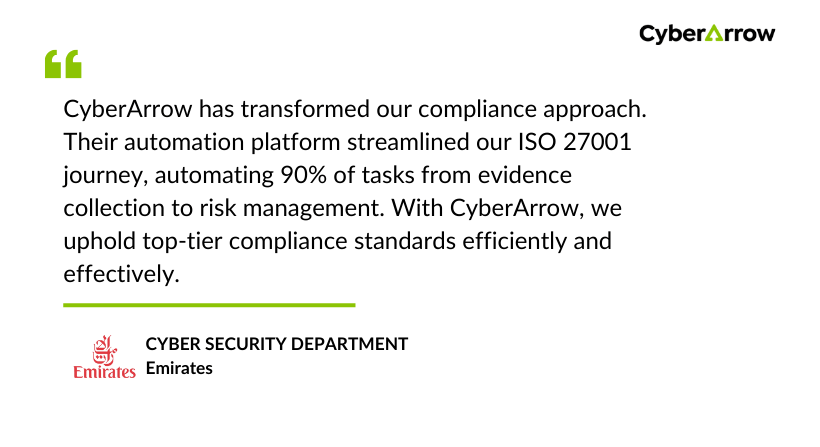
See what our clients have to say about CyberArrow GRC:
FAQs
What is the primary purpose of corporate governance?
Corporate governance ensures that a company is run ethically, transparently, and responsibly. Its primary purpose is to safeguard the interests of stakeholders, including shareholders, employees, and customers, while fostering trust and long-term growth.
How does corporate governance benefit small businesses?
Corporate governance helps small businesses establish clear rules and practices, improving decision-making, building trust with stakeholders, and ensuring compliance with regulations. This can attract investors and create a strong foundation for growth.
Can corporate governance be automated?
Yes, corporate governance processes can be automated using tools like CyberArrow GRC, which streamline compliance tracking, risk management, and reporting. Automation saves time, reduces errors, and ensures a more efficient governance framework.
