

What is cloud security compliance? A brief guide
As businesses rapidly move their data and applications to the cloud, ensuring security and compliance has become a top priority. But what exactly does cloud security compliance mean, and why is it crucial for organizations?
Navigating the complex world of compliance standards while protecting sensitive data in the cloud can feel overwhelming. Failure to comply can lead to legal issues, data breaches, and a loss of trust.
This guide simplifies cloud security compliance, explaining its importance, common standards, and how tools like CyberArrow GRC can help streamline the process.
- What is cloud security compliance?
- Why cloud security compliance is essential
- Key cloud security compliance standards
- 1. ISO/IEC 27001
- 2. SOC 2 (System and Organization Controls 2)
- 3. GDPR (General Data Protection Regulation)
- 4. HIPAA (Health Insurance Portability and Accountability Act)
- 5. CCPA (California Consumer Privacy Act)
- 6. FedRAMP (Federal Risk and Authorization Management Program)
- 7. PCI DSS (Payment Card Industry Data Security Standard)
- Steps to Achieve Cloud Security Compliance
- Challenges in cloud security compliance
- How CyberArrow GRC simplifies cloud security compliance
- FAQs
What is cloud security compliance?
Cloud security compliance refers to adhering to laws, regulations, and standards designed to protect data stored in and accessed from cloud environments. It ensures that organizations use the cloud responsibly, securing sensitive information while meeting legal and contractual obligations.
Compliance is not just a legal requirement—it’s a trust-building measure that demonstrates your commitment to safeguarding customer data.
Why cloud security compliance is essential
- Data protection: Ensures sensitive data is encrypted, stored, and transmitted securely.
- Risk mitigation: Reduces the chances of data breaches and cyberattacks.
- Customer trust: Builds confidence in your organization’s ability to handle data responsibly.
- Legal adherence: Avoids penalties by complying with local and international regulations.
Key cloud security compliance standards
Let’s explore some of the most recognized cloud security compliance standards:
1. ISO/IEC 27001
This international standard focuses on managing information security risks. ISO/IEC 27001 provides a framework to establish, implement, maintain, and improve an Information Security Management System (ISMS). For cloud environments, ISO/IEC 27017 offers additional controls tailored to cloud security.
2. SOC 2 (System and Organization Controls 2)
SOC 2 is designed for service providers storing customer data in the cloud. It ensures that organizations meet five trust service principles: security, availability, processing integrity, confidentiality, and privacy.
3. GDPR (General Data Protection Regulation)
This European regulation governs how organizations handle personal data of EU citizens. For cloud service providers, GDPR emphasizes data protection measures, breach notifications, and lawful data processing.
4. HIPAA (Health Insurance Portability and Accountability Act)
For healthcare organizations using cloud services, HIPAA mandates strict security measures to protect electronic Protected Health Information (ePHI). This includes encryption, access controls, and audit trails.
5. CCPA (California Consumer Privacy Act)
The CCPA focuses on protecting the privacy rights of California residents. Cloud service providers must ensure transparency, allow users to control their data, and protect it against unauthorized access.
6. FedRAMP (Federal Risk and Authorization Management Program)
FedRAMP is mandatory for cloud service providers working with U.S. federal agencies. It sets strict security requirements for cloud products and services to ensure consistent data protection.
7. PCI DSS (Payment Card Industry Data Security Standard)
Organizations handling cardholder data in the cloud must comply with PCI DSS. It outlines technical and operational requirements to protect payment data from theft and fraud.
Steps to achieve cloud security compliance
1. Understand relevant standards
Identify which compliance standards apply to your organization based on your industry, location, and customer base.
2. Conduct risk assessments
Evaluate your cloud infrastructure for vulnerabilities, misconfigurations, and potential threats.
3. Implement security controls
Adopt encryption, access management, firewalls, and other security measures required by the relevant standards.
4. Monitor and audit regularly
Continuously monitor your cloud environment for compliance violations and conduct regular audits to ensure adherence to standards.
5. Train your team
Educate employees about cloud security practices and their role in maintaining compliance.
Challenges in cloud security compliance
Achieving cloud security compliance can be challenging due to:
- Dynamic cloud environments: Constantly changing configurations and data flows.
- Lack of expertise: Understanding and implementing compliance standards can be complex.
- Manual processes: Traditional methods of tracking compliance are time-consuming and prone to errors.
How CyberArrow GRC simplifies cloud security compliance
CyberArrow GRC is a powerful platform designed to automate and simplify governance, risk, and compliance processes, including cloud security compliance.
Here’s how CyberArrow GRC can help:
1. Automated compliance monitoring
CyberArrow GRC continuously monitors your cloud environment, ensuring all controls are in place and aligned with applicable standards. It identifies and alerts you to any compliance gaps in real time.
2. Centralized dashboard
The platform provides a comprehensive view of your compliance status, allowing you to track progress, generate reports, and manage tasks from a single interface.
3. Customizable frameworks
CyberArrow GRC supports multiple compliance frameworks, including ISO 27001, SOC 2, HIPAA, and GDPR. It adapts to your organization’s unique requirements.
4. Streamlined risk assessments
The platform automates risk assessments by identifying threats and vulnerabilities in your cloud environment. It also suggests appropriate controls to mitigate these risks.
5. Effortless audit preparation
CyberArrow GRC ensures that all your compliance documentation is organized and audit-ready, saving you time and reducing stress during audits.
6. Collaboration across teams
Assign tasks, track progress, and ensure accountability across departments using CyberArrow GRC’s intuitive collaboration tools.
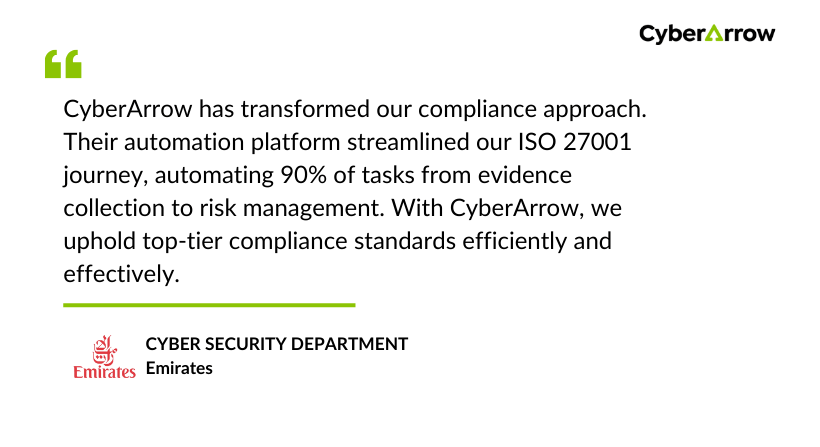
See what Emirates has to say about CyberArrow GRC:
FAQs
What is cloud security compliance and why is it important?
Cloud security compliance refers to adhering to legal, regulatory, and industry standards for protecting data stored in cloud environments. It ensures your organization uses the cloud responsibly, safeguarding sensitive information, reducing risks, and building trust with customers.
What are the key cloud security compliance standards organizations should follow?
Some of the most important standards include:
FedRAMP for federal agencies’ cloud security requirements.
ISO/IEC 27001 for information security management.
SOC 2 for data security and privacy in cloud environments.
GDPR for protecting personal data of EU residents.
HIPAA for securing healthcare information.
How can CyberArrow GRC help with cloud security compliance?
CyberArrow GRC automates compliance processes, monitors cloud environments in real time, and supports multiple frameworks like ISO 27001 and SOC 2. It simplifies risk assessments, prepares you for audits, and provides centralized management for compliance tasks, making compliance easier and more efficient.
