


What is cloud data protection? Its role in cyber security compliance
In today’s digital-first world, data is the backbone of every business. However, as more organizations move their operations to the cloud, ensuring data security becomes a pressing concern. Hackers, data breaches, and compliance failures aren’t just risks—they’re real threats that can cripple businesses. So, how can you ensure that your data in the cloud is protected while meeting cyber security compliance requirements?
This is where cloud data protection comes into play. In this guide, we’ll explore what cloud data protection is, why it’s critical for cyber security compliance, and how organizations can simplify compliance through automation using tools like CyberArrow GRC.
What is cloud data protection?
Cloud data protection involves safeguarding your data stored in the cloud from unauthorized access, breaches, or loss. It includes a range of technologies and practices designed to ensure the confidentiality, integrity, and availability of data stored in cloud environments.
With businesses relying on cloud services for everything from storage to communication, ensuring data security in the cloud is no longer optional—it’s essential.
Why is cloud data protection important?
1. Increased cyber security threats
Cyberattacks targeting cloud environments are rising. From phishing attempts to sophisticated ransomware attacks, organizations must proactively secure their cloud data.
2. Regulatory compliance requirements
Governments and industry bodies have implemented stringent data protection regulations. Failing to comply with these standards can lead to hefty fines, reputational damage, and loss of customer trust.
3. Data privacy concerns
Your customers expect you to protect their sensitive information. Ensuring robust cloud data protection builds trust and strengthens your brand reputation.
Quick link: What is hybrid cloud security?
Cyber security standards ensuring cloud data protection
To manage the risks associated with cloud environments, various cyber security standards and frameworks have been established. These standards help organizations implement consistent practices for protecting cloud data.
1. ISO/IEC 27001
The ISO/IEC 27001 standard focuses on information security management systems (ISMS). It provides a framework for securing data, including those stored in the cloud, and ensuring compliance with global best practices.
2. General Data Protection Regulation (GDPR)
GDPR enforces strict rules for protecting personal data, particularly for organizations operating in or serving customers in the European Union. Cloud providers and their clients must implement measures to safeguard customer data in compliance with GDPR.
3. NIST Cybersecurity Framework
The National Institute of Standards and Technology (NIST) outlines a cyber security framework that includes guidelines for protecting cloud-stored data. It covers key aspects like risk management, data encryption, and continuous monitoring.
4. HIPAA (Health Insurance Portability and Accountability Act)
For organizations in the healthcare sector, HIPAA mandates stringent controls to protect patient data, including data stored in the cloud.
5. Cloud Security Alliance (CSA) Frameworks
The CSA provides best practices for ensuring cloud data security. Its Cloud Controls Matrix (CCM) offers specific controls to address various aspects of cloud data protection.
Best practices for cloud data protection
1. Encrypt your data
Encryption ensures that even if unauthorized parties access your data, they cannot decipher it without the encryption key.
2. Implement access controls
Restrict access to sensitive data. Use multi-factor authentication (MFA) and role-based access controls (RBAC) to ensure that only authorized personnel can access critical information.
3. Monitor and audit
Regularly monitor your cloud environment for suspicious activity and audit your systems to ensure compliance with security standards.
4. Train your team
Human error is a common cause of data breaches. Regular cyber security training helps employees recognize threats and follow best practices for cloud security.
5. Use trusted cloud service providers
Choose cloud providers with a strong track record of implementing robust security measures and adhering to global compliance standards.
The role of cloud data protection in cyber security compliance
Cloud data protection isn’t just about safeguarding data—it’s also about meeting compliance requirements. Many cyber security regulations mandate specific controls for protecting cloud data. Organizations that fail to meet these requirements face legal and financial consequences.
1. Building a secure cloud environment
Standards like ISO 27001 and GDPR require organizations to implement measures such as data encryption, access controls, and continuous monitoring. These measures ensure a secure cloud environment and reduce the risk of data breaches.
2. Demonstrating accountability
Compliance frameworks emphasize accountability. Organizations must demonstrate that they’ve taken proactive steps to secure their cloud data and comply with relevant standards.
3. Reducing risk exposure
By implementing cloud data protection measures, organizations can minimize their risk exposure, ensuring they remain resilient in the face of cyber threats.
Quick link: What is SWG (Secure Web Gateway)?
How CyberArrow GRC simplifies cloud data protection compliance
Ensuring cloud data protection while managing multiple compliance requirements can be overwhelming.
CyberArrow GRC helps organizations:
- Streamline compliance processes: Automate the documentation and monitoring of compliance requirements.
- Centralize compliance efforts: Manage multiple frameworks like ISO 27001, GDPR, and NIST in one platform.
- Enhance security posture: Stay aligned with cyber security standards, reducing the risk of non-compliance.
- Continuous monitoring: Keep track of compliance requirements in real time to ensure nothing slips through the cracks.
With CyberArrow GRC, organizations can save time, reduce manual efforts, and ensure they meet all their cloud data protection requirements seamlessly.
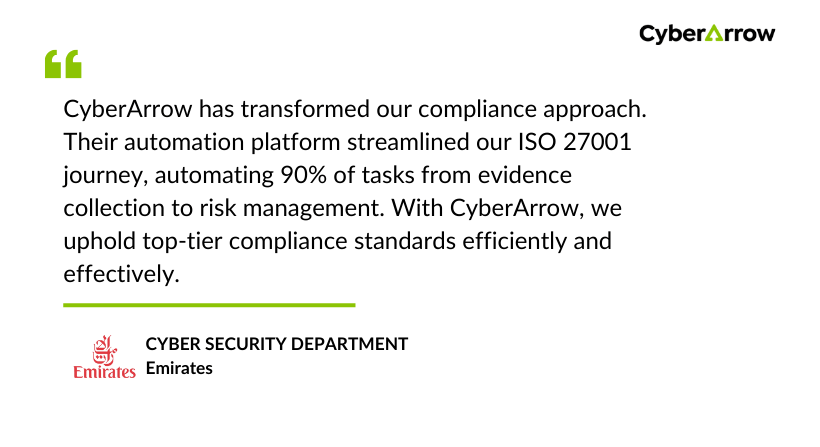
Read how Emirates enhanced Information Security by automating ISO 27001 with CyberArrow GRC.
See what Emirates has to say about CyberArrow GRC:
FAQs
What is cloud data protection?
Cloud data protection involves safeguarding data stored in the cloud from unauthorized access, breaches, or loss through encryption, access controls, and continuous monitoring.
Why is cloud data protection important for compliance?
It helps organizations meet cyber security standards like ISO 27001, GDPR, and NIST, reducing the risk of penalties and improving their security posture.
How can CyberArrow GRC help with cloud data protection compliance?
CyberArrow GRC automates compliance processes, centralizes efforts across multiple frameworks, and ensures organizations stay aligned with relevant standards, saving time and reducing manual work.
