Top remote compliance jobs: Build a career from anywhere
Are you tired of long commutes and the 9-to-5 grind? Do you want a career that allows flexibility while staying relevant in today’s digital world? Remote compliance jobs might be the perfect answer!
These jobs let you work from anywhere, helping businesses stay within legal regulations and industry standards.
In this blog, we will explore the most popular remote compliance roles, the skills you need, and how to get started.
What are remote compliance jobs?
Remote compliance jobs ensure companies follow laws, regulations, and industry standards. Compliance is crucial in industries like healthcare, finance, and tech. Businesses must follow certain rules to avoid fines, protect data, and maintain their reputation.
With more companies embracing remote work, compliance roles are now available to people worldwide. Working remotely as a compliance officer or analyst lets you perform critical tasks without being tied to an office.
Why choose a remote compliance job?
The demand for compliance professionals is rising, and remote jobs in this field come with many benefits:
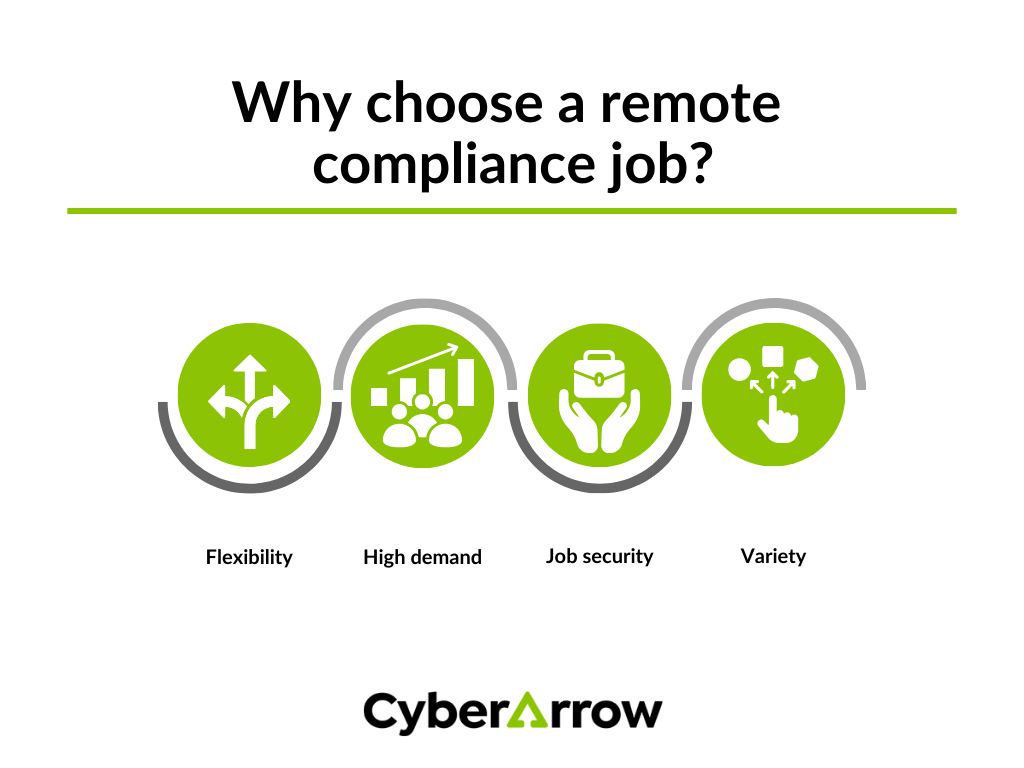
- Flexibility: Work from anywhere in the world, set your hours, and enjoy a better work-life balance.
- High demand: Companies need compliance experts, making this field highly in demand.
- Job security: As businesses expand, the need for compliance will only grow.
- Variety: You can work in different industries, including finance, healthcare, and technology.
Top remote compliance jobs
Let’s dive into some of the most popular remote compliance jobs available today.
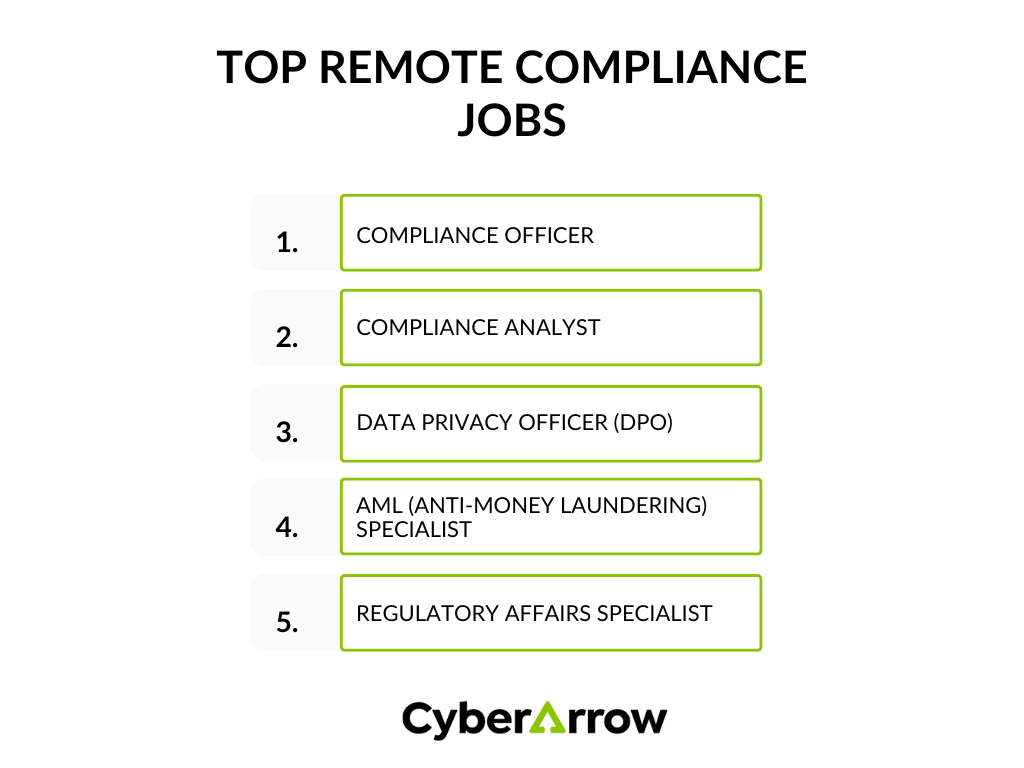
1. Compliance officer
Job role: A compliance officer ensures that a company adheres to all the legal and regulatory standards in its industry. They often create and enforce policies that help businesses avoid violations.
Key responsibilities:
- Creating and updating compliance policies.
- Conducting audits and risk assessments.
- Training employees on compliance practices.
Skills needed:
- Strong understanding of industry laws and regulations.
- Excellent communication and analytical skills.
Why it’s ideal: Remote compliance officers can easily perform tasks from home, making it an attractive role for those seeking flexibility.
2. Compliance analyst
Job role: A compliance analyst reviews processes and reports to ensure the company follows necessary regulations. They focus on data analysis, reviewing procedures, and risk management.
Key responsibilities:
- Researching regulatory changes.
- Analyzing internal data for potential risks.
- Collaborating with other departments to enforce compliance.
Skills needed:
- Data analysis and interpretation skills.
- Keen attention to detail.
Why it’s ideal: Compliance analysts can often do their work online, making it perfect for remote work. All you need is a strong internet connection and access to company databases.
3. Data Privacy Officer (DPO)
Job role: As businesses deal with sensitive information, data privacy officers ensure that companies comply with data protection laws like GDPR. A DPO oversees how a company handles personal data.
Key responsibilities:
- Monitoring data privacy compliance.
- Reporting any data breaches.
- Ensuring the company follows GDPR and other privacy regulations.
Skills needed:
- Expertise in data protection laws like GDPR.
- Strong analytical and organizational skills.
Why it’s ideal: The role is largely administrative, so you can fulfill most responsibilities remotely. Many organizations now hire DPOs on a contractual basis, making remote work even more common.
4. AML (Anti-Money Laundering) specialist
Job role: An AML specialist monitors financial transactions to identify suspicious activities like money laundering. They are essential in industries like banking and finance, where regulations are strict.
Key responsibilities:
- Reviewing and analyzing financial transactions.
- Preparing reports on suspicious activities.
- Ensuring the company adheres to financial laws.
Skills needed:
- Knowledge of financial laws and regulations.
- Strong investigative skills and attention to detail.
Why it’s ideal: Many banks and financial institutions hire remote AML specialists to keep their operations compliant with financial regulations.
5. Regulatory affairs specialist
Job role: Regulatory affairs specialists work primarily in healthcare and pharmaceuticals. Their job is to ensure that products meet the necessary legal and regulatory requirements before they hit the market.
Key responsibilities:
- Filing applications for product approvals.
- Ensuring products comply with healthcare regulations.
- Working with government agencies for regulatory approvals.
Skills needed:
- Knowledge of healthcare regulations and FDA guidelines.
- Strong organizational and project management skills.
Why it’s ideal: The work of a regulatory affairs specialist involves document review and research, which can easily be done remotely.
Skills you need for remote compliance jobs
Before jumping into a remote compliance role, there are certain skills and qualifications that will help you succeed.
1. Understanding of regulatory requirements
You must have a deep understanding of the laws and regulations that govern your industry. Whether it’s data privacy or anti-money laundering, knowing the ins and outs of compliance standards is essential.
2. Analytical skills
Compliance work often involves sifting through data, identifying risks, and understanding complex legal language. Strong analytical skills are a must.
3. Communication skills
As a remote worker, you’ll need to communicate clearly and effectively with other team members through email, video calls, and messaging platforms.
4. Attention to detail
When working in compliance, even small mistakes can lead to big problems for a company. Attention to detail is critical in this field.
5. Adaptability
Working remotely comes with unique challenges, such as time zone differences and limited face-to-face interaction. Being adaptable will help you manage these challenges effectively.
How to get started in remote compliance jobs
If you’re ready to pursue a career in remote compliance, follow these steps to get started:
- Get certified: Many compliance roles require certifications like Certified Compliance & Ethics Professional (CCEP) or Certified Information Privacy Professional (CIPP).
- Gain experience: Start with internships or entry-level positions to build experience.
- Build your network: Join online compliance forums, attend virtual conferences, and network with other professionals.
- Create a remote-ready resume: Highlight any previous remote work experience and relevant certifications on your resume.
- Stay up-to-date: Regulations are constantly evolving, so keep yourself informed by reading industry news and attending webinars.
Quick link: Explore careers at CyberArrow
Use CyberArrow GRC to simplify compliance
Looking to streamline your compliance efforts? Whether you’re in finance, healthcare, or tech, automating compliance can save you time and reduce errors.
CyberArrow GRC helps companies simplify their compliance processes by automating risk assessments, evidence collection, and regulatory reporting. If you’re hiring for remote compliance jobs or managing a team, CyberArrow Awareness Platform makes security training easier through automated training modules.
Key features of CyberArrow:
- Automates risk assessments and compliance reporting.
- Supports multiple standards like GDPR, ISO 27001, and SOC 2.
- Offers real-time tracking and reporting dashboards.
- Enables easy integration with third-party tools.
A mid-sized tech firm struggling with GDPR compliance used CyberArrow to automate 80% of its processes, saving hours of manual work each week. Their remote compliance team was able to manage everything from risk assessments to employee training from different locations around the world.
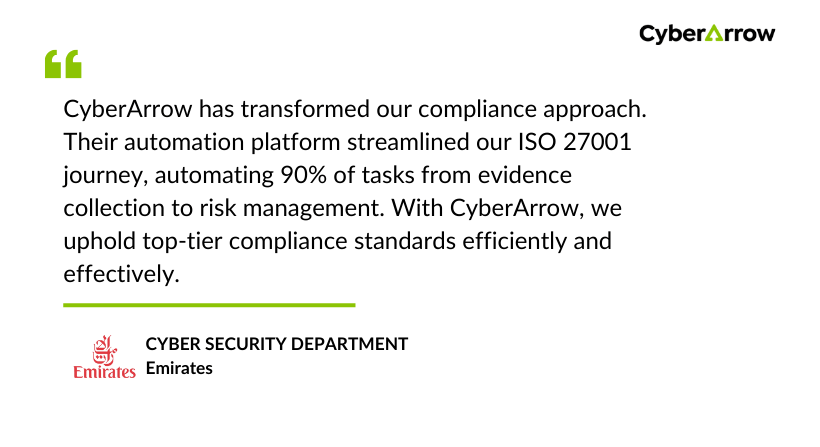
See what Emirates has to say about CyberArrow GRC: