

To whom does PCI-DSS apply? A comprehensive guide
With the rise of digital payments, securing payment card data has become a critical concern for businesses worldwide. Cybercriminals continuously target payment systems, making it essential for organizations to implement strict security measures. This is where PCI DSS (Payment Card Industry Data Security Standard) comes into play.
But who needs to comply with PCI DSS? Does it apply only to large corporations, or do small businesses also need to follow it? What about third-party service providers?
In this guide, we will answer these questions in detail, providing a comprehensive breakdown of who must comply with PCI DSS and how organizations can streamline their compliance process.
- What is PCI DSS?
- Who needs to comply with PCI DSS?
- 1. Merchants that accept payment cards
- 2. Service Providers Handling Payment Data
- 3. Banks and financial institutions
- 4. Third-party vendors and software providers
- 5. Businesses that store payment card data
- 6. Healthcare organizations handling payment transactions
- 7. Government agencies and public institutions accepting card payments
- What happens if a business fails to comply with PCI DSS?
- How to achieve PCI DSS compliance efficiently
- Conclusion
What is PCI DSS?
The Payment Card Industry Data Security Standard (PCI DSS) is a set of security requirements designed to protect payment card data. It was developed by the PCI Security Standards Council (PCI SSC), which includes major payment brands like Visa, Mastercard, American Express, Discover, and JCB.
PCI DSS aims to reduce payment card fraud by ensuring businesses implement strong security measures when processing, storing, or transmitting cardholder data.
Compliance with PCI DSS is not optional, it is a mandatory requirement for all entities that handle payment card transactions.
Who needs to comply with PCI DSS?
PCI DSS applies to a broad range of organizations, including businesses of all sizes, financial institutions, and third-party service providers. Below are the key groups that must comply:
1. Merchants that accept payment cards
If your business accepts Visa, Mastercard, American Express, Discover, or JCB, you must comply with PCI DSS. This applies to all merchants, regardless of size or industry.
Types of merchants that need PCI DSS compliance:
- Retail stores (brick-and-mortar businesses)
- E-commerce websites
- Restaurants and cafes
- Hotels and travel agencies
- Subscription-based services
- Healthcare providers that process patient payments
Even if a merchant outsources payment processing to a third party, they are still responsible for ensuring compliance.
2. Service Providers Handling Payment Data
Businesses that process, store, or transmit payment card data on behalf of others must comply with PCI DSS.
Examples of service providers that must comply:
- Payment processors and gateways
- Cloud hosting providers handling payment transactions
- Fraud detection and prevention services
- Encryption and tokenization service providers
- Managed IT security providers
- Call centers processing payments over the phone
These providers play a critical role in securing payment transactions and must ensure their systems comply with PCI DSS standards.
3. Banks and financial institutions
Banks and financial institutions that issue payment cards or process card transactions must adhere to PCI DSS regulations. This includes:
- Card-issuing banks
- Acquiring banks that process payments for merchants
- Credit unions and payment facilitators
- ATM operators handling payment card transactions
Since financial institutions deal with large volumes of payment data, they are prime targets for cyberattacks, making PCI DSS compliance essential.
4. Third-party vendors and software providers
Organizations that develop, manage, or maintain payment processing software must also comply with PCI DSS.
Examples of third-party vendors that must comply:
- Point-of-sale (POS) system providers
- E-commerce payment plugins and checkout solutions
- Payment terminal manufacturers
- Mobile payment application developers
These vendors must ensure their products meet PCI DSS security requirements to prevent data breaches and unauthorized access to cardholder information.
5. Businesses that store payment card data
Any organization that stores cardholder data—even temporarily—must comply with PCI DSS. This includes:
- Membership-based services that save payment details for recurring billing
- Subscription platforms that auto-charge customers
- Billing departments in organizations that process card payments
Storing payment card data increases security risks, making PCI DSS compliance crucial for preventing fraud.
6. Healthcare organizations handling payment transactions
Hospitals, clinics, and healthcare providers that process patient payments via credit or debit cards must comply with PCI DSS.
Why is PCI DSS important in healthcare?
- Prevents financial fraud targeting patients
- Protects payment card data from cyberattacks
- Ensures compliance with healthcare security regulations
Even if healthcare organizations comply with HIPAA (Health Insurance Portability and Accountability Act), they must also adhere to PCI DSS when processing card payments.
7. Government agencies and public institutions accepting card payments
Government entities that accept credit card payments for taxes, fines, fees, or other services must comply with PCI DSS.
Examples include:
- Tax departments processing online payments
- Public transport systems using contactless payments
- Government portals accepting card transactions
Compliance ensures that citizens’ payment data remains secure and prevents cybercriminals from exploiting vulnerabilities in public payment systems.
Quick link: Download your free PCI DSS checklist!
What happens if a business fails to comply with PCI DSS?
Failure to comply with PCI DSS can result in severe consequences, including:
1. Financial penalties
Non-compliant businesses may face fines ranging from $5,000 to $500,000 per month, depending on the severity of non-compliance.
2. Increased fraud risk
Without PCI DSS compliance, businesses are more vulnerable to data breaches and payment fraud.
3. Loss of payment processing privileges
Payment processors and acquiring banks may suspend or terminate services for non-compliant businesses.
4. Reputational damage
A security breach due to non-compliance can destroy customer trust and lead to revenue loss.
5. Lawsuits and legal consequences
Organizations may face lawsuits, regulatory action, and liability claims in case of a data breach.
How to achieve PCI DSS compliance efficiently
Ensuring PCI DSS compliance can be complex, especially for businesses handling large volumes of payment transactions. However, automation can simplify the process and reduce the risk of human errors.
Why choose CyberArrow GRC for PCI DSS compliance?
CyberArrow GRC (Governance, Risk, and Compliance) is a powerful automation platform designed to help businesses meet PCI DSS requirements seamlessly.
- Automated compliance management: Reduce manual effort by automating PCI DSS controls.
- Real-time security monitoring: Get instant alerts on security risks and compliance gaps.
- Simplified audit preparation: Generate compliance reports easily for audits.
- Centralized compliance dashboard: Monitor your compliance status in real time.
- Scalability for any business size: Whether you’re a small business or a large enterprise, CyberArrow GRC scales with your needs.
By using CyberArrow GRC, businesses can achieve and maintain PCI DSS compliance effortlessly, reducing security risks while ensuring seamless payment security.
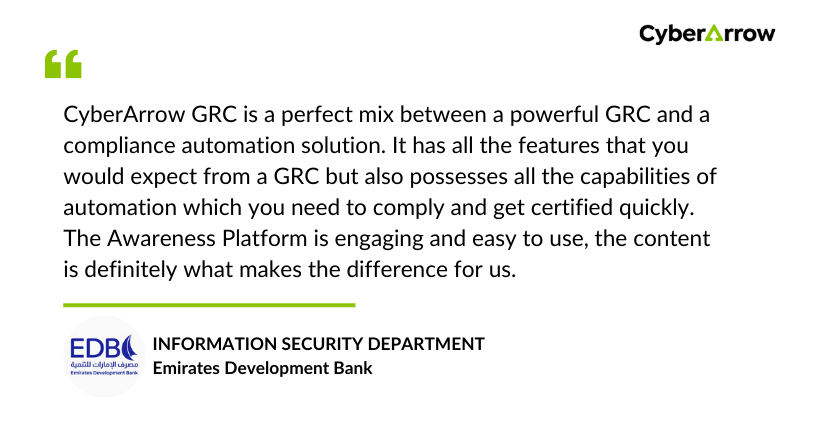
See what our clients have to say about CyberArrow GRC:
Conclusion
PCI DSS compliance applies to all businesses and service providers handling payment card transactions. Whether you are a merchant, financial institution, software provider, or government agency, securing payment data is a legal and financial necessity.
Failure to comply with PCI DSS can result in financial penalties, reputational damage, and loss of payment processing privileges. To streamline compliance, organizations should leverage automation tools like CyberArrow GRC to ensure continuous monitoring, risk management, and simplified audits.
