

PCI DSS certification cost: A detailed guide
The cost of achieving PCI DSS certification is one of the biggest concerns for businesses that handle credit card payments. With global credit card fraud losses exceeding $32 billion in 2021 and rising every year, compliance with the Payment Card Industry Data Security Standard (PCI DSS) is no longer optional. Organizations that fail to comply face penalties, higher transaction fees, and even the loss of the ability to process card payments.
But how much does PCI DSS certification actually cost? The answer depends on your company’s size, transaction volume, and the approach you take to compliance.
This guide breaks down the key cost factors, average price ranges, hidden expenses, and how you can cut costs with automation platforms like CyberArrow GRC.
- What is PCI DSS certification?
- Why PCI DSS certification costs matter
- Key factors that influence PCI DSS certification cost
- Average PCI DSS certification costs
- Hidden costs of PCI DSS certification
- How long does PCI DSS certification take?
- How to reduce PCI DSS certification costs
- CyberArrow GRC: The smarter way to PCI DSS certification
- Conclusion
- FAQs
What is PCI DSS certification?
PCI DSS certification is proof that an organization meets the security requirements outlined by the PCI Security Standards Council. These requirements protect cardholder data and reduce the risk of payment fraud.
The certification process involves:
- Defining the scope of cardholder data environments.
- Implementing technical and operational controls.
- Collecting evidence to prove compliance.
- Undergoing an assessment by a Qualified Security Assessor (QSA) or completing a Self-Assessment Questionnaire (SAQ), depending on your merchant level.
Once certified, organizations receive a Report on Compliance (ROC) or an Attestation of Compliance (AOC).
Why PCI DSS certification costs matter
PCI DSS certification is not just about avoiding fines; it impacts your brand reputation, customer trust, and ability to operate.
- Non-compliance fines range from $5,000 to $100,000 per month, depending on the violation and card network.
- According to the Verizon Payment Security Report, organizations that maintain PCI DSS compliance reduce their chance of a data breach by 50%.
- The average cost of a data breach is $4.45 million (IBM 2023 report), far higher than the cost of certification.
Investing in PCI DSS certification is far cheaper than dealing with the consequences of non-compliance.
Key factors that influence PCI DSS certification cost
1. Merchant level
PCI DSS categorizes organizations into four levels based on annual transaction volume:
- Level 1: More than 6 million transactions – requires an on-site QSA-led audit.
- Level 2: 1–6 million transactions – SAQ or QSA-led audit.
- Level 3: 20,000 to 1 million e-commerce transactions – SAQ required.
- Level 4: Fewer than 20,000 e-commerce transactions – SAQ required.
Level 1 merchants face the highest costs since they must hire a QSA for annual audits.
2. Scope of compliance
The more systems, networks, and applications involved in processing cardholder data, the higher the cost. Many organizations invest in scope reduction techniques (such as tokenization and network segmentation) to lower compliance expenses.
3. Internal resources
Some companies rely on internal staff for compliance, while others hire consultants. The cost of pulling employees away from daily work to manage audits can be significant.
4. Technology and tools
Companies often need new firewalls, encryption solutions, monitoring systems, or security awareness programs to meet PCI DSS requirements.
5. Audit and assessment fees
Hiring a QSA is one of the largest expenses. Fees depend on the complexity of the environment and range widely.
Average PCI DSS certification costs
Based on industry research and real-world cases, here are the average ranges:
- Small businesses (Level 4 merchants): $5,000 – $10,000 annually,
- Medium-sized businesses (Level 2–3 merchants): $25,000 – $50,000 annually.
- Large enterprises (Level 1 merchants): $100,000 – $500,000+ annually.
These costs include assessments, tools, remediation, and ongoing monitoring. However, they can rise significantly if breaches or compliance failures occur.
Download your free PCI DSS checklist and assess your PCI DSS audit-readiness in minutes.
Download now
Hidden costs of PCI DSS certification
Beyond direct expenses, there are hidden costs companies often overlook:
- Remediation projects: Updating systems, encrypting data, or redesigning networks.
- Employee training: Staff must be trained to follow PCI DSS requirements.
- Documentation: Creating and maintaining security policies and audit evidence.
- Ongoing compliance maintenance: PCI DSS is not a one-time project. Organizations must conduct quarterly scans, annual assessments, and continuous monitoring.
The Ponemon Institute found that businesses spend over $3.5 million annually on compliance activities, highlighting the hidden workload involved.
How long does PCI DSS certification take?
The timeline also impacts cost. Smaller businesses may become compliant in 3–6 months, while large enterprises often take 12–18 months. The longer the process, the more staff hours and consultant fees are consumed.
How to reduce PCI DSS certification costs
- Reduce scope: Use tokenization and encryption to keep fewer systems in PCI scope.
- Use automation tools: Replace spreadsheets with automated compliance platforms.
- Integrate compliance across frameworks: PCI DSS shares controls with ISO 27001, SOC 2, and NIST. Cross-mapping can save time and money.
- Continuous monitoring: Proactive monitoring reduces last-minute fixes during audits.
- Policy templates: Start with auditor-approved templates to avoid wasted time.
CyberArrow GRC: The smarter way to PCI DSS certification
Manual PCI DSS compliance is slow, expensive, and prone to errors. This is where CyberArrow GRC changes the game.
Zero-touch audit
CyberArrow automates evidence collection across systems, eliminating manual screenshots and spreadsheets. Auditors can access real-time dashboards, reducing preparation time by up to 90%.
Automated policy management
CyberArrow provides ready-to-use, auditor-approved PCI DSS policies. You can customize, distribute, and track acknowledgments seamlessly.
Cross-framework mapping
Controls in PCI DSS are mapped to ISO 27001, SOC 2, and NIST. This ensures compliance work is reusable across frameworks, saving resources.
Continuous monitoring
With 80+ integrations, CyberArrow tracks compliance KPIs automatically. You always know your PCI DSS status without manual effort.
Cost efficiency
By cutting audit preparation time, reducing consultant dependency, and preventing compliance gaps, CyberArrow significantly lowers PCI DSS certification costs.
Read how CyberArrow empowered a Fintech startup to automate PCI DSS in 3 weeks.
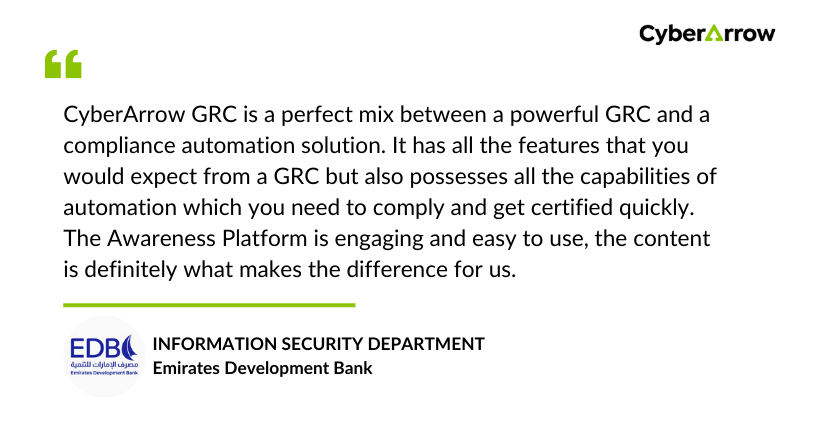
See what our clients have to say about CyberArrow GRC:
Conclusion
PCI DSS certification is one of the most critical investments for businesses that handle payment data. While costs vary depending on company size, scope, and transaction volume, the expense is far less than the financial and reputational damage caused by non-compliance.
Traditional manual methods make PCI DSS certification long, expensive, and stressful. By adopting CyberArrow GRC, organizations can automate evidence collection, streamline audits, and reduce costs while maintaining year-round compliance.
With its zero-touch audit approach, CyberArrow turns PCI DSS certification from a painful yearly burden into a smooth, automated process that saves time and money.
FAQs
How much does PCI DSS certification cost for a small business?
For Level 4 merchants, PCI DSS certification usually costs between $5,000 and $10,000 annually, depending on scope and tools.
Is PCI DSS certification mandatory?
Yes. Any business that stores, processes, or transmits cardholder data must comply with PCI DSS to avoid fines and penalties.
How can CyberArrow GRC reduce PCI DSS certification costs?
CyberArrow GRC automates evidence collection, risk assessments, and cross-framework mapping, reducing consultant fees and manual labor.
How often do organizations need PCI DSS certification?
Certification is required annually, with quarterly scans and continuous monitoring to maintain compliance.
What happens if a company fails PCI DSS certification?
Certification is required annually, with quarterly scans and continuous monitoring to maintain compliance.
