


PCI DSS audit: Requirements and steps to prepare for a PCI audit
The Payment Card Industry Data Security Standard (PCI DSS) is a security standard established to protect cardholder data and prevent security breaches. Organizations must undergo periodic PCI DSS audits to ensure compliance with PCI DSS. However, organizations may find it challenging to achieve and maintain PCI DSS compliance and fail to pass through the PCI DSS audit. By adequately preparing and effectively managing ongoing compliance efforts, security teams can prevent the need for last-minute actions.
But how can your organizations prepare for the PCI DSS audit? Let’s explore in this article.
What is a PCI DSS audit?
A PCI DSS audit is an assessment conducted to evaluate an organization’s compliance with the PCI Data Security Standard. It involves reviewing the security controls, policies, and processes to ensure your organization meets the required standards for protecting cardholder data.
A Qualified Security Assessor (QSA) or an internal auditor performs the audit, thoroughly examining your systems, networks, and practices to verify compliance with PCI DSS requirements.
Requirements for PCI DSS compliance
PCI DSS consists of twelve requirements that organizations handling cardholder data must adhere to. PCI DSS requirements cover various aspects of information security, including network and data security, access control, vulnerability management, and policy enforcement. Organizations should understand the scope of these requirements and ensure they address all relevant areas within their compliance efforts.
Download your free PCI DSS checklist and assess your PCI DSS audit-readiness in minutes.
Download now
A 10-step checklist to prepare for a PCI DSS audit
Preparing for a PCI DSS audit requires a systematic approach. Here are the key steps to help organizations navigate through the preparation process:
- Identify relevant PCI DSS requirements: Start by identifying which PCI DSS requirements apply to your environment and operations. Understanding the specific requirements will provide a clear roadmap for compliance efforts and PCI DSS audit.
- Assess your current compliance status: Conduct an initial assessment to identify existing gaps and deficiencies in managing PCI DSS compliance and assess where your organization stands in maintaining it. This assessment will serve as a baseline to guide remediation efforts.
- Establish an audit preparation team: Assemble a dedicated team responsible for managing the audit process. This team should include representatives from relevant departments, such as IT, security, compliance, and operations.
- Conduct gap analysis & remediation: Perform a detailed gap analysis to identify areas where your organization needs improvement. Once you have identified potential security gaps in your business, develop and implement a remediation plan to address any shortcomings.
- Implement security controls & policies: Implement necessary security controls and policies to meet PCI DSS requirements. This may include network segmentation, encryption, access controls, and monitoring.
- Engage an auditor: Depending on your organization’s level of compliance, it may be necessary to engage an auditor, a certified professional who assesses an organization’s compliance with PCI DSS requirements and provides guidance throughout the audit process. To learn more about PCI DSS compliance levels, visit our blog: A Guide to PCI DSS Compliance Levels.
- Prepare documentation & evidence: Maintain accurate and up-to-date documentation demonstrating compliance with PCI DSS requirements. This includes policies, procedures, network diagrams, system configurations, and evidence of ongoing security practices.
- Conduct internal audits & testing: Perform regular internal audits and testing to validate the effectiveness of security controls and identify any potential weaknesses. This helps ensure that the organization is continuously maintaining compliance.
- Address identified issues: Address any issues or vulnerabilities identified during the internal audit. Implement appropriate remediation measures and validate their effectiveness.
- Finalize a compliance report & documentation: Compile all relevant documentation and evidence to create a comprehensive compliance report. This report will be submitted to the QSA for review and validation.
Best practices for successful PCI DSS audits
In addition to following the steps discussed above, organizations can adopt the following best practices to enhance their PCI DSS audit preparations:
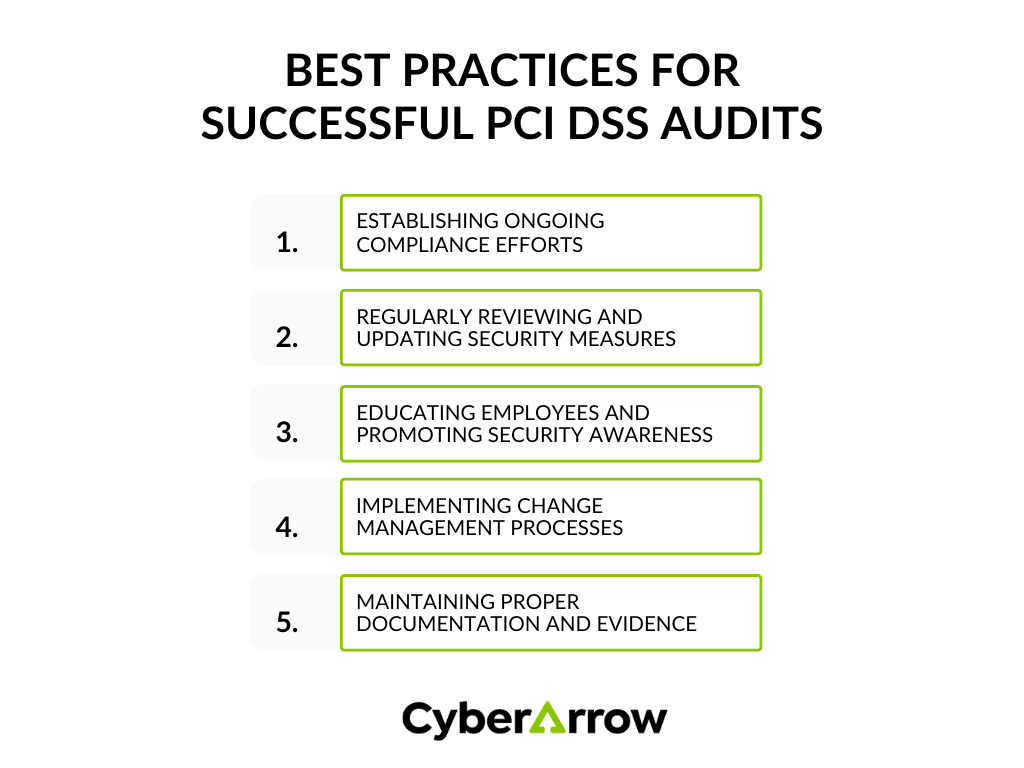
- Establishing ongoing compliance efforts: PCI DSS compliance is not a one-time event. Establish continuous compliance efforts by implementing regular security assessments and monitoring.
- Regularly reviewing and updating security measures: Stay updated with the latest security threats and vulnerabilities. Regularly review and update security measures to ensure they remain effective against emerging risks.
- Educating employees and promoting security awareness: Conduct regular training sessions to educate employees about their roles and responsibilities in maintaining PCI DSS compliance. Promote a culture of security awareness throughout the organization.
- Implementing change management processes: Implement robust change management processes to ensure that any modifications to the network or systems are thoroughly reviewed and comply with PCI DSS requirements.
- Maintaining proper documentation and evidence: Accurate and up-to-date documentation is critical for a successful PCI DSS audit. Maintain a central repository for all relevant documentation and evidence to streamline the audit process.
FAQs
What is a PCI DSS audit?
A PCI DSS audit is an assessment conducted to evaluate an organization’s compliance with the Payment Card Industry Data Security Standard (PCI DSS). It ensures that organizations meet the required security measures to protect cardholder data.
Who needs to undergo a PCI DSS audit?
Any organization that processes, stores, or transmits cardholder data is generally required to undergo a PCI DSS audit. This includes merchants, service providers, and financial institutions.
How often should a PCI DSS audit be conducted?
The frequency of PCI DSS audits depends on the organization’s transaction volume and compliance level. Generally, Level 1 merchants (high transaction volume) require an annual audit, while Level 2, 3, and 4 merchants may undergo audits every one to three years
What should I expect during a PCI DSS audit?
During a PCI DSS audit, a QSA or internal auditor will review your organization’s security controls, policies, and processes. They will assess compliance with the relevant PCI DSS requirements, conduct interviews, and review documentation and evidence.
Experience low-touch PCI DSS audits with CyberArrow GRC
Navigating the complex landscape of PCI DSS audits can pose significant challenges for organizations. The stringent requirements, time-consuming processes, and resource-intensive nature of audits can create hurdles on the path to achieving and maintaining compliance. However, organizations can overcome these challenges with the CyberArrow compliance automation platform and streamline their journey toward PCI DSS compliance.
CyberArrow offers low-touch PCI DSS audits executed by QSAs. The auditor collects evidence from the CyberArrow platform, executes assessments, and fills out PCI DSS forms. With Cyberarrow’s advanced technology, organizations can reduce the manual effort involved in audits and minimize the need for active participation.
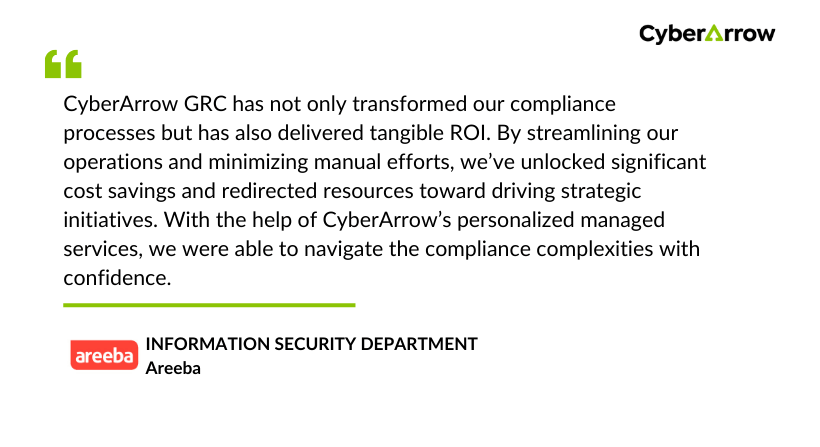
See what our clients have to say about CyberArrow GRC:
Let CyberArrow GRC handle your PCI DSS audits while you liberate valuable resources and focus on core business operations, achieving and maintaining compliance.
