


Cardholder data and its role in PCI DSS compliance
For businesses that process card payments, navigating the intricacies of payment processing, especially regarding data security, can be challenging. Comprehending and adhering to the Payment Card Industry Data Security Standard (PCI DSS) is crucial in properly handling cardholder data.
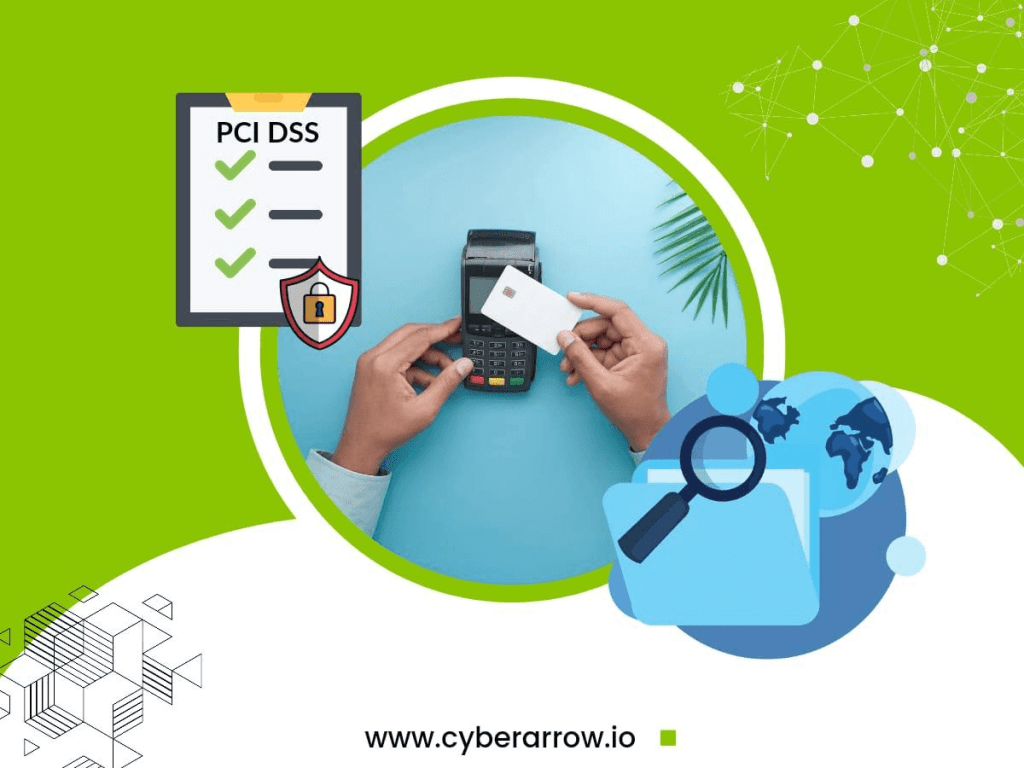
To assist businesses in unraveling the complexities of industry jargon and technical terminology, here is valuable guidance on the precise definition of cardholder data and effective measures to safeguard it, thereby ensuring PCI compliance.
What is cardholder data?
Cardholder data refers to any personally identifiable information (PII) associated with payment cards. It includes the primary account number (PAN), cardholder name, expiration date, service code, and other related data.
- PAN: The Primary Account Number, commonly referred to as PAN, is a unique numerical identifier assigned to an individual’s payment card, such as a credit or debit card.
- PIN: Personal Identification Number (PIN) is a numeric password associated with a payment card used for cardholder verification during certain types of transactions, such as ATM withdrawals or point-of-sale purchases.
- Service code: The service code is a three-digit numeric code encoded on the magnetic stripe of a payment card. It provides information about specific services and features associated with the card, such as transaction authorization requirements, card acceptance locations, and usage restrictions.
This data allows transactions to be processed, making it a prime target for attackers seeking financial gain or identity theft.
Cardholder data may also include EMV chip data and card security codes, which may vary by card brand. Some of them include:
- PAN CVC — card validation code (MasterCard).
- PAN CVC2 — Card Validation Code 2 (MasterCard)
- CAV — card authentication value (JCB).
- CVV — card verification value (Visa and Discover).
- CAV2 — Card Authentication Value 2 (JCB).
- CID — card identification number (American Express and Discover).
- CVV2 — Card Verification Value 2 (Visa).
- CSC — card security code (American Express).
The role of cardholder data in PCI DSS compliance
Cardholder data forms the foundation of PCI DSS compliance, which is essential for maintaining trust in the payment card industry. Compliance ensures that organizations handling cardholder data implement adequate security measures to protect this sensitive information. Failure to comply with PCI DSS standards can result in severe consequences, including financial losses, reputational damage, and legal liabilities.
PCI DSS compliance revolves around protecting sensitive cardholder data from unauthorized access, ensuring its confidentiality, integrity, and availability. Cardholder data is at the core of PCI DSS compliance because it is the primary information that needs to be safeguarded.
The different PCI DSS levels determine the specific compliance requirements for businesses based on their transaction volumes and the potential risks they pose to cardholder data. Moreover, PCI DSS audits are integral to maintaining compliance and ensuring cardholder data security.
Download your free PCI DSS checklist and assess your PCI DSS audit-readiness in minutes.
Download now
Cardholder data security measures
To maintain the integrity and confidentiality of cardholder data, organizations must implement various security measures as part of their PCI DSS compliance efforts. These measures include:
- Encryption and tokenization: Strong encryption techniques, such as secure cryptographic algorithms, are used to render cardholder data unreadable during transmission and storage. Tokenization replaces sensitive data with unique identifiers, reducing the risk associated with storing actual cardholder data.
- Access controls and segregation of duties: Access to cardholder data should only be restricted to authorized personnel. Implementing proper access controls, including user authentication and role-based permissions, minimizes the risk of unauthorized access. Segregation of duties ensures that no single individual has excessive privileges or control over cardholder data.
- Secure storage and transmission: Cardholder data should be stored securely, employing technologies such as firewalls, intrusion detection systems, and file integrity monitoring. When transmitting data over networks, secure protocols like Transport Layer Security (TLS) or Secure Sockets Layer (SSL) should be utilized to protect against interception and unauthorized access.
Compliance challenges and solutions to protect cardholder data
Achieving and maintaining PCI DSS compliance can present challenges to organizations. Some of them include:
- Employee training and awareness: Ensuring employees understand their roles and responsibilities in maintaining data security is crucial. Ongoing training and awareness programs can help address this challenge.
- Secure coding practices: Implementing secure coding practices helps mitigate vulnerabilities in applications that handle cardholder data. Adhering to secure development standards and conducting regular code reviews can minimize security risks.
- Third-party vendor management: Organizations must ensure their third-party vendors adhere to PCI DSS requirements. Contractual agreements should include data security obligations, regular assessments, and audits of vendor compliance.
FAQs
How does cardholder data relate to PCI DSS?
Compliance with PCI DSS is imperative when handling cardholder data, as the PCI SSC outlines. If the PAN is stored, processed, or transmitted, protecting associated data like the cardholder’s name, expiration date, and service code is crucial. These additional elements must be safeguarded in adherence to the security requirements specified in PCI DSS.
Why is cardholder data security important?
Cardholder data security is crucial for several reasons. It helps prevent fraud and identity theft by safeguarding sensitive information. By prioritizing data security, businesses build trust with their customers, which is essential for maintaining strong customer relationships. Additionally, compliance with regulatory requirements, such as PCI DSS, ensures legal and industry compliance.
How does requirement 3 of PCI DSS relate to cardholder data?
Requirement 3 of PCI DSS focuses on protecting stored cardholder data. It includes measures such as masking the primary account number (PAN) when displayed, encrypting PAN when stored, implementing secure cryptographic key management, and restricting access to cardholder data. These requirements aim to ensure the confidentiality and security of stored cardholder information, reducing the risk of unauthorized access and data breaches.
Navigate PCI DSS compliance challenges with CyberArrow GRC
PCI DSS compliance challenges, such as employee training and third-party vendor management, require effective solutions. CyberArrow offers a comprehensive compliance automation platform with a third-party risk management module, enabling organizations to assess and monitor vendor risk.
Additionally, the CyberArrow Awareness Platform provides tailored employee training on compliance and data security. With CyberArrow, businesses can streamline compliance processes, enhance security, and maintain a robust payment card environment. Moreover, organizations can overcome the challenges associated with employee training and vendor risk management, ensuring a strong defense against data breaches and maintaining PCI DSS compliance.
Read also: How CyberArrow empowered a Fintech startup to automate PCI DSS in 3 weeks
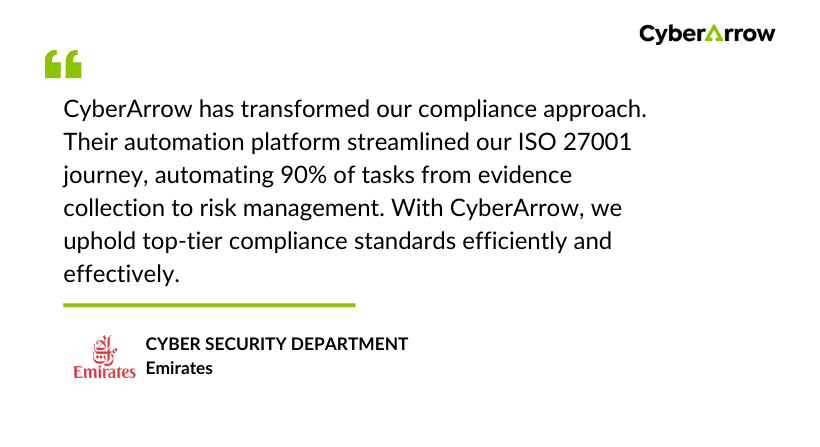
See what Emirates have to say about CyberArrow GRC:
Navigate the PCI DSS compliance challenges and ensure cardholder data security with CyberArrow GRC.
