


What is network security monitoring: Best NSM tools
Modern organizations depend on networks to run applications, support users, and store sensitive information. Because networks carry all business traffic, they are one of the biggest targets for attackers. Cybercriminals use malware, phishing, scanning, and lateral movement to breach systems. Once inside the network, they try to stay hidden.
This is why network security monitoring is important. It provides visibility across network activity so teams can detect threats, respond to incidents, and prevent harmful attacks. Without network security monitoring, suspicious behavior goes unnoticed, and attackers have more time to move deeper into systems.
This detailed guide explains what network security monitoring is, how it works, why it matters, and the best NSM tools used in 2026. The guide also explains how strong GRC platforms like CyberArrow help companies manage security and compliance programs connected to NSM.
- What is network security monitoring?
- Why network security monitoring matters
- How network security monitoring works
- Key benefits of network security monitoring
- Top network security monitoring tools
- Challenges of network security monitoring
- Why NSM must be part of a complete GRC program
- How CyberArrow supports network security monitoring
- Conclusion
- FAQs
What is network security monitoring?
Network security monitoring, also known as NSM, is the practice of collecting and analyzing network data to detect threats, suspicious activity, and security incidents. It helps security teams understand what is happening inside the network at all times.
NSM focuses on:
- Capturing network traffic.
- Logging network events.
- Detecting intrusions.
- Identifying unusual behavior.
- Monitoring communication between devices.
- Alerting teams about possible attacks.
NSM tools help organizations see everything that moves across the network. This includes packets, host activity, DNS queries, files, signatures, anomalies, and metadata.
Network security monitoring strengthens both security operations and incident response.
Why network security monitoring matters
Networks are the foundation of company operations. Without strong visibility, risks increase. NSM helps protect networks in several important ways.
- Network activity changes constantly. NSM helps understand traffic patterns, detect strange behavior, and identify scanning or brute force attempts.
- Attackers often hide inside networks for days or weeks. NSM detects both early signs and long-term suspicious activity.
- Cloud adoption, remote work, and IoT devices create more entry points. NSM gives visibility across all these environments.
- Compliance standards like ISO 27001, SOC 2, PCI DSS, HIPAA, and NIST require monitoring and logging. NSM helps organizations meet these requirements.
- NSM supports incident response by giving clear data about what happened, when it happened, and how attackers moved inside the network.
Network security monitoring is essential for both security and compliance.
How network security monitoring works
NSM focuses on collecting network data, analyzing it, and generating alerts. Below are the core steps used by NSM systems.
1. Data collection
NSM tools collect data from different sources, such as:
- Switches.
- Routers.
- Firewalls.
- Network taps.
- Cloud network logs.
- Endpoint logs.
- DNS servers.
The goal is to gather enough data to understand all communication inside the network.
2. Packet capture
Many NSM tools capture network packets to provide deep visibility.
- Packet capture allows full inspection of headers and payloads.
- It helps detect malware, suspicious commands, or harmful file transfers.
- It gives detailed information that supports investigations.
Packet capture is one of the strongest ways to monitor networks.
3. Log analysis
NSM uses logs to track network events. Logs may include:
- Connection attempts.
- Failed logins.
- DNS requests.
- Firewall events.
- Web traffic.
- Intrusion alerts.
Analyzing logs helps detect patterns that show threats.
5. Anomaly detection
NSM also uses anomaly detection to find unknown threats.
- It analyzes behavior patterns.
- It detects unusual traffic, new connections, or strange activity.
- It identifies issues that signatures may not catch.
Anomaly detection improves the overall security posture.
6. Alerts and reporting
When NSM detects something suspicious, it generates alerts.
- Alerts notify security teams about unusual behavior.
- They can be sent to SIEM platforms, email, or SOC dashboards.
- Reports help teams understand trends over time.
This makes NSM a core part of the security operations workflow.
Key benefits of network security monitoring
Here are the main benefits of using NSM:
- NSM provides deep visibility into all network communication.
- It helps detect attacks early so teams can respond quickly.
- It reduces the chance of hidden activity inside the network.
- It supports investigations by giving clear evidence.
- It improves compliance through logging and monitoring.
- It strengthens the organization’s overall security posture.
These benefits make NSM a required part of modern cyber security programs.
Top network security monitoring tools
Below are some of the most trusted NSM tools used by organizations in 2026. Each tool offers different features to help monitor network activity.
1. Zeek
Zeek is one of the most powerful open source NSM platforms.
- It focuses on network analysis rather than signature detection.
- It generates detailed logs about network behavior.
- It supports custom scripts to detect unusual patterns.
Zeek is widely used in research labs, enterprises, and SOC teams.
2. Suricata
Suricata is a fast and flexible NSM tool.
- It uses signature-based detection and anomaly detection.
- It supports IDS, IPS, and NSM capabilities.
- It can inspect large volumes of traffic in real time.
Suricata is known for strong performance and scalability.
3. Snort
Snort is one of the oldest and most trusted intrusion detection systems.
- It uses signature-based detection.
- It provides strong rules for detecting exploits and malware.
- It is used across many industries.
Snort is popular for its large rule community.
4. Security onion
Security onion is a complete NSM and SOC platform.
- It includes Zeek, Suricata, Elastic, Fleet, and other tools.
- It provides dashboards, packet capture, logs, and alerts.
- It is used for monitoring, threat hunting, and incident response.
Security onion is ideal for organizations that need a full security stack.
5. SolarWinds network performance monitor
SolarWinds focuses on network health and performance, but also supports security.
- It tracks bandwidth usage.
- It detects unusual traffic behavior.
- It supports large enterprise networks.
SolarWinds is strong for organizations with complex network architectures.
6. Palo Alto networks cortex XDR
Cortex XDR combines endpoint and network visibility.
- It detects threats across multiple layers.
- It correlates data from firewalls, endpoints, and networks.
- It supports fast investigation and response.
Cortex XDR is used for unified threat detection.
7. Cisco secure network analytics
Formerly known as Stealthwatch, this tool provides strong network visibility.
- It uses machine learning to detect anomalies.
- It supports cloud, on-premises, and hybrid environments.
- It helps reduce insider threats and lateral movement.
Cisco is trusted by both small and large organizations.
Challenges of network security monitoring
NSM is powerful, but organizations still face challenges:
- Large networks produce huge amounts of data. Teams must manage storage and analysis.
- Encrypted traffic makes deep inspection harder.
- Cloud environments require different monitoring tools.
- Skilled staff is needed to analyze logs and packets.
- NSM tools must integrate with SIEM and SOC platforms.
Despite these challenges, NSM remains necessary for strong cyber security.
Why NSM must be part of a complete GRC program
NSM provides technical visibility, but organizations still need a complete GRC system to manage:
- Controls.
- Risks.
- Policies.
- Evidence.
- Audit requirements.
- Third-party security.
- Compliance workflows.
Security monitoring is only one part of a larger compliance and governance ecosystem.
How CyberArrow supports network security monitoring
CyberArrow GRC complements NSM by providing governance, risk, and compliance support.
Control management
CyberArrow maps NSM activities to frameworks such as ISO 27001, SOC 2, NIST, and PCI DSS.
Risk management
CyberArrow helps teams record risks found through NSM and build treatment plans.
Policy automation
CyberArrow manages network security policies and review schedules.
Evidence tracking
CyberArrow stores logs, screenshots, and audit records for compliance.
Audit readiness
CyberArrow prepares organizations for audits by organizing documents and workflows.
Continuous compliance monitoring
CyberArrow tracks tasks, control performance, and pending work to keep companies compliant all year.
NSM tools protect networks. CyberArrow protects the compliance program that surrounds them.
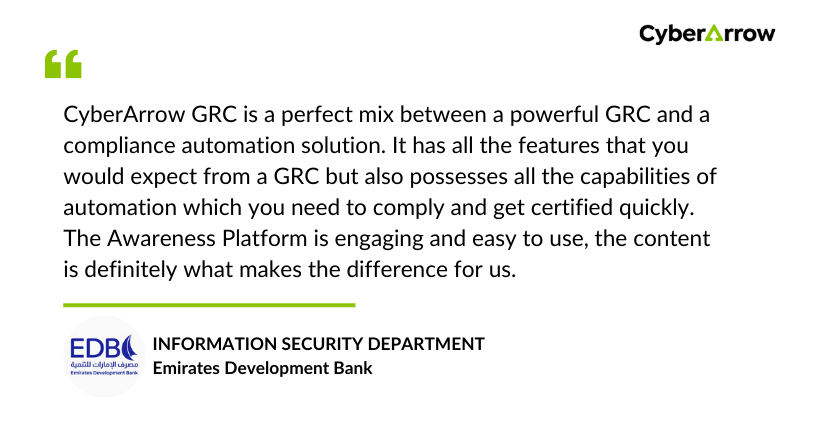
See what our clients have to say about CyberArrow GRC:
Conclusion
Network security monitoring is one of the most important parts of modern cyber security. It provides visibility into traffic, detects threats, and helps teams understand what is happening inside the network. NSM tools like Zeek, Suricata, Snort, Security onion, and others help organizations monitor and protect their systems.
But a strong NSM is only one piece of the larger security puzzle. Organizations also need a complete GRC program to manage risks, controls, policies, and compliance. CyberArrow GRC provides this structure and helps organizations stay audit-ready.
If your organization wants to strengthen security and automate compliance together, CyberArrow GRC is the best solution.
FAQs
What is network security monitoring used for?
Network security monitoring helps detect threats, suspicious traffic, and unusual behavior inside a network. It collects packets, logs, and metadata to give teams visibility and support faster incident response.
What is the difference between NSM and a SIEM?
NSM focuses on network data like packets and traffic analysis. A SIEM collects logs from many systems across the organization. NSM provides deep visibility into network behavior, while a SIEM provides central logging and correlation across multiple sources.
Do NSM tools help with compliance standards?
Yes. NSM tools support compliance for ISO 27001, SOC 2, PCI DSS, HIPAA, and NIST by providing monitoring, logs, alerts, and traffic analysis. They also help organizations meet requirements related to incident detection and security monitoring.
What are the most important features of NSM tools?
Key features include packet capture, intrusion detection, anomaly detection, log analysis, behavioral analytics, real-time alerts, and integration with SIEM and SOC platforms. These features help detect threats early and support investigations.
How does CyberArrow GRC support network security monitoring?
CyberArrow GRC manages the governance and compliance layer around NSM. It tracks controls, risks, policies, evidence, and audit requirements linked to network security. CyberArrow helps organizations turn NSM activities into a complete and audit-ready GRC program.
