


A complete guide to ISO 22320: Requirements & implementation
Emergencies can strike at any time, whether they’re natural disasters, cyber-attacks, or system failures. How prepared are you to handle such disruptions? ISO 22320 offers a clear framework to help organizations respond effectively to these types of incidents.
In this guide, we’ll explore the key requirements of ISO 22320 and how you can implement them. Plus, we’ll show you how CyberArrow GRC can simplify this process, offering automation and cross-mapping features that make compliance easier and more efficient.
What is ISO 22320?
ISO 22320 is an international standard that focuses on emergency management and response. It provides guidelines for organizing and managing an emergency response, ensuring that an organization can handle incidents efficiently while minimizing risks to people, assets, and operations. The standard is a part of the ISO 22300 family, which is designed to support organizations in their business continuity management (BCM) efforts.
ISO 22320 specifies how organizations can establish and maintain procedures to:
- Respond to emergencies and crises.
- Ensure effective decision-making.
- Manage resources during critical situations.
- Coordinate efforts across different levels and sectors.
In essence, ISO 22320 ensures that businesses and governmental organizations are ready to respond to any emergency swiftly and effectively. However, adopting this standard requires careful planning and a robust system in place.
Key requirements of ISO 22320
To align your organization with ISO 22320, you need to understand its key requirements. Here are the main areas that the standard covers:
1. Emergency management structure
A well-defined structure is crucial for managing emergencies effectively. ISO 22320 emphasizes the need for clear roles, responsibilities, and reporting structures. This ensures that everyone in the organization knows their part when an emergency occurs.
2. Response planning
ISO 22320 requires the creation of detailed response plans, including evacuation plans, resource allocation, and contingency measures. These plans should be tested regularly to ensure they’re practical and effective.
3. Communication systems
Effective communication is key in emergency management. ISO 22320 specifies the need for reliable, timely, and clear communication with both internal teams and external stakeholders, including the public, media, and emergency services.
4. Training and awareness
Organizations must regularly train staff to handle emergencies. ISO 22320 stresses the importance of ongoing training programs to ensure that employees know how to act quickly and correctly in an emergency.
5. Coordination and cooperation
Emergencies often involve multiple agencies, sectors, or departments. ISO 22320 requires organizations to establish coordination mechanisms, ensuring that all relevant parties can work together efficiently when responding to an incident.
6. Resource management
During a crisis, it’s crucial to have the right resources available, including personnel, equipment, and materials. ISO 22320 emphasizes the need for organizations to maintain an inventory of resources and have a system in place to allocate them during emergencies.
7. Monitoring and evaluation
After an incident, it’s vital to assess the response and learn from it. ISO 22320 requires organizations to monitor their emergency response efforts and evaluate their effectiveness to improve future readiness.
How to implement ISO 22320: Step-by-step guide
Now that we’ve covered the key requirements of ISO 22320, let’s look at how you can implement it in your organization. The following steps will guide you through the process:
Step 1: Understand the standard
Before implementation, it’s important to thoroughly understand ISO 22320 and how it applies to your organization. Review the guidelines and determine which parts of the standard are most relevant to your specific industry or type of business.
Step 2: Create an emergency management team
ISO 22320 requires a dedicated team to oversee emergency management efforts. Form a team with key individuals from different departments. This team will be responsible for creating response plans, organizing training, and ensuring coordination during emergencies.
Step 3: Develop emergency response plans
Next, your team should develop detailed emergency response plans. This involves identifying potential risks and creating strategies for each type of emergency. Be sure to include:
- Evacuation protocols.
- Communication strategies.
- Resource allocation plans.
These plans should be tested regularly to ensure their effectiveness.
Step 4: Establish communication channels
Effective communication is a cornerstone of ISO 22320. Set up communication systems that can be quickly activated during an emergency. This might include:
- Emergency contact lists.
- Automated messaging systems.
- Public announcement systems.
Ensure that communication channels are clear, reliable, and tested.
Step 5: Train your team
ISO 22320 requires that your team be regularly trained to handle emergencies. Organize training sessions, drills, and exercises to prepare your staff. Make sure that everyone understands their role and is confident in their ability to act under pressure.
Step 6: Collaborate with external agencies
Emergencies often require collaboration with external stakeholders, such as fire departments, hospitals, or local authorities. Establish relationships and communication protocols with these agencies to ensure smooth coordination during a crisis.
Step 7: Maintain resources and equipment
Ensure that your organization has the necessary resources and equipment ready for emergencies. Keep an updated inventory of your resources and regularly check that they are in working order.
Step 8: Monitor and review
After implementing ISO 22320, continually monitor and review your emergency response efforts. Conduct post-incident reviews to identify areas for improvement and make necessary adjustments to your plans.
Quick link: A complete guide to ISO 21878
How CyberArrow GRC simplifies ISO 22320 implementation
Implementing ISO 22320 can be a complex task, but CyberArrow GRC makes it easier by automating several processes and integrating them with other compliance frameworks. Here’s how CyberArrow GRC helps:
1. Automation
CyberArrow GRC automates many of the tasks involved in ISO 22320 compliance, such as risk assessments, plan creation, resource management, and reporting. This saves time, reduces the risk of human error, and ensures your organization is always ready for any emergency.
2. Cross-mapping across ISO and NIST frameworks
One of the standout features of CyberArrow GRC is its cross-mapping capability. With this feature, you can map ISO 22320 requirements to other frameworks such as ISO 27001 (Information Security), ISO 22316 (Resilience), and the NIST Cybersecurity Framework. This ensures your organization is compliant across multiple standards without duplicating efforts. You can manage all your compliance needs from one platform.
3. Centralized platform
CyberArrow GRC provides a centralized platform for managing ISO 22320 compliance. This includes a single location for all policies, plans, and reports, making it easier to stay organized and maintain documentation for audits.
4. Real-time tracking and updates
With CyberArrow GRC, you get real-time updates on your progress, allowing you to track the implementation of ISO 22320. You can monitor tasks, see which areas need improvement, and take quick action if needed.
5. Seamless integration
CyberArrow GRC integrates seamlessly with existing systems, allowing you to build upon your current processes while streamlining your compliance efforts. Whether it’s internal communication tools or external risk management software, CyberArrow GRC ensures everything works together.
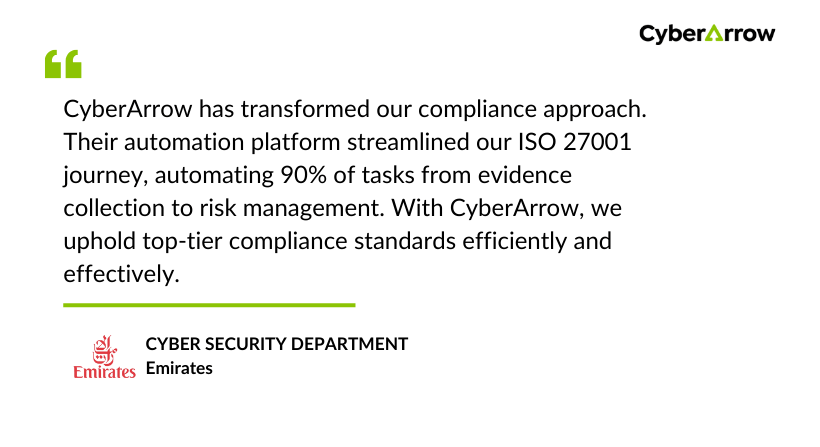
Read how Emirates enhanced Information Security by automating ISO 27001 with CyberArrow GRC.
See what Emirates has to say about CyberArrow GRC:
Final Thoughts
ISO 22320 isn’t just for large organizations; it’s a vital framework for any entity that needs to be prepared for emergencies. By implementing ISO 22320, you ensure that your organization is ready to respond to crises efficiently, minimizing harm and protecting valuable resources.
CyberArrow GRC simplifies this process by automating key tasks, helping you stay compliant, and offering cross-mapping features across multiple frameworks.
With CyberArrow GRC, you can ensure that your emergency management efforts are as effective and streamlined as possible.
