


A complete guide to the 10 cybersecurity domains
Cybersecurity is not just about firewalls or antivirus software. It’s much bigger than that. From managing passwords to securing networks and training employees, cybersecurity covers a wide range of tasks.
To keep things organized, the world of cybersecurity is divided into 10 major domains. Each domain focuses on a different area, but together they form a complete system for protecting your business, data, and people.
In this guide, we’ll explain what these cybersecurity domains are, why they matter, and how you can apply them in your organization. We’ll also show how tools like CyberArrow GRC help manage everything in one place, with automation and cross-framework mapping.
Let’s get started.
- What are cybersecurity domains?
- The 10 cybersecurity domains explained
- 1. Security and risk management
- 2. Asset security
- 3. Security architecture and engineering
- 4. Communication and network security
- 5. Identity and Access Management (IAM)
- 6. Security assessment and testing
- 7. Security operations
- 8. Software development security
- 9. Security in the cloud
- 10. Governance, compliance, and legal
- Why do the cybersecurity domains matter?
- Challenges in managing all 10 domains
- How CyberArrow GRC simplifies cybersecurity domain management
- Final thoughts
Cybersecurity is not just about firewalls or antivirus software. It’s much bigger than that. From managing passwords to securing networks and training employees, cybersecurity covers a wide range of tasks.
To keep things organized, the world of cybersecurity is divided into 10 major domains. Each domain focuses on a different area, but together they form a complete system for protecting your business, data, and people.
In this guide, we’ll explain what these cybersecurity domains are, why they matter, and how you can apply them in your organization. We’ll also show how tools like CyberArrow GRC help manage everything in one place, with automation and cross-framework mapping.
Let’s get started.
What are cybersecurity domains?
Cybersecurity domains are categories used to organize different aspects of information security. They help organizations understand where they need protection, what risks they face, and how to build strong defenses.
These domains are commonly used in professional certifications like CISSP (Certified Information Systems Security Professional) and are also recognized in global security frameworks like NIST and ISO/IEC 27001.
By understanding each domain, companies can make smarter decisions, train their teams better, and stay compliant with important rules and laws.
The 10 cybersecurity domains explained
Let’s break down each of the 10 cybersecurity domains in simple, clear language:
1. Security and risk management
This domain covers the basics of cybersecurity. It includes:
- Understanding threats and vulnerabilities.
- Creating security policies.
- Managing risk.
- Making sure your organization follows laws and regulations.
Good security starts with knowing what you need to protect, what could go wrong, and how to reduce the risk.
2. Asset security
Assets are the things your business owns like computers, software, data, and even printed records. This domain helps you classify, label, store, and protect those assets based on how important they are.
It ensures:
- Sensitive data is only shared with people who need it.
- Old or unused data is safely destroyed.
- Data is protected while being used, stored, or shared.
3. Security architecture and engineering
This domain focuses on building secure systems from the ground up. It includes:
- Designing secure networks.
- Using safe coding practices.
- Understanding security models (like defense-in-depth).
- Adding strong controls to systems.
It’s like building a house with strong locks, alarms, and a smart layout to protect what’s inside.
4. Communication and network security
This domain focuses on how systems talk to each other. It covers:
- Securing network connections.
- Using firewalls and VPNs.
- Encrypting data as it travels.
- Stopping attackers from accessing your systems remotely.
Without strong network security, your organization can easily be attacked from the outside.
5. Identity and Access Management (IAM)
IAM makes sure that only the right people can access the right data, at the right time. This domain includes:
- User authentication (passwords, biometrics, multi-factor login).
- Role-based access control (giving access based on job role).
- Managing user permissions and accounts.
It helps stop insider threats and limits damage if someone’s account is hacked.
6. Security assessment and testing
You can’t protect what you don’t test. This domain is all about checking if your security is working properly. It includes:
- Running security audits.
- Performing vulnerability scans and penetration tests.
- Reviewing logs and systems for signs of attack.
Testing helps find weak spots before attackers do.
7. Security operations
This is the day-to-day work of running a secure business. It includes:
- Monitoring systems.
- Responding to incidents.
- Backing up data.
- Managing logs and alerts.
Security operations keep your defenses active and ready.
8. Software development security
When software is created, it must be built securely. This domain helps:
- Teach developers how to write safe code.
- Catch bugs and flaws before attackers do.
- Use secure coding tools and frameworks.
With more cyberattacks targeting apps, this domain is more important than ever.
9. Security in the cloud
Many businesses use cloud services like AWS, Azure, or Google Cloud. This domain ensures:
- Cloud data is encrypted.
- Cloud access is controlled.
- The shared responsibility model is followed.
Cloud security means understanding what your provider handles and what you must secure yourself.
10. Governance, compliance, and legal
This domain covers the laws and rules your organization must follow. It includes:
- Industry standards like HIPAA, GDPR, or ISO 27001.
- Data privacy regulations.
- Internal audits and compliance checks.
- Documenting and reporting policies.
Failure to follow legal rules can result in heavy fines, lawsuits, and damage to your brand.
Quick link: What is compliance monitoring?
Why do the cybersecurity domains matter?
These 10 domains give organizations a full view of where risks might exist. Instead of only focusing on firewalls or antivirus software, they help businesses:
- Cover all areas of security.
- Train staff with the right skills.
- Create strong policies and procedures.
- Stay compliant with industry standards.
- Plan for future threats and changes.
Whether you’re a small business or a global enterprise, these domains apply to you.
Challenges in managing all 10 domains
Managing cybersecurity across 10 domains is not easy. Many organizations struggle with:
- Keeping up with changes in laws and frameworks.
- Managing dozens of spreadsheets, policies, and tools.
- Training employees in different departments.
- Tracking incidents and fixing problems quickly.
- Proving compliance during audits.
That’s where automation becomes essential.
How CyberArrow GRC simplifies cybersecurity domain management
CyberArrow GRC is an all-in-one platform built to help you manage governance, risk, and compliance across all cybersecurity domains without the stress or confusion.
Here’s how CyberArrow helps:
- Cross-domain management: Instead of juggling separate tools for each area, CyberArrow centralizes your controls, documents, and processes across all 10 domains.
- Framework cross-mapping: CyberArrow allows you to map controls across different standards like NIST, ISO 27001, HIPAA, and CIS. One control can support multiple frameworks, saving time and effort.
- Built-in templates and policies: Preloaded with ready-to-use policies, risk registers, and workflows that match major cybersecurity frameworks, so you don’t have to start from scratch.
- Automated risk assessments: Identify and rank your cybersecurity risks with guided workflows and real-time dashboards.
- Compliance monitoring: Get alerts when something goes out of compliance. Track changes, approvals, and audit logs with ease.
- Audit-ready reporting: When it’s time for an audit, generate clean, professional reports for your leadership team, clients, or regulators in just a few clicks.
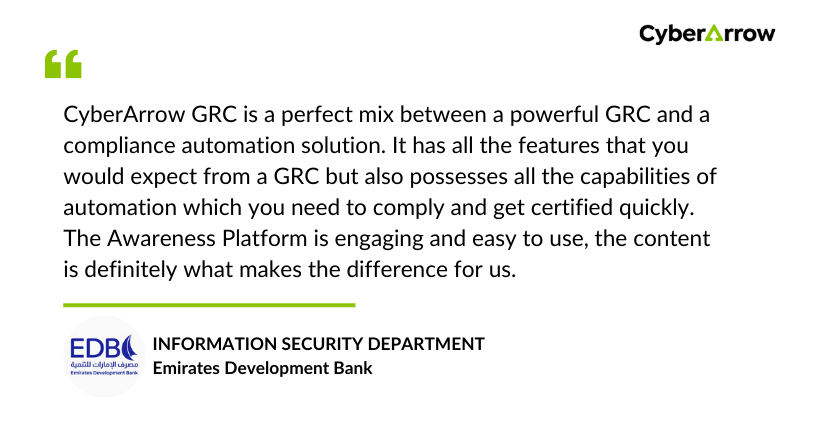
See what Emirates Development Bank has to say about CyberArrow GRC:
Final thoughts
Cybersecurity is not a one-time project. It’s a daily responsibility that touches every part of your organization. By understanding and applying the 10 cybersecurity domains, you can build a complete defense system that protects your data, systems, and people.
But managing all of this manually can be overwhelming.
CyberArrow GRC helps you simplify the process, stay compliant, and be ready for anything. With automation, cross-framework mapping, and real-time monitoring, you’ll spend less time on paperwork and more time strengthening your security.
