


ISO 27001 stage 1 audit checklist
ISO 27001 certification is a major milestone for any organization. It proves that information security is managed in a structured and consistent way. Before an organization can pass the final certification audit, it must complete the ISO 27001 stage 1 audit.
The stage 1 audit is not about testing every control in depth. Instead, it checks whether the organization is ready for the full audit. Many organizations fail or face delays because they do not prepare properly for this stage.
This guide explains what the ISO 27001 stage 1 audit is, why it matters, what auditors review, and provides a detailed checklist to help organizations prepare with confidence.
- What is the ISO 27001 stage 1 audit
- Why the ISO 27001 stage 1 audit is important
- What auditors focus on during stage 1
- ISO 27001 stage 1 audit checklist
- ISMS scope checklist
- Context of the organization checklist
- Leadership and governance checklist
- Information security policy checklist
- Risk assessment methodology checklist
- Risk register checklist
- Risk treatment plan checklist
- Statement of applicability checklist
- Policy and procedure framework checklist
- Competence and training checklist
- Communication checklist
- Operational planning checklist
- Internal audit program checklist
- Management review planning checklist
- Legal and compliance checklist
- Evidence readiness checklist
- Common findings in ISO 27001 stage 1 audits
- How to prepare effectively for the stage 1 audit
- How CyberArrow GRC helps with ISO 27001 stage 1 audit readiness
- Conclusion
- FAQs
What is the ISO 27001 stage 1 audit
The ISO 27001 stage 1 audit is the first formal audit in the certification process. Its main purpose is to confirm that the organization has built the required foundations for an Information Security Management System.
During the stage 1 audit, the auditor checks whether:
- The ISMS scope is defined.
- Required documents exist.
- Risk management is in place.
- Leadership is involved.
- The organization understands ISO 27001 requirements.
The stage 1 audit helps identify gaps before the final audit.
Why the ISO 27001 stage 1 audit is important
Many organizations underestimate this stage. However, it plays a critical role in certification success.
The stage 1 audit is important because it:
- Confirms readiness for the stage 2 audit.
- Identifies major gaps early.
- Reduces the risk of failure in stage 2.
- Helps organizations improve documentation.
- Saves time and cost in the long run.
If serious gaps are found, the stage 2 audit may be delayed.
What auditors focus on during stage 1
The ISO 27001 stage 1 audit focuses mainly on documentation and planning. Auditors do not test every control, but they check whether controls are defined and aligned with risks.
Auditors typically review:
- ISMS scope.
- Information security policy.
- Risk assessment methodology.
- Risk register.
- Risk treatment plan.
- Statement of Applicability.
- Roles and responsibilities.
- Internal audit planning.
- Management review planning.
Understanding these focus areas helps organizations prepare effectively.
ISO 27001 stage 1 audit checklist
The checklist below is organized by major ISO 27001 requirements. Each section explains what auditors expect to see.
ISMS scope checklist
The ISMS scope defines what is included in certification.
Auditors will check:
- A written ISMS scope document.
- Clear boundaries of the ISMS.
- Included locations, systems, and processes.
- Excluded items with justification.
- Alignment with business operations.
The scope should be realistic and clearly documented.
Context of the organization checklist
Organizations must understand internal and external factors.
Auditors will check:
- Identification of internal issues.
- Identification of external issues.
- Understanding of regulatory requirements.
- Identification of interested parties.
- Security needs of interested parties.
This shows that the ISMS is designed for the real business environment.
Leadership and governance checklist
Leadership involvement is critical.
Auditors will check:
- Approved information security policy.
- Evidence of leadership commitment.
- Defined roles and responsibilities.
- Appointment of ISMS owners.
- Security objectives aligned with business goals.
Without leadership support, certification is at risk.
Information security policy checklist
The policy sets the direction for security.
Auditors will check:
- Policy approval by management.
- Policy alignment with ISO 27001.
- Policy communication to staff.
- Policy availability and version control.
The policy should be clear and current.
Risk assessment methodology checklist
Risk management is central to ISO 27001.
Auditors will check:
- Documented risk assessment methodology.
- Defined risk criteria.
- Risk scoring approach.
- Likelihood and impact definitions.
- Consistent application of methodology.
The methodology must be practical and repeatable.
Risk register checklist
The risk register shows identified risks.
Auditors will check:
- List of information security risks.
- Risk owners assigned.
- Risk ratings documented.
- Clear descriptions of risks.
- Alignment with scope.
The risk register must reflect real risks, not generic ones.
Risk treatment plan checklist
The risk treatment plan explains how risks are handled.
Auditors will check:
- Selected risk treatment options.
- Controls linked to risks.
- Target risk levels.
- Responsible owners.
- Timelines for treatment.
Risk treatment decisions must be justified.
Statement of applicability checklist
The Statement of Applicability is a key document.
Auditors will check:
- List of Annex A controls.
- Controls marked as applicable or not.
- Justification for exclusions.
- Alignment with risk treatment plan.
- Version control.
This document often causes issues if poorly prepared.
Policy and procedure framework checklist
ISO 27001 requires documented policies and procedures.
Auditors will check:
- List of security policies.
- Procedures supporting key controls.
- Document control process.
- Access control for documents.
Policies should reflect how the organization operates.
Competence and training checklist
Staff competence is important.
Auditors will check:
- Defined security roles.
- Required skills for roles.
- Training plans.
- Awareness programs.
- Records of training.
Security awareness must be planned, not informal.
Communication checklist
Security communication must be defined.
Auditors will check:
- Internal communication plans.
- External communication plans.
- Incident communication procedures.
- Roles for communication.
Clear communication supports incident response and compliance.
Operational planning checklist
Operations must support the ISMS.
Auditors will check:
- Planned ISMS processes.
- Control implementation plans.
- Risk treatment execution planning.
- Change management approach.
This shows that the ISMS is not only theoretical.
Internal audit program checklist
Internal audits are required.
Auditors will check:
- Internal audit plan.
- Audit schedule.
- Audit scope.
- Auditor competence.
- Planned reporting process.
The internal audit does not need to be completed before stage 1, but it must be planned.
Management review planning checklist
Management review is mandatory.
Auditors will check:
- Management review procedure.
- Planned agenda.
- Inputs and outputs defined.
- Frequency defined.
The review shows leadership oversight.
Legal and compliance checklist
Organizations must identify compliance obligations.
Auditors will check:
- List of applicable laws.
- Regulatory requirements.
- Contractual obligations.
- Compliance tracking approach.
This supports Annex A compliance controls.
Evidence readiness checklist
Even in stage 1, auditors look for evidence readiness.
Auditors may check:
- Sample records.
- Document control logs.
- Risk assessment records.
- Approval records.
Evidence does not need to be complete, but structure must exist.
Common findings in ISO 27001 stage 1 audits
Many organizations face similar issues.
Common findings include:
- Unclear ISMS scope.
- Generic risk assessments.
- Missing justifications in the Statement of Applicability.
- Weak leadership involvement.
- Incomplete policy set.
- Poor documentation control.
Addressing these early improves success in stage 2.
How to prepare effectively for the stage 1 audit
Organizations can prepare by:
- Reviewing all mandatory documents.
- Aligning risks with controls.
- Ensuring leadership involvement.
- Using a clear checklist.
- Centralizing documentation.
- Running a readiness review.
Preparation reduces stress and audit delays.
How CyberArrow GRC helps with ISO 27001 stage 1 audit readiness
CyberArrow GRC helps organizations prepare for the ISO 27001 stage 1 audit in a structured and automated way.
Key benefits include:
- Centralized ISMS documentation.
- Built in ISO 27001 templates.
- Risk assessment and treatment workflows.
- Automated Statement of Applicability.
- Policy management with approvals.
- Task tracking for audit readiness.
- Real time visibility into gaps.
CyberArrow GRC helps teams move from scattered documents to a clear and organized ISMS.
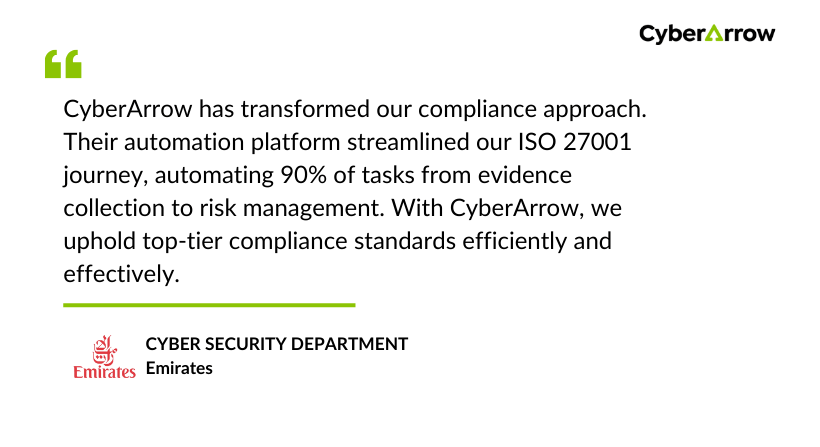
Read how Emirates enhanced Information Security by automating ISO 27001 with CyberArrow.
See what Emirates has to say about CyberArrow GRC:
Conclusion
The ISO 27001 stage 1 audit is a critical step in the certification journey. It checks whether an organization has built a strong foundation for information security. Proper preparation reduces the risk of delays, findings, and extra costs.
Using a detailed checklist helps ensure that required documents, plans, and structures are in place. It also helps teams understand what auditors expect and where gaps may exist.
CyberArrow GRC provides the structure, automation, and visibility needed to prepare for the ISO 27001 stage 1 audit with confidence. It helps organizations organize documentation, manage risks, and demonstrate readiness without unnecessary manual work.
For organizations preparing for ISO 27001 certification, CyberArrow GRC is the right platform to support a smooth and successful audit journey.
FAQs
What is the purpose of the ISO 27001 stage 1 audit?
The purpose of the ISO 27001 stage 1 audit is to confirm that an organization is ready for the final certification audit. It checks whether the ISMS is properly defined, documented, and planned before detailed control testing begins.
Does the stage 1 audit test technical security controls?
No. The stage 1 audit focuses on documentation, planning, and readiness. Auditors do not test technical controls in depth during this stage. Technical testing happens during the stage 2 audit.
What documents are mandatory for the ISO 27001 stage 1 audit?
Mandatory documents include the ISMS scope, information security policy, risk assessment methodology, risk register, risk treatment plan, Statement of Applicability, internal audit plan, and management review plan.
What happens if issues are found during the stage 1 audit?
If issues are found, the auditor will report gaps or concerns. Organizations are given time to fix these issues before moving to the stage 2 audit. Serious gaps may delay certification.
How can organizations prepare more effectively for the stage 1 audit?
Organizations can prepare by using a detailed checklist, keeping documentation organized, involving leadership early, and tracking risks and controls in one place. Platforms like CyberArrow GRC help teams stay organized and audit-ready.
