

What is cyber forensics? A detailed guide
Cyber attacks are growing in speed and complexity. When an attack happens, companies must understand what caused it, how the attacker got inside, what data was taken, and how to stop it from happening again. This is where cyber forensics becomes important.
Cyber forensics is the science of investigating digital crimes. It helps security teams collect, analyze, and preserve digital evidence. This evidence is used to understand cyber incidents, support legal cases, and improve the security posture of an organization.
This guide explains everything you need to know about cyber forensics, including how it works, key methods, tools, challenges, and how CyberArrow GRC supports digital investigations through strong governance and compliance.
What is cyber forensics?
Cyber forensics, also called digital forensics, is the process of investigating digital devices and networks to collect evidence that shows how a cyber incident occurred.
Cyber forensics focuses on:
- Collecting evidence from computers, servers, networks, and cloud systems.
- Analyzing logs, files, traffic, and system activity.
- Identifying the attacker’s actions.
- Preserving evidence in a way that can be used in court.
- Supporting incident response teams.
- Reconstructing events before, during, and after an attack.
Cyber forensics helps organizations understand attacks and prevent future incidents.
Why cyber forensics matters today
Modern businesses depend on technology for every part of their operations. When attackers break into these systems, the damage can be severe. Cyber forensics helps reduce this risk in several important ways.
- It helps find the exact entry point of the attack.
- It shows which systems or data were affected.
- It helps teams understand how the attacker moved inside the network.
- It supports legal cases by preserving digital evidence.
- It improves the incident response process.
- It helps organizations avoid repeated attacks.
Strong cyber forensics is essential for both cyber security and business continuity.
Types of cyber forensics
Cyber forensics has many branches. Each one focuses on different environments and types of digital evidence.
1. Computer forensics
Computer forensics focuses on desktops, laptops, and servers.
- It analyzes system files, temporary files, registry data, and installed software.
- It helps identify malware infections, unauthorized access, and file changes.
Computer forensics is one of the most common forms of digital investigation.
2. Network forensics
Network forensics focuses on monitoring and analyzing network traffic.
- It examines packets, logs, and communication patterns.
- It helps detect attacks like scanning, data exfiltration, or lateral movement.
Network forensics is essential for understanding how attackers moved inside the environment.
3. Mobile device forensics
Mobile forensics focuses on smartphones and tablets.
- It analyzes messages, images, app data, and call logs.
- It helps identify unauthorized access or data theft on mobile devices.
This branch is important because mobile devices now hold sensitive business data.
4. Cloud forensics
Cloud forensics investigates cloud environments such as AWS, Azure, and Google Cloud.
- It analyzes cloud logs, storage buckets, IAM events, and audit trails.
- It helps identify misconfigurations or compromised access keys.
Cloud forensics is growing as more companies move their operations to cloud platforms.
5. IoT forensics
IoT forensics focuses on smart devices such as sensors, cameras, and industrial systems.
- It analyzes firmware, device logs, and network behavior.
- It helps detect security issues in connected devices.
As IoT expands, this branch becomes more important.
How cyber forensics works
Cyber forensics follows a structured process. This process ensures that evidence is collected correctly and remains reliable.
1. Identification
The first step is identifying that an incident has occurred.
- Security teams detect suspicious activity through alerts, logs, or reports.
- They confirm that a potential breach or misuse took place.
Early identification helps reduce damage.
2. Evidence collection
Once an incident is confirmed, evidence must be collected.
- Investigators gather logs, system images, memory dumps, and network captures.
- All evidence must be collected without altering the data.
Proper collection is essential to maintain integrity.
3. Preservation
Evidence must be preserved so it does not change.
- Data is stored in secure formats.
- Tools record checksums to prevent modification.
- Forensic images are created to protect original files.
Preservation ensures that evidence remains usable in court or audits.
4. Analysis
Investigators analyze the collected data to understand the incident.
They look for:
- Suspicious processes.
- Malware signatures.
- File changes.
- Failed login attempts.
- Unauthorized access.
- Network traffic patterns.
Analysis reveals how the attack happened.
5. Documentation
Every step of the process must be documented.
- Investigators create timelines.
- They record findings, evidence sources, and actions taken.
- Reports are prepared for legal teams, auditors, or management.
Documentation is essential for compliance and legal requirements.
6. Reporting and recovery
The final step is reporting the findings and supporting recovery.
- Teams share the root cause of the incident.
- Recommendations help prevent future attacks.
- Organizations update policies and controls.
Cyber forensics improves the security posture of the entire organization.
Tools used in cyber forensics
Cyber forensics depends on specialized tools to collect and analyze digital evidence. Here are some of the most common ones.
Disk imaging tools
These tools create exact copies of storage devices.
Examples:
- FTK Imager
- EnCase Forensics
- Autopsy
They help investigators work on a safe copy of the original data.
Network forensic tools
These tools monitor network traffic and detect suspicious patterns.
Examples:
- Zeek
- Suricata
- Wireshark
They help identify how attackers moved inside the network.
Memory analysis tools
Memory analysis helps identify active malware or hidden processes.
Examples:
- Volatility
- Rekall
Memory snapshots are important for analyzing live threats.
Log analysis tools
Logs are one of the most important sources of evidence.
Examples:
- Splunk
- Elastic Stack
- Graylog
Log analysis helps trace user activity and detect anomalies.
Cloud forensic tools
Cloud environments require special tools.
Examples:
- AWS CloudTrail
- Azure Monitor
- Google Cloud Logging
These tools help identify misconfigurations, access logs, and cloud activity.
Common challenges in cyber forensics
Cyber forensics is powerful but also challenging.
- Digital environments change fast. New tools and systems appear each year.
- Attackers are skilled at hiding their tracks.
- Large companies generate massive amounts of data.
- Cloud forensics is harder because data may not be stored locally.
- Evidence is easy to lose if not collected properly.
These challenges show why companies must have strong governance and well-defined processes.
Why cyber forensics must be part of a GRC program
Cyber forensics helps understand incidents, but companies also need a structured way to manage:
- Policies
- Controls
- Risks
- Evidence
- Legal requirements
- Compliance frameworks
A complete GRC program ensures that forensic findings translate into long-term improvements. This is where CyberArrow GRC adds value.
How CyberArrow GRC supports cyber forensics
CyberArrow GRC does not replace forensic tools, but it supports the governance, compliance, and documentation processes around investigations.
Policy management
CyberArrow helps manage incident response and forensic policies.
Risk management
CyberArrow helps track risks identified during forensic investigations.
Control mapping
CyberArrow maps forensic practices to frameworks like ISO 27001, SOC 2, NIST, and PCI DSS.
Evidence tracking
CyberArrow provides secure storage for logs, reports, and forensic documents.
Audit readiness
CyberArrow helps companies show that incidents were handled correctly.
Task automation
CyberArrow assigns and tracks tasks during incident response.
Cyber forensics gives answers. CyberArrow ensures the organization uses those answers to build stronger security and compliance programs.
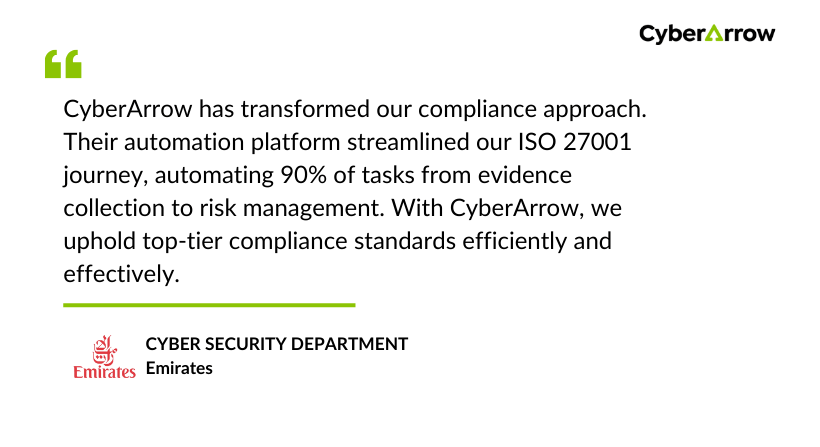
See what our clients have to say about CyberArrow GRC:
Conclusion
Cyber forensics is one of the most important parts of modern cyber security. It helps organizations understand cyber attacks, collect evidence, support legal cases, and improve future defenses. From network investigation to memory analysis and cloud forensics, this field covers everything needed to uncover what happened during an incident.
But forensics alone is not enough. Organizations need a complete GRC program to manage policies, risks, controls, evidence, and compliance obligations.
CyberArrow GRC provides this structure. It helps organizations stay organized, document investigations, manage risks, and stay audit-ready.
If your organization wants to strengthen its cyber forensics program and improve its overall security posture, CyberArrow GRC is the best platform to support that journey.
FAQs
What is cyber forensics used for?
Cyber forensics is used to investigate cyber attacks, collect digital evidence, and understand how an incident happened. It helps identify the attacker’s actions, the systems they accessed, and the damage caused. It also supports legal cases and strengthens security programs.
What types of evidence are collected in cyber forensics?
Cyber forensics collects system logs, memory dumps, disk images, network packets, cloud audit logs, file metadata, browser history, registry data, and communication records. The goal is to preserve all evidence in a way that keeps it reliable and unchanged.
How is cyber forensics different from incident response?
Incident response focuses on containing and recovering from an attack. Cyber forensics focuses on analyzing the attack in detail, collecting evidence, and understanding how it occurred. Both functions work together, but cyber forensics is more focused on investigation and documentation.
What tools are commonly used in cyber forensics?
Common tools include FTK Imager, EnCase, Autopsy, Volatility, Rekall, Wireshark, Zeek, Suricata, Splunk, Elastic Stack, and cloud tools like AWS CloudTrail. These tools help investigators analyze data, track activity, and detect attacker behavior.
How does CyberArrow GRC support cyber forensic investigations?
CyberArrow GRC helps document incidents, track risks, manage policies, maintain audit evidence, and support compliance requirements tied to forensic work. CyberArrow gives organizations a structured system to store reports, assign tasks, track control gaps, and stay audit-ready after an investigation.
