

What is Resolver? Why CyberArrow GRC is best
Organizations today deal with many risks. These risks come from cyber threats, third-party vendors, compliance rules, and daily operations. To manage all this, companies rely on smart and automated tools. One well-known tool in this space is Resolver, a platform used for risk, incident, and compliance management.
Resolver has built a strong name in the industry. It helps companies track incidents, assess risks, and improve their overall security posture. But the market has changed fast. Modern companies now want more automation, easier workflows, and a platform that cuts down manual work. They want tools that support fast compliance with frameworks like SOC 2, ISO 27001, GDPR, HIPAA, and DORA.
This is where CyberArrow GRC stands out. While Resolver offers important features, CyberArrow GRC provides a more complete, simple, and automation-driven experience that supports full governance, risk, and compliance management.
In this blog, we will explain what Resolver is, what it offers, and why many organizations today choose CyberArrow GRC as their preferred GRC platform.
- What is Resolver?
- What features does Resolver offer?
- Why companies look for alternatives to Resolver
- Why CyberArrow GRC is the best alternative to Resolver
- 3. Easy user experience
- 4. Vendor risk management
- 5. Real-time dashboards and monitoring
- 6. Incident and risk management included
- 8. Faster time to audit readiness
- Final comparison: Resolver vs CyberArrow GRC
- Conclusion: CyberArrow GRC is the best choice for modern GRC needs
- FAQs
What is Resolver?
Resolver is a risk and incident management software designed to help companies track, analyze, and reduce risks. Resolver allows security and compliance teams to record incidents, manage investigations, and report outcomes. It also includes tools for enterprise risk management and internal audits.
Many organizations use Resolver to create structured workflows that help security teams respond to events in a consistent and controlled way. It is known for its dashboards, reporting features, and integrations with security tools.
Resolver is mainly used for:
- Incident management
- Risk assessment
- Security operations tracking
- Internal audits
- Investigation workflows
- Compliance documentation
It helps companies understand where risks exist and how incidents affect their business. This is useful for organizations trying to improve their security maturity.
What features does Resolver offer?
To understand the value of Resolver, it helps to look at its key features. While the platform focuses heavily on incident and risk management, it also supports compliance workflows.
Here are the main features Resolver provides:
1. Incident management
Resolver allows organizations to record and track incidents like security breaches, workplace injuries, or process failures. It keeps all event data in one place and helps identify patterns.
2. Risk management
The platform supports risk assessments, scoring, and reporting. Teams can analyze threats and decide which risks require the most attention.
3. Security operations
Resolver gives visibility into security tasks, event responses, and follow-up actions. Security teams can manage cases and investigations from start to finish.
4. Compliance tracking
Some organizations use Resolver to track compliance activities, though the platform is not fully centered on modern compliance automation.
5. Audit and investigation tools
Resolver includes features for internal audits and investigative workflows. Teams can document findings and store all records for future reference.
These features make Resolver a solid choice for organizations that want structured security and risk workflows. But many teams now expect a platform that does much more than record risks. They want a tool that automates compliance, reduces repetitive work, and keeps them audit-ready all the time.
This is where CyberArrow GRC provides a major advantage.
Why companies look for alternatives to Resolver
Resolver is a helpful risk and incident management tool, but it has limitations for modern governance, risk, and compliance needs. Companies today want speed, automation, and easy mapping across multiple frameworks.
Organizations often look for Resolver alternatives because of these reasons:
1. Limited compliance automation
Resolver supports compliance, but it does not automate most compliance tasks. Many actions still need manual work.
2. Complex setup
Some users report that setup can take time, especially when creating custom dashboards or workflows.
3. Not purpose-built for modern cloud compliance
Cloud-first companies need direct integrations with cloud systems. Resolver focuses more on security incidents than cloud compliance automation.
4. Not ideal for fast-growing teams
High-growth organizations want solutions that scale with them and support dozens of frameworks. Resolver may require more manual effort in such environments.
5. Limited cross-framework mapping
Companies that need SOC 2, ISO 27001, GDPR, HIPAA, PCI DSS, and DORA prefer platforms with automatic cross-mapping.
Because of these limitations, many companies move toward modern GRC platforms that offer smoother workflows and greater automation.
This is why CyberArrow GRC has become a trusted choice for organizations of every size.
Why CyberArrow GRC is the best alternative to Resolver
CyberArrow GRC is designed for organizations that want a complete, easy, and automated approach to governance, risk, and compliance. It offers powerful automation that reduces compliance effort by up to 90 percent.
Below are the reasons CyberArrow GRC is considered the best alternative to Resolver.
1. Complete automation for all frameworks
CyberArrow GRC automates risk assessments, evidence collection, control tracking, and compliance reporting. It connects with cloud tools, security tools, and identity systems to collect the evidence required for audits.
This saves teams hours of manual work and keeps them always prepared for audits.
2. Built-in compliance frameworks
CyberArrow GRC includes ready-to-use templates and controls for:
- SOC 2
- ISO 27001
- GDPR
- HIPAA
- PCI DSS
- NIST
- DORA
- And many more
Instead of building frameworks from scratch, organizations can start immediately.
3. Easy user experience
The platform is built for simplicity. Teams do not need technical expertise to use it. Everything is clear, visual, and intuitive. This makes CyberArrow GRC ideal for startups, mid-size companies, and large enterprises.
4. Vendor risk management
While Resolver focuses more on incidents, CyberArrow GRC provides strong vendor risk tools, including:
- Vendor onboarding
- Risk scores
- Compliance checks
- Document tracking
- Continuous monitoring
This helps organizations meet rules like GDPR, DORA, and ISO 27001.
5. Real-time dashboards and monitoring
CyberArrow GRC shows compliance progress, risk levels, failed controls, and open tasks in real time. Leaders get clear visibility into their entire risk and compliance program without waiting for reports.
6. Incident and risk management included
CyberArrow GRC not only automates compliance, but it also includes rich tools for:
- Incident logging
- Risk analysis
- Impact assessment
- Root cause tracking
- Remediation workflows
This makes the platform a full replacement for Resolver with stronger compliance features.
7. Ideal for fast-growing companies
As a company grows, it often needs to comply with more frameworks. CyberArrow GRC grows with the organization without slowing down.
It supports multiple teams, multiple frameworks, and large-scale reporting without complexity.
8. Faster time to audit readiness
Companies using CyberArrow GRC report faster readiness for:
- SOC 2 audits
- ISO 27001 certification
- GDPR assessments
- HIPAA compliance reviews
- DORA inspections
Automation ensures evidence is always updated and easy to export.
9. Strong support and continuous updates
CyberArrow GRC provides excellent customer support and updates the platform regularly to stay aligned with new global compliance rules.
Resolver, while strong in security, does not offer the same level of proactive GRC innovation.
Final comparison: Resolver vs CyberArrow GRC
| Feature | Resolver | CyberArrow GRC |
| Primary focus | Incident and risk tracking | Full GRC automation |
| Compliance automation | Limited | Advanced |
| Built-in frameworks | Partial | Full library |
| Ease of use | Moderate | Very easy |
| Cloud integrations | Limited | Wide integrations |
| Vendor risk | Basic | Complete |
| Best for | Security operations | End-to-end compliance and risk |
CyberArrow GRC delivers more complete governance, risk, and compliance management while keeping the user experience simple and automated.
Conclusion: CyberArrow GRC is the best choice for modern GRC needs
Resolver is a powerful tool for tracking incidents and performing risk assessments. But organizations today need more than incident management. They need automation, continuous monitoring, and easy compliance across multiple frameworks.
CyberArrow GRC provides a complete solution that helps companies:
- Reduce manual work
- Automate evidence collection
- Strengthen compliance
- Improve risk visibility
- Prepare for audits faster
- Manage vendors easily
CyberArrow GRC makes modern GRC simple, efficient, and future-ready. For any organization looking for a Resolver alternative that offers more automation and stronger compliance support, CyberArrow GRC is the best choice.
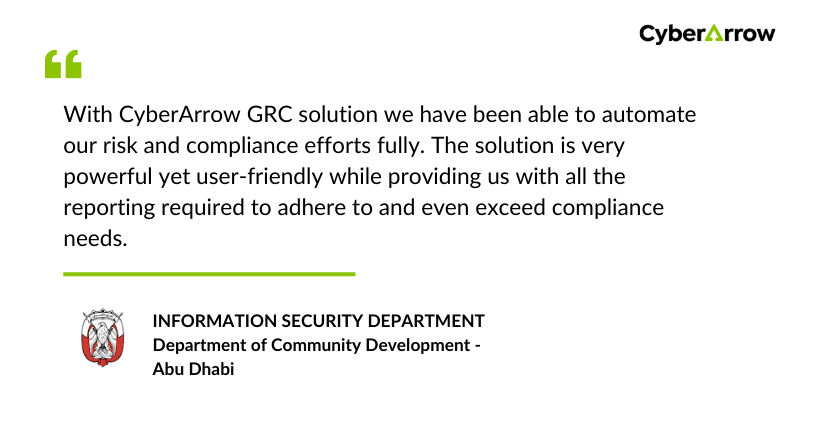
See what our clients have to say about CyberArrow GRC:
FAQs
What is Resolver used for?
Resolver is used to track risks, record incidents, and support security investigations. Many teams use it to organize security events and understand how risks affect their business.
How is CyberArrow GRC different from Resolver?
CyberArrow GRC focuses on full compliance automation, built-in frameworks, easy workflows, and real-time dashboards. It helps companies stay audit-ready at all times, which makes it more complete than Resolver for modern GRC needs.
Is CyberArrow GRC better for growing companies?
Yes. CyberArrow GRC is designed for fast growth. It supports many frameworks, automates evidence collection, and gives clear visibility into risks. This helps growing companies save time and stay compliant without heavy manual work.
