


What is corporate security? Best practices for corporate security
Corporate security is one of the most important parts of running a safe and trusted business today. Every company holds private information, financial data, staff records, and intellectual property that must be protected. Without strong security, a business can face data breaches, legal trouble, and a loss of customer trust. This is why corporate security is now a priority for companies of every size.
The world has changed in recent years. Cyber attacks are more advanced. Ransomware groups target firms of all industries. Physical threats also continue to rise. Because of this, companies must use a complete and structured approach to protect their operations. Corporate security plays a major role in this mission.
This guide explains what corporate security really means, why it matters, and the best practices that help organizations stay safe and compliant. It also explains how smart tools can support a strong security program.
- What is corporate security?
- Why corporate security matters today
- Key elements of corporate security
- Best practices for strong corporate security
- 1. Create a clear corporate security policy
- 2. Conduct regular risk assessments
- 3. Protect physical access to facilities
- 4. Strengthen cyber security controls
- 5. Build an incident response plan
- 6. Monitor third party risks
- 7. Protect sensitive data
- 8. Train all employees on security awareness
- 9. Use centralized security reporting
- 10. Use automated GRC tools for better efficiency
- How corporate security supports business growth
- Why CyberArrow GRC is the best choice for strong corporate security
- FAQs
What is corporate security?
Corporate security is the set of practices, policies, tools, and systems used to protect a company’s people, data, assets, facilities, and reputation. It covers both physical security and digital security. The goal is to reduce risks, stop threats, and keep the organization running without interruption.
Corporate security does not only focus on hackers or cyber attacks. It also includes protection from theft, workplace violence, fraud, insider threats, and supply chain risks. When done correctly, it creates a safe environment for employees, stable operations for management, and trust for customers.
Corporate security teams often work with departments such as IT, human resources, compliance, legal, and operations. This teamwork is important for keeping every part of the company aligned and informed.
Why corporate security matters today
In the past, companies mainly focused on physical protection. Today, businesses face both digital and physical risks at the same time. A simple mistake in one area can impact the entire organization.
Here are the main reasons why corporate security is so important:
Growth of cyber attacks
Cyber threats are more complex than ever. Attackers use malware, phishing, and social engineering to break into systems. When a company has weak security, the chance of a breach increases.
Legal and compliance rules
Many industries must follow strict laws about data protection. These include GDPR, HIPAA, and ISO 27001. When a company cannot meet these requirements, it can face penalties and lose its credibility.
Protection of intellectual property
Companies that create products, software, research, or designs must protect their ideas. Corporate security helps prevent theft from outside attackers and insiders.
Business continuity
A major security incident can stop business operations for days or even weeks. Strong security supports faster recovery and reduces financial damage.
Reputation and trust
Customers expect companies to protect their information. When a business shows strong corporate security, it builds trust and loyalty.
Key elements of corporate security
Corporate security includes several different parts that work together. Each part plays an important role in protecting the company.
1. Physical security
This covers access control, surveillance cameras, visitor procedures, alarm systems, and protection of facilities. Physical security stops unauthorized entry and keeps staff and assets safe.
2. Cyber security controls
Cyber security includes firewalls, encryption, endpoint protection, multi factor authentication, network monitoring, and secure development practices.
These tools protect data, prevent hacking attempts, and support safe digital operations.
3. Risk management
Risk management helps companies identify, track, and reduce risks. This includes evaluating threats, reviewing controls, and planning for emergencies.
4. Compliance management
Many companies must follow standards and laws. Compliance management ensures all requirements are met and documented. Good compliance also reduces legal and financial risks.
5. Incident response
Every company should have a clear plan for responding to security incidents. This includes roles, responsibilities, communication steps, and recovery actions.
6. Employee security awareness
Human error is still a major cause of security issues. Training employees helps them make safe decisions, avoid scams, and follow best practices.
7. Vendor and third party security
Many cyber breaches happen through suppliers. Companies must review third parties to make sure they follow strong security standards.
Best practices for strong corporate security
Building a strong corporate security program takes effort, planning, and clear processes. The following best practices help companies create a safe environment that supports business success.
1. Create a clear corporate security policy
A security policy explains how the company protects its data, facilities, and people. It also sets rules for staff, contractors, and partners. The policy should be easy to understand and updated regularly to match new threats.
2. Conduct regular risk assessments
A risk assessment helps identify weaknesses in the company’s security. It reveals which areas need attention, such as outdated systems, employee mistakes, or access gaps. By reviewing risks often, companies stay ahead of potential issues.
3. Protect physical access to facilities
Physical security protects staff and property. Companies should use key cards, visitor logs, cameras, locked server rooms, and other access controls. It is important to review these systems regularly to ensure they still work well.
4. Strengthen cyber security controls
Strong cyber security is a major part of corporate security. Here are the most important controls:
- Use multi factor authentication.
- Keep systems updated.
- Encrypt sensitive data.
- Train staff on phishing.
- Use secure communication tools.
- Monitor networks for abnormal activity.
These actions reduce the risk of attacks and help detect threats early.
5. Build an incident response plan
A clear incident response plan helps teams react quickly during a crisis. The plan should include:
- Step by step actions.
- Roles and responsibilities.
- Communication rules.
- Reporting requirements.
- Recovery procedures.
Practicing the plan each year helps teams stay ready.
6. Monitor third party risks
Suppliers and partners can introduce hidden risks. Companies should review each vendor’s security posture, complete assessments, and monitor them over time.
7. Protect sensitive data
Companies should classify their data, control who can access it, and use strong security measures to protect it. This includes encryption, secure storage, and access reviews.
8. Train all employees on security awareness
People are one of the most important parts of corporate security. Training helps employees spot fake emails, follow safe practices, and avoid risky behavior. Training should be simple, practical, and frequent.
9. Use centralized security reporting
Centralized reporting helps leadership understand the company’s risk level. Dashboards and automated systems make it easy to see security gaps, compliance status, and progress toward goals.
10. Use automated GRC tools for better efficiency
Manual security work takes time and increases the chance of errors. Automated governance, risk, and compliance tools help companies:
- Track controls.
- Manage policies.
- Monitor risks.
- Prepare audits.
- Collect evidence.
- Build reports.
- Improve visibility.
This improves accuracy and efficiency across the entire organization.
How corporate security supports business growth
Strong corporate security does more than prevent attacks. It also supports long-term growth. When security systems are stable and reliable, teams can innovate faster and focus on the company’s main goals.
Security also helps build trust with investors, partners, regulators, and customers. In competitive industries, trust becomes a major advantage. Companies with strong corporate security are better prepared for audits, market expansion, and new opportunities.
Why CyberArrow GRC is the best choice for strong corporate security
Corporate security works best when it is supported by a powerful and easy to use GRC platform. CyberArrow GRC helps companies build strong protection across every department with simple workflows and smart automation.
CyberArrow GRC offers:
- Automated compliance frameworks.
- Easy risk management tools.
- Centralized dashboards.
- Real time monitoring.
- Policy and control management.
- Automated evidence collection.
- Smooth audit preparation.
- Fast onboarding and simple design.
It helps companies reduce manual work, avoid errors, and stay compliant at all times. CyberArrow GRC brings clarity to complex security tasks and helps organizations improve their maturity without extra effort.
If you want to build a safer, stronger, and more trusted organization, CyberArrow GRC is the best partner for your corporate security goals.
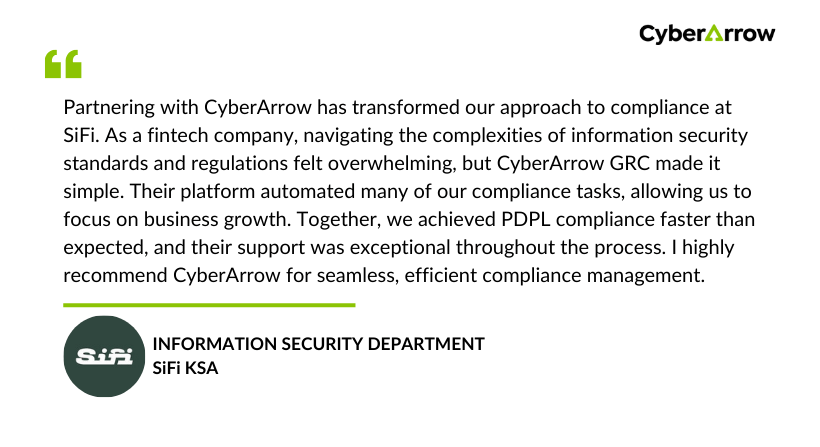
See what our clients have to say about CyberArrow GRC:
FAQs
What does corporate security include?
Corporate security includes all steps a company takes to protect its people, data, buildings, systems, and reputation. It covers both physical protection and digital protection. This includes access control, cyber security controls, training, incident response, and risk management.
Why is corporate security important for businesses today?
Corporate security is important because companies face more cyber attacks, data risks, and physical threats than ever before. Strong security protects the business from financial loss, legal trouble, and damage to its reputation. It also helps companies meet compliance requirements and stay trusted by customers.
How does CyberArrow GRC help with corporate security?
CyberArrow GRC helps companies manage risks, track controls, prepare for audits, and automate compliance tasks. It gives clear dashboards, easy workflows, and real time visibility across the organization. This makes it easier for companies to build strong corporate security and stay safe at all times.
