


How to set up anti-phishing and anti-vishing systems
Cyber attacks are growing every day. Two of the most common threats are phishing and vishing. These attacks trick people into giving up important information like passwords, bank details, or access to company systems.
Setting up strong anti-phishing and anti-vishing systems is critical to keep your business safe. But it’s not just about technology. You need to prepare your people, too.
In this blog, you will learn:
- What phishing and vishing are.
- Why anti-phishing systems matter.
- How to set up anti-phishing and anti-vishing defenses.
- How the CyberArrow Awareness Platform helps automate cyber security training and build strong human firewalls.
Let’s get started.
- What are phishing and vishing?
- Why set up anti-phishing and anti-vishing systems?
- Step 1: Implement technical anti-phishing solutions
- Step 2: Set up anti-vishing defenses
- Step 3: Build a security-aware culture with ongoing training
- How to train employees effectively
- How the CyberArrow Awareness Platform can help
- Step 4: Combine technology and training for full protection
- Step 5: Keep improving and updating your systems
- Final thoughts: Protect your organization now
What are phishing and vishing?
Phishing
Phishing is a cyber attack where criminals send fake emails or messages. These messages look real. They often try to trick people into clicking bad links or giving sensitive information.
Phishing emails might:
- Pretend to be from your bank or company.
- Ask you to verify passwords.
- Contain fake invoices or delivery notices.
- Include dangerous attachments.
Vishing
Vishing means “voice phishing.” Here, attackers use phone calls instead of emails. They call and pretend to be someone trustworthy, like IT support or a bank officer.
They try to:
- Trick you into sharing passwords or PINs.
- Get you to install harmful software.
- Make urgent requests to transfer money or data.
Both phishing and vishing exploit human trust and fear.
Why set up anti-phishing and anti-vishing systems?
Phishing and vishing are behind many cyberattacks. According to recent reports:
- Over 90% of cyber attacks start with phishing or social engineering.
- The average cost of a data breach caused by phishing is $4.45 million.
- People are often the weakest link in cyber security.
Anti-phishing and anti-vishing systems help stop attacks before they cause damage.
But defense is two-fold:
- Use technology to block attacks.
- Train people to recognize and respond correctly.
Step 1: Implement technical anti-phishing solutions
Start with technology that reduces phishing risks.
a. Email filtering and spam protection
Set up strong email filters to catch phishing emails before they reach employees’ inboxes.
Use solutions like:
- Spam filters.
- Malware scanners.
- URL and attachment scanners.
These tools can block most phishing emails automatically.
b. Multi-factor authentication (MFA)
MFA requires users to provide two or more forms of ID before logging in. Even if attackers steal passwords, MFA stops them.
Implement MFA on:
- Email accounts.
- Company systems.
- Remote access points.
c. Secure email gateways (SEGs)
SEGs provide advanced protection by:
- Analyzing email content.
- Blocking suspicious senders.
- Detecting phishing links.
d. Domain-based message authentication (DMARC)
DMARC protects your company domain from being used in phishing emails. It stops criminals from sending fake emails pretending to be from your company.
Step 2: Set up anti-vishing defenses
Stopping vishing is harder because phone calls seem more personal.
a. Employee education
Train staff to recognize vishing calls. Teach them to:
- Verify the caller’s identity before sharing information.
- Never give passwords or sensitive data over the phone.
- Use official company contact numbers.
b. Call monitoring and recording
Use phone systems that monitor and record calls. Suspicious calls can be flagged and reviewed.
c. Use call authentication services
Caller ID spoofing is common in vishing. Use services that verify caller IDs and block fake numbers.
d. Clear internal policies
Create clear rules for employees on how to handle phone requests related to sensitive information or transactions.
Step 3: Build a security-aware culture with ongoing training
Technology alone isn’t enough. Employees must be aware and ready.
Why training matters
Phishing and vishing attacks succeed because they exploit human error. Training helps employees:
- Spot suspicious emails and calls.
- Know how to respond safely.
- Report potential attacks quickly.
How to train employees effectively
1. Make training easy and regular
Avoid long, boring sessions. Use short, engaging videos and quizzes. Repeat training often to keep awareness high.
2. Use real-world examples
Show actual phishing emails and vishing call scripts. Help employees see what attacks look like in real life.
3. Run simulated attacks
Test employees with fake phishing emails or vishing calls. This shows who needs more help and keeps everyone alert.
4. Encourage reporting
Create a simple way for employees to report suspicious emails or calls without fear.
How the CyberArrow Awareness Platform can help
The CyberArrow Awareness Platform makes it easy to set up strong anti-phishing and anti-vishing defenses across your organization.
Here’s what CyberArrow offers:
Automated cyber security training
- Easy, bite-sized courses on phishing, vishing, and other cyber risks.
- Engaging content with videos, quizzes, and real-life stories.
- Regular updates to keep training fresh and relevant.
Simulated attacks
- Send realistic phishing and vishing tests to employees.
- Measure who is vulnerable and who is ready.
- Personalized follow-up training for those who need it.
Smart reporting & analytics
- See detailed reports on training progress and test results.
- Get risk scores for teams and individuals.
- Identify weak spots before attackers do.
Build human firewalls
CyberArrow helps turn your employees into a strong defense layer. When your team knows what to look for and how to react, your company is safer.
Step 4: Combine technology and training for full protection
The best anti-phishing and anti-vishing systems are a mix of:
- Strong technical tools that block attacks automatically.
- Continuous training to keep people alert and informed.
CyberArrow supports both sides by automating training and running tests while you maintain email filtering and phone monitoring.
Step 5: Keep improving and updating your systems
Cyber threats change fast. New phishing tricks and vishing scams appear every day.
- Regularly update your email filters and phone security tools.
- Update your training content with new threats and examples.
- Review your policies and procedures often.
- Encourage a culture of security that learns and adapts.
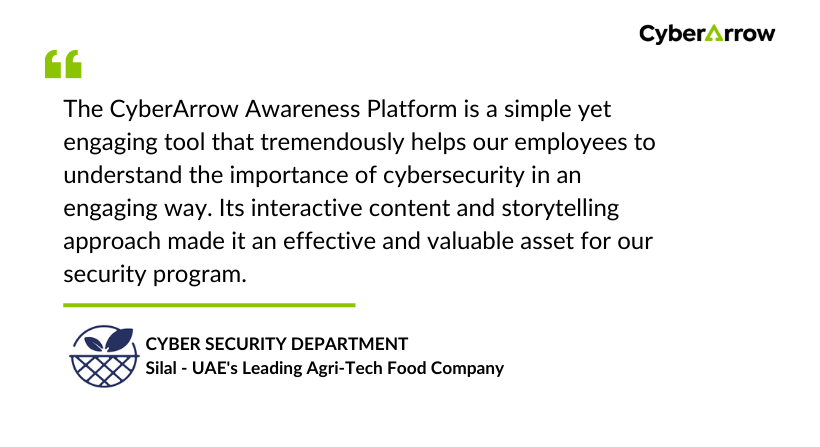
Read how CyberArrow awareness platform increased security awareness among Silal’s employees.
See what Silal has to say about CyberArrow Awareness Platform:
Final thoughts: Protect your organization now
Phishing and vishing attacks target your people, your biggest asset, and sometimes your biggest weakness.
Setting up anti-phishing and anti-vishing systems means more than technology. It means building a culture where everyone is alert and prepared.
The CyberArrow Awareness Platform helps you do exactly that. It makes cyber security training easy, effective, and ongoing.
