

How to identify vishing scams over the phone
Cybercriminals are not just sending fake emails anymore. They’re now calling you and pretending to be someone they’re not. These phone-based scams are called vishing scams.
Vishing is short for “voice phishing.” It’s a type of scam where the attacker uses a phone call to trick you into giving away sensitive information like passwords, credit card numbers, or personal details.
This blog will help you understand what vishing scams are, learn how they work, spot the warning signs, and protect your organization from falling victim.
And at the end, we’ll show you how the CyberArrow Awareness Platform can automate cyber security awareness training across your organization and help you build strong human firewalls.
- What is a vishing scam?
- Why vishing scams are growing
- Real-life examples of vishing scams
- Common tricks used in vishing scams
- How to spot a vishing scam
- What to do if you suspect a vishing scam
- Why businesses must train employees about vishing scams
- How CyberArrow Awareness Platform helps prevent vishing scams
- Final thoughts
What is a vishing scam?
A vishing scam is when a cybercriminal calls you pretending to be someone you trust like your bank, your company’s IT department, or even law enforcement.
Their goal is to:
- Get your passwords.
- Access your bank accounts.
- Trick you into sending money.
- Steal your identity.
The caller usually sounds very confident and professional. They create a sense of urgency so you don’t stop to think.
And because the attack happens over the phone, it feels personal—which makes it even more dangerous.
Why vishing scams are growing
Phone scams are not new, but they are getting more advanced and harder to detect. Here’s why:
1. Easy access to personal info
Cybercriminals often collect data from:
- Social media.
- Data breaches.
- Company websites.
They use this information to sound convincing.
2. Spoofed caller IDs
Attackers can make it look like they’re calling from a real phone number like your bank or office. This is called caller ID spoofing.
3. Emotional pressure
They use fear, urgency, or even fake rewards to get people to act without thinking.
Real-life examples of vishing scams
Let’s look at how these scams work in real situations:
Example 1: The fake bank call
You get a call that sounds like it’s from your bank:
“There’s been suspicious activity on your account. We need to confirm your identity. Please provide your PIN.”
The caller may even know your name and part of your account number. But they are a scammer, not your bank.
Example 2: The tech support scam
Someone calls claiming to be from your company’s IT team:
“We’ve detected a virus on your system. We need remote access to fix it.”
They might ask you to install software that gives them control over your computer.
Example 3: The CEO fraud
An employee gets a call from someone pretending to be the CEO:
“I’m in a meeting and need you to urgently wire money to a client.”
This is also known as Business Email Compromise (BEC) but done over the phone.
Common tricks used in vishing scams
Vishing scams follow patterns. Here are some of the tricks scammers use:
Pretending to be someone you trust
They might act like:
- Bank staff.
- Tech support.
- Police officers.
- Company executives.
- Government workers.
Creating urgency or fear
They say things like:
- “Act now or your account will be locked.”
- “You’ll be arrested if you don’t respond.”
- “Your job is at risk if this isn’t fixed immediately.”
This pressure makes people panic.
Using background noise
To sound real, scammers might add fake office or call center noises in the background.
Asking for personal or company information
They’ll ask for things like:
- Passwords.
- Security codes.
- Account numbers.
- Employee details.
Requesting money transfers
They may ask you to:
- Buy gift cards.
- Transfer money.
- Share credit card details.
How to spot a vishing scam
Now that you know the tricks, here are the signs to look out for:
1. Unexpected calls asking for sensitive info
Legit organizations never ask for passwords or PINs over the phone. If someone does it’s a red flag.
2. Pressure to act fast
Scammers don’t want you to think. They’ll rush you to make a mistake.
Always pause, hang up, and think before acting.
3. Caller gets angry or pushy
If someone becomes aggressive or demanding, they’re likely trying to manipulate you.
4. Too good to be true
“Congratulations! You’ve won a free vacation!”
If it sounds too good to be true, it probably is.
5. You’re asked to keep it secret
If someone says, “Don’t tell anyone about this,” it’s often a scam.
What to do if you suspect a vishing scam
Here’s what you should do when something feels off:
- Hang up: Don’t feel bad. If it sounds suspicious, hang up immediately.
- Call the official number: If the caller claims to be from your bank or IT department, call back using an official number (not the one they gave you).
- Report it: Tell your IT/security team right away. If it happened at home, report to local authorities or your bank.
- Never share sensitive info: Don’t share passwords, codes, or account details over the phone, even if the caller sounds real.
Why businesses must train employees about vishing scams
One untrained employee can put your entire organization at risk. And vishing scams are especially dangerous because they:
- Are hard to trace.
- Sounds very convincing.
- Often trick even smart, tech-savvy people.
That’s why cyber security awareness training is more important than ever.
How CyberArrow Awareness Platform helps prevent vishing scams
The CyberArrow Awareness Platform helps companies build strong human firewalls by training employees to spot and stop social engineering attacks like vishing.
Let’s look at how CyberArrow helps:
1. Automated security awareness training
CyberArrow provides ongoing training that is:
- Easy to understand.
- Based on real-world examples.
- Designed for all employees.
It teaches users exactly how to recognize vishing calls and what to do next.
2. Simulated attacks and testing
CyberArrow runs realistic attack simulations so you can test how your employees would respond to fake vishing or phishing scenarios.
This helps identify who needs more support and training.
3. Real-time reporting
Managers and security teams get:
- Clear dashboards.
- Real-time reports.
- Risk scores for each employee.
This helps companies track progress and reduce future risks.
4. Industry-specific training
Whether you’re in:
- Finance.
- Healthcare.
- Education.
- Government.
CyberArrow tailors the training to your industry and its unique threats.
5. Builds a security-first culture
CyberArrow does more than train, it helps build a culture where employees:
- Stay alert.
- Question suspicious behavior.
- Report scams immediately.
Over time, this culture becomes your first and strongest line of defense.
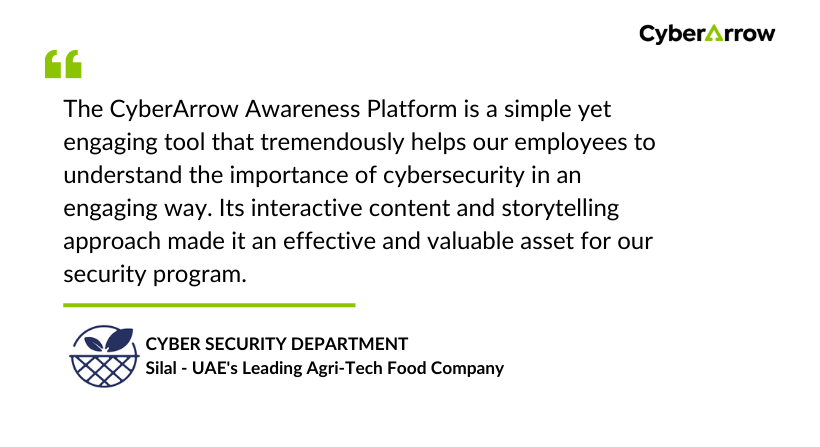
Read how CyberArrow awareness platform increased security awareness among Silal’s employees.
See what Silal has to say about CyberArrow Awareness Platform:
Final thoughts
Vishing scams are becoming smarter and more dangerous. Scammers no longer need to hack your systems; they just need to convince one person to trust them.
That’s why protecting your organization isn’t just about firewalls and antivirus software, it’s about people.
