


What is compliance monitoring? How CyberArrow GRC automates it
Staying compliant with laws, rules, and standards is not just a legal requirement, it’s a key part of protecting your business. But compliance is not a one-time task. It’s an ongoing process that needs regular tracking and updates. This is where compliance monitoring comes in.
In this guide, we’ll explain what compliance monitoring means, why it’s important for your business, and the steps involved in monitoring compliance. And how tools like CyberArrow GRC can automate everything, saves you time and reduce risk.
Let’s get started.
What is compliance monitoring?
Compliance monitoring means checking regularly to make sure your business is following all the laws, rules, industry standards, and internal policies that apply to it.
This can include:
- Data privacy laws like GDPR or HIPAA.
- Cybersecurity standards like ISO 27001.
- Financial regulations like SOX.
- Internal control policies.
- Vendor and third-party requirements.
It’s like having a system in place that keeps an eye on everything your business does to make sure it’s always playing by the rules.
Why is compliance monitoring important?
When businesses don’t monitor compliance, a lot can go wrong:
- Data breaches can happen when security standards are not followed.
- Fines and penalties can pile up for breaking laws.
- Customers lose trust if their information isn’t protected.
- Audits become stressful and time-consuming.
On the other hand, companies that monitor compliance regularly:
- Catch issues early before they turn into problems.
- Build trust with clients and partners.
- Pass audits smoothly.
- Stay ahead of industry changes.
Compliance monitoring is about more than just avoiding trouble. It’s about being proactive and protecting your company’s reputation and operations.
Key areas compliance monitoring covers
Compliance monitoring can involve different areas depending on your industry. But here are some of the most common areas it includes:
1. Data security and privacy
Checking that sensitive customer or employee data is being handled and protected properly (e.g., under laws like GDPR, CCPA, HIPAA).
2. Access control
Monitoring who has access to systems, data, and physical locations and making sure access is limited to the right people.
3. Internal controls
Verifying that business processes follow approved procedures, including how data is stored, backed up, and shared.
4. Vendor compliance
Ensuring your third-party service providers also follow compliance rules and standards.
5. Policy adherence
Making sure employees follow internal policies such as password rules, email usage, and security practices.
Steps in compliance monitoring
Let’s break down the basic steps involved in compliance monitoring:
Step 1: Identify what you need to comply with
Start by listing all the laws, standards, and frameworks that apply to your business. These could include:
- ISO 27001
- NIST
- SOC 2
- HIPAA
- GDPR
- Local data laws
Each one will have different requirements.
Step 2: Set up controls
Create internal rules or technical controls that help your business meet those standards. These can include things like two-factor authentication, data encryption, or employee training.
Step 3: Monitor and gather evidence
This is the main step. You must track systems, actions, and reports to prove your company is following the rules. For example:
- Are security updates installed on time?
- Is employee access reviewed regularly?
- Are backups happening as scheduled?
Step 4: Report and analyze
Generate reports to show your compliance status. These reports are used in audits and management reviews.
Step 5: Improve Continuously
If any issues or gaps are found, update your controls and repeat the process. Compliance is not a one-time job it’s something you need to keep doing.
Quick link: A complete guide to the 10 cybersecurity domains
Challenges in manual compliance monitoring
Many organizations still use spreadsheets, emails, and manual checklists to monitor compliance. This might work at first, but it quickly becomes a problem as the company grows.
Here are some of the biggest challenges of manual compliance monitoring:
- Too much time spent gathering evidence.
- Difficulty tracking changes across departments.
- Missed deadlines for audits or updates.
- Confusion over who is responsible for what.
- Human errors in reporting or data entry.
- Hard to keep up with changing laws or standards.
This is why more and more companies are turning to automated solutions like CyberArrow GRC.
How CyberArrow GRC automates compliance monitoring
CyberArrow GRC is a powerful governance, risk, and compliance platform designed to make compliance monitoring easy, fast, and reliable.
Here’s how it helps:
1. Say goodbye to spreadsheets
CyberArrow replaces manual tracking with a smart, automated system. You no longer need to use messy spreadsheets or send reminders manually. Everything is tracked in one place, in real-time.
2. Automated evidence collection
Gathering evidence is one of the hardest parts of compliance. CyberArrow automatically collects internal control evidence across your systems, no more hunting for screenshots or logs.
This not only saves time but also improves audit readiness.
3. 80+ Integrations out of the box
CyberArrow connects easily with over 80 systems, including:
- Cloud platforms (AWS, Azure, GCP).
- HR and ticketing systems.
- Security tools and apps.
This allows it to auto-scan your infrastructure and keep compliance data flowing without manual updates.
4. Pre-approved document templates
Need to prepare for an audit or compliance review? CyberArrow gives you access to auditor-ready templates, making it easy to:
- Write policies.
- Document processes.
- Submit reports.
This reduces the time spent preparing for audits and helps you stay aligned with industry standards.
5. Real-time dashboards and alerts
Stay ahead of problems with real-time dashboards and alerts. Get notified when a control is failing or a system needs attention. This helps you act fast and fix issues before they become risks.
6. Support for multiple frameworks
CyberArrow comes pre-mapped to 100+ frameworks, including:
- ISO 27001
- NIST
- HIPAA
- PCI-DSS
- SOC 2
This allows you to monitor and maintain cross-framework compliance without duplicating efforts.
The benefits of automating compliance monitoring
Here’s what you gain by using CyberArrow GRC to automate your compliance monitoring:
- Save time on routine tasks.
- Reduce errors caused by manual tracking.
- Get audit-ready fast with collected evidence and templates.
- Increase visibility into your compliance status.
- Build a culture of compliance across departments.
- Lower the cost of managing governance and risk programs.
Whether you’re a small team or a large enterprise, automation makes compliance easier, smarter, and more scalable.
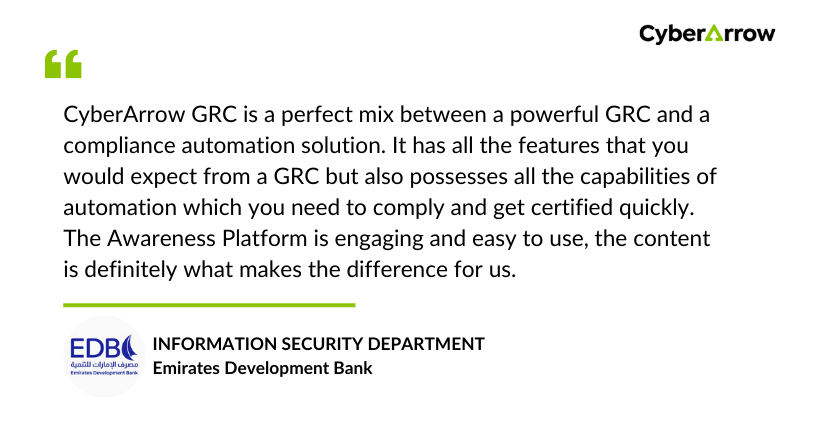
See what Emirates Development Bank has to say about CyberArrow GRC:
Final thoughts
Compliance monitoring is a critical part of running a secure and responsible business. It helps you follow the law, protect your data, and earn customer trust. But trying to manage it manually can lead to delays, errors, and even legal trouble.
The good news? You don’t have to do it all alone.
CyberArrow GRC puts your compliance program on autopilot. From auto-gathering evidence to real-time tracking and auditor-ready reports, it gives you everything you need to monitor compliance, without the headaches.
