


Data security compliance standards: A complete guide
In today’s digital age, safeguarding sensitive information is crucial for businesses of all sizes. Data breaches can lead to financial losses, reputational damage, and legal consequences. To mitigate these risks, organizations must adhere to data security compliance standards.
This comprehensive guide will explore key data security compliance standards and how CyberArrow GRC can streamline compliance efforts.
- What is data security compliance?
- Why is data security compliance important?
- Key data security compliance standards you should know
- Challenges of managing data security compliance manually
- How CyberArrow GRC automates data security compliance
- Why businesses trust CyberArrow for data security compliance
- Final thoughts
What is data security compliance?
Data security compliance means following the rules, laws, and standards that protect important data from being stolen, lost, or used the wrong way. These rules tell companies how to handle personal, financial, and business information in a safe and legal way.
Every business collects some type of data like customer names, addresses, health records, or credit card numbers. If this data gets leaked or lost, it can cause big problems. That’s why data security compliance is so important. It keeps information safe and helps businesses avoid legal trouble.
Why is data security compliance important?
Data is one of the most valuable assets today. When companies don’t protect it, they face major risks like:
- Losing customer trust.
- Facing big fines and lawsuits.
- Damage to their reputation.
- Cyberattacks and ransomware threats.
Staying compliant with data protection laws helps a business:
- Keep customer data safe.
- Build trust and brand reputation.
- Avoid heavy penalties.
- Stay ahead of cyber threats.
Quick link: What is the PGPA Act?
Key data security compliance standards you should know
Let’s walk through some of the most common data security compliance standards that businesses follow across industries.
1. ISO/IEC 27001
What it is:
ISO 27001 is a global standard for information security. It helps businesses build a strong security system to protect data.
What it covers:
- Managing security risks.
- Setting up policies and controls.
- Training employees.
- Handling security incidents.
- Keeping records of all processes.
Why it matters:
ISO 27001 is trusted worldwide. Companies that follow it show they care about data protection and managing risks seriously.
2. NIST Cybersecurity Framework
What it is:
NIST stands for the National Institute of Standards and Technology. Their framework is a guideline for U.S. businesses to improve cybersecurity.
What it includes:
- Identifying risks.
- Protecting systems.
- Detecting attacks.
- Responding to threats.
- Recovering from incidents.
Why it matters:
NIST is flexible. Businesses of all sizes can use it. It works well with other standards like ISO 27001 too.
3. HIPAA (Health Insurance Portability and Accountability Act)
What it is:
HIPAA is a U.S. law that protects health data. It applies to hospitals, doctors, health insurance companies, and any business that handles personal health information.
What it covers:
- Keeping patient data private and secure.
- Controlling who can see health records.
- Reporting data breaches.
- Training staff on data privacy.
Why it matters:
If a healthcare provider loses patient data, they can face serious legal action. HIPAA ensures they take data security seriously.
4. GDPR (General Data Protection Regulation)
What it is:
GDPR is a law from the European Union. It protects the personal data of EU citizens, even if the company is outside the EU.
What it includes:
- Getting clear permission to collect data.
- Letting people access or delete their data.
- Reporting data leaks quickly.
- Assigning Data Protection Officers (DPOs).
Why it matters:
Businesses that serve European customers must follow GDPR rules. Fines for non-compliance can be millions of euros.
5. PCI DSS (Payment Card Industry Data Security Standard)
What it is:
PCI DSS is a global standard for businesses that handle credit and debit card data.
What it includes:
- Encrypting cardholder data.
- Using secure systems and software.
- Limiting access to sensitive data.
- Testing security often.
Why it matters:
If a company handles card payments but doesn’t follow PCI DSS, they could face huge fines and lose the ability to process payments.
6. CCPA (California Consumer Privacy Act)
What it is:
CCPA is a data privacy law in California. It gives people control over how businesses collect and use their personal information.
What it includes:
- Telling people what data is collected.
- Giving them the option to delete data.
- Letting them opt out of data selling.
- Protecting personal data from leaks.
Why it matters:
If your business deals with California residents, CCPA applies to you. It’s also influencing similar laws in other states.
Challenges of managing data security compliance manually
Trying to keep up with multiple standards like GDPR, HIPAA, ISO 27001, and PCI DSS manually is not easy.
You may face:
- Too many spreadsheets and documents.
- Gaps in evidence collection.
- Missed updates to policies.
- Difficulty proving compliance to auditors.
- Errors in risk assessments.
When your team is small or busy, these problems can lead to delays, fines, and audit failures.
Quick link: Why manual GRC is failing modern enterprises
How CyberArrow GRC automates data security compliance
CyberArrow GRC is built to solve all of these challenges. It automates the entire compliance process, so your team spends less time managing spreadsheets and more time staying secure.
Here’s how it helps:
1. Evidence collection without hassle: CyberArrow connects with 80+ systems you already use. It pulls internal control evidence automatically, no more chasing down documents.
2. Compliance templates approved by auditors: CyberArrow includes built-in document templates that auditors already trust. This helps you get audit-ready faster.
3. Infrastructure auto-scanning: CyberArrow checks your IT systems for compliance gaps. It finds risks in your setup and tells you how to fix them.
4. Central dashboard for all frameworks: Manage multiple standards like ISO 27001, HIPAA, and PCI DSS from one platform. No need to jump between different tools.
5. Continuous monitoring: Instead of checking for compliance once a year, CyberArrow lets you monitor your security status every day.
6. Saves time and reduces costs: With automation, you reduce the time needed for audits and training. You also avoid costly fines from missed controls.
Why businesses trust CyberArrow for data security compliance
CyberArrow makes data security compliance simple, fast, and stress-free. Whether you’re working with healthcare, finance, or government clients, CyberArrow keeps your business ready.
Key highlights:
- 80+ integrations.
- 3000+ pre-mapped risks and mitigations.
- Covers 100+ GRC frameworks.
- Auditor-approved templates.
- Risk-based alerts and real-time dashboards.
- Easy reporting for management and auditors.
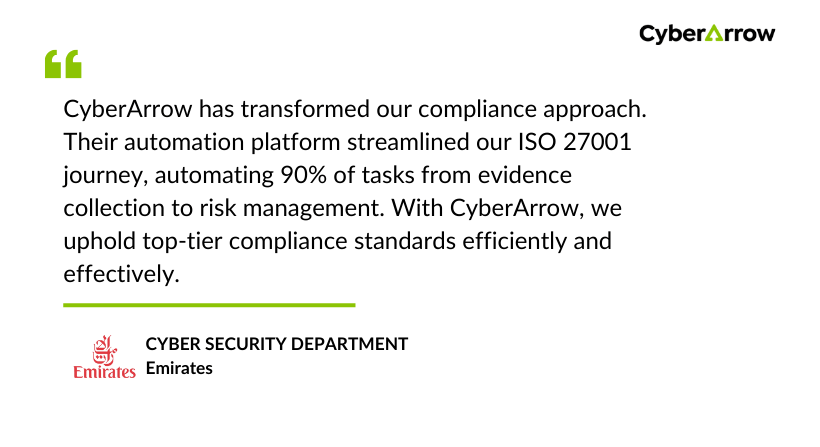
See what Emirates Development Bank has to say about CyberArrow GRC:
Final thoughts
Data security compliance is no longer optional. Businesses that collect and handle sensitive information must follow strict rules to protect data and avoid legal trouble.
From HIPAA and GDPR to ISO 27001 and PCI DSS, staying compliant can be complex but it doesn’t have to be.
With CyberArrow GRC, your entire compliance program runs on autopilot. You save time, reduce risk, and stay ahead of regulations with confidence.
