What is the Digital Operational Resilience Act (DORA)?
The Digital Operational Resilience Act (DORA) is a regulation from the European Union (EU) that focuses on strengthening the cyber security of financial institutions. The goal of DORA is to ensure that financial companies can withstand, respond to, and recover from cyber threats.
DORA was adopted in November 2022 and officially came into force on January 16, 2023. However, financial institutions must comply with DORA by January 17, 2025.
In this blog, we will explore what DORA is, why it is important, who it applies to, and how financial institutions can stay compliant.
- Why is DORA important?
- What does the Digital Operational Resilience Act (DORA) do?
- Who does DORA apply to?
- Third-party ICT service providers covered by DORA:
- How does DORA ensure compliance?
- How can financial institutions prepare for DORA?
- Benefits of DORA
- Conclusion
- Simplify DORA compliance with CyberArrow GRC
Why is DORA important?
Cyber security threats are growing worldwide, and the financial sector is a major target. Banks, insurance companies, and other financial institutions store sensitive data and handle large amounts of money. A cyberattack on these companies can lead to:
- Data breaches (loss of personal and financial information).
- Financial losses (stolen money or fraud).
- Service disruptions (banking systems going offline).
- Reputational damage (loss of customer trust).
DORA protects financial institutions by ensuring they have strong security measures in place. It also ensures that third-party vendors (such as cloud service providers) follow high-security standards to prevent cyber security risks.
What does the Digital Operational Resilience Act (DORA) do?
DORA is designed to make the financial sector more resilient to cyber threats. Cyberattacks on financial institutions can cause major disruptions, leading to loss of money, data breaches, and damage to trust. DORA introduces standardized rules to help financial companies manage cyber security risks effectively.
Here are the key objectives of DORA:
| Objective | Description |
| Improve digital resilience | Ensures financial institutions can survive cyber threats and disruptions. |
| Standardize cyber security rules | Creates a unified approach to cyber security across the financial sector. |
| Prevent and mitigate cyber threats | Helps businesses prepare for and respond to cyber incidents. |
| Ensure ICT security | Requires financial firms to have strong Information and Communication Technology (ICT) security. |
By implementing DORA, the EU wants to make sure that all financial companies follow the same cyber security standards. This reduces the risk of cyberattacks affecting the entire financial system.
Who does DORA apply to?
DORA applies to all financial institutions in the EU and critical third parties that provide ICT-related services.
Financial institutions covered by DORA:
| Type of Institution | Examples |
| Banks | Commercial banks, investment banks, and central banks. |
| Insurance companies | Life insurance, health insurance, and property insurance firms. |
| Investment firms | Asset management companies, stock trading firms. |
| Payment service providers | Payment gateways, mobile payment apps. |
| Credit institutions | Organizations that provide credit and loans. |
| Pension funds | Retirement fund organizations. |
Third-party ICT service providers covered by DORA:
DORA also applies to external vendors that provide Information and Communication Technology (ICT) services to financial institutions. These vendors must follow DORA regulations to ensure cyber security across the financial sector.
| ICT services covered | Examples |
| Cloud service providers | Companies that store financial data in cloud systems. |
| Software providers | Firms that develop cyber security software for banks. |
| Data analytics firms | Businesses that process financial data for risk analysis. |
| IT support companies | Organizations that provide technical support for financial firms. |
By covering third-party ICT providers, DORA ensures that financial institutions are protected from cyber threats coming from outside vendors.
How does DORA ensure compliance?
DORA requires financial institutions and ICT service providers to follow strict cyber security rules. If companies do not comply, authorities can impose penalties and require them to fix security issues.
Here’s how DORA ensures compliance:
| Compliance method | Description |
| National authorities | Each EU country has its own authorities to oversee DORA compliance. |
| Regular cyber risk assessments | Companies must perform risk assessments to identify cyber security weaknesses. |
| Incident reporting | Financial institutions must report cyber incidents quickly. |
| Penalties for non-compliance | Companies that fail to comply may face fines and other penalties. |
Financial institutions need to take compliance seriously to avoid penalties and protect themselves from cyber threats.
How can financial institutions prepare for DORA?
To comply with DORA, financial institutions must strengthen their cyber security policies and incident response strategies. Below are key steps to prepare:
1. Perform a risk assessment
- Identify possible cyber threats and weaknesses.
- Evaluate current security measures and improve weak areas.
2. Strengthen ICT security
- Upgrade firewalls, encryption, and intrusion detection systems.
- Ensure third-party vendors meet cyber security standards.
3. Develop an incident response plan
- Create a step-by-step plan for responding to cyberattacks.
- Train employees to detect and report security threats.
4. Regularly test cyber security measures
- Conduct penetration testing to find security vulnerabilities.
- Simulate cyberattacks to test response readiness.
5. Train employees on cyber security
- Educate staff about phishing attacks, password security, and cyber hygiene.
- Conduct regular training sessions to keep employees updated on cyber security threats.
By following these steps, financial institutions can stay compliant with DORA and reduce the risk of cyber threats.
Benefits of DORA
Although implementing DORA takes effort, it offers significant benefits to financial institutions:
- Stronger cyber security: Reduces the risk of cyberattacks and data breaches.
- Better regulatory compliance: Ensures businesses follow EU cyber security laws.
- Improved customer trust: Customers feel safer using financial services.
- Reduced financial losses: Protects businesses from the financial impact of cyberattacks.
- Greater market stability: Prevents cyber security risks from affecting the entire financial system.
By complying with DORA, financial institutions can create a secure, resilient, and reliable financial ecosystem.
Conclusion
The Digital Operational Resilience Act (DORA) is a crucial regulation that ensures financial institutions and their ICT providers are resilient against cyber threats. With the compliance deadline set for January 17, 2025, organizations must act now to strengthen their cyber security and prepare for regulatory requirements.
To comply with DORA, financial institutions need to:
✅ Assess cyber security risks regularly
✅ Implement strong ICT security measures
✅ Develop an incident response plan
✅ Monitor third-party vendors for compliance
✅ Train employees on cyber security best practices
Simplify DORA compliance with CyberArrow GRC
Manually managing DORA compliance can be time-consuming and complex. CyberArrow GRC makes it easier by automating compliance tasks, reducing risks, and ensuring financial institutions stay ahead of regulations.
With CyberArrow GRC, you get:
- Automated risk assessments: Identify and address vulnerabilities effortlessly
- Real-time compliance monitoring: Stay up-to-date with DORA requirements
- Incident reporting & response: Quickly detect and mitigate cyber threats
- Third-party risk management: Ensure vendors meet DORA standards
- Audit-ready reports: Generate compliance reports in minutes
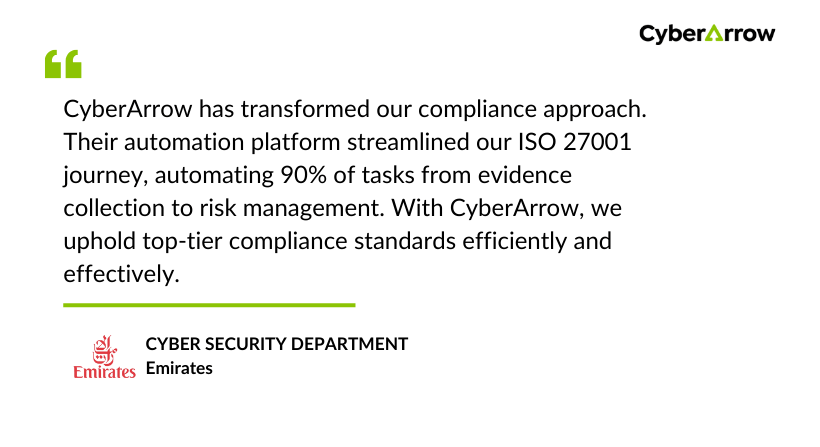
See what global brands have to say about CyberArrow GRC: