


Understanding PCI DSS v4.0.1: A complete guide to payment security compliance
If your business handles payment card information, staying compliant with the PCI DSS v4.0.1 standard is critical. Why? Because it’s not just about meeting rules—it’s about protecting your customers’ sensitive data from cyber threats.
The Payment Card Industry Data Security Standard (PCI DSS) is a globally recognized framework designed to safeguard cardholder data. Version 4.0.1 introduces significant updates to ensure businesses are better equipped to tackle evolving security challenges. From enhanced authentication methods to greater flexibility in compliance, this version sets a new benchmark for payment security.
In this guide, we’ll break down PCI DSS v4.0.1, explain the updates, highlight its importance, and provide actionable steps for compliance. Plus, we’ll show you how tools like CyberArrow GRC can simplify and automate the compliance process.
What is PCI DSS v4.0.1?
The Payment Card Industry Data Security Standard (PCI DSS) is a set of security standards created to ensure businesses handle credit card data securely. Version 4.0.1 builds on previous versions by addressing modern security threats and making compliance more adaptable to various business models.
Key objectives of PCI DSS
- Protect cardholder data.
- Secure systems and networks.
- Manage vulnerabilities.
- Implement strong access controls.
- Monitor and test networks regularly.
- Maintain an information security policy.
Who needs to comply?
Any business that processes, stores, or transmits credit card information must comply with PCI DSS. This includes:
- E-commerce businesses.
- Brick-and-mortar retailers.
- Payment processors.
- Service providers.
What’s new in PCI DSS v4.0.1?
PCI DSS v4.0.1 introduces several updates to enhance security, provide more flexibility, and simplify compliance.
1. Focus on evolving threats
- Updated encryption standards to combat advanced cyberattacks.
- Enhanced multi-factor authentication (MFA) requirements.
2. Greater flexibility for businesses
- Allows for customized approaches to compliance based on specific business needs.
- Encourages innovation in securing payment data.
3. More focus on continuous compliance
- Emphasis on maintaining compliance year-round rather than viewing it as a one-time activity.
- Regular testing and monitoring requirements are more stringent.
4. Clearer reporting and documentation
- Streamlined documentation processes.
- Improved reporting templates to make audits simpler and more transparent.
Download your free PCI DSS checklist and assess your PCI DSS audit-readiness in minutes.
Download now
Steps to achieve PCI DSS v4.0.1 compliance
Achieving compliance with PCI DSS v4.0.1 can seem daunting, but breaking it into manageable steps makes the process more straightforward.
1. Understand the requirements
Familiarize yourself with the 12 core requirements of PCI DSS, which cover everything from building secure networks to maintaining strong access control measures.
2. Conduct a gap analysis
Assess your current security posture against PCI DSS v4.0.1 standards. Identify gaps and create an action plan to address them.
3. Implement security controls
- Encryption: Ensure sensitive data is encrypted during transmission and storage.
- Access management: Restrict access to cardholder data to only those who need it.
- Monitoring: Use tools to monitor and log all access to sensitive data.
4. Train employees
Provide regular training on payment security best practices. Employees play a critical role in preventing breaches.
5. Conduct regular assessments
- Perform vulnerability scans and penetration tests to identify and fix potential security issues.
- Use automated tools to monitor compliance continuously.
6. Work with a Qualified Security Assessor (QSA)
If required, engage a QSA to validate your compliance. They’ll review your processes and provide guidance to ensure you meet PCI DSS standards.
Common challenges in PCI DSS compliance
While the framework is straightforward, businesses often face challenges in achieving compliance.
1. Complexity of requirements
Smaller businesses may find the technical requirements overwhelming.
2. Lack of resources
Limited budgets or staffing can make it harder to meet compliance standards.
3. Evolving threat landscape
Keeping up with new security threats requires constant vigilance.
4. Misunderstanding responsibilities
For businesses using third-party vendors, it’s essential to clarify who is responsible for which parts of compliance.
Quick link: PCI DSS vs GDPR
Best practices for PCI DSS v4.0.1 compliance
1. Adopt a risk-based approach
Focus on the areas of your system that pose the greatest risks. This ensures resources are allocated efficiently.
2. Use automation tools
Automated tools like CyberArrow GRC can help streamline compliance by handling tasks like reporting, monitoring, and documentation.
3. Stay updated
Regularly review updates to the PCI DSS framework and adjust your processes accordingly.
4. Partner with experts
Working with cybersecurity consultants or QSAs can provide valuable insights and simplify the compliance process.
How CyberArrow GRC automates PCI DSS v4.0.1 compliance
Complying with PCI DSS v4.0.1 requires effort, but CyberArrow GRC makes the process much easier. It’s designed to help businesses automate and manage compliance requirements efficiently.
Features of CyberArrow GRC
- Automated compliance monitoring: Continuously tracks compliance with PCI DSS requirements.
- Customizable frameworks: Aligns with your business processes for a tailored approach.
- Centralized documentation: Keeps all compliance-related documents in one place for easy access.
- Real-time alerts: Notifies you of potential compliance issues, allowing for quick action.
- Audit-ready reports: Generates detailed reports that simplify the audit process.
Use cases for CyberArrow GRC
- E-commerce businesses: Automate the monitoring of payment systems and ensure customer data is secure.
- Payment processors: Streamline reporting and maintain continuous compliance.
- Service providers: Offer clients a reliable solution for managing their compliance requirements.
Read how CyberArrow empowered a Fintech startup to automate PCI DSS in 3 weeks.
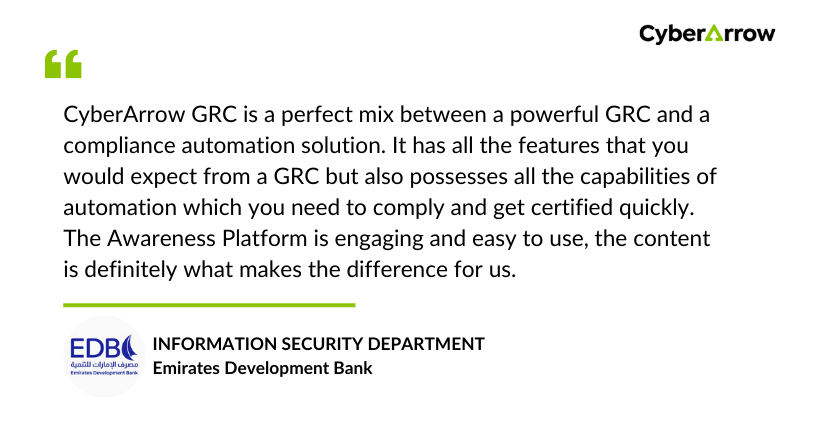
See what our clients have to say about CyberArrow GRC:
Conclusion
PCI DSS v4.0.1 is more than just a set of rules; it’s a critical framework for protecting payment card data. By staying compliant, businesses not only safeguard their customers but also build trust and reduce the risk of costly data breaches.
Achieving and maintaining compliance doesn’t have to be overwhelming. With CyberArrow GRC, businesses can automate the process, simplify reporting, and stay ahead of evolving threats.
