CyberArrow vs. Scrut: Which one is the right choice for your business?
Businesses have many options when it comes to managing governance, risk, and compliance (GRC) needs. Two GRC tools, CyberArrow and Scrut, offer a range of features to help organizations maintain compliance and improve risk management. However, each tool offers something different, and choosing the right one depends on specific business requirements.
In this article, we’ll explore the key features and differences between CyberArrow and Scrut to help you decide which platform may better fit your business.
What is CyberArrow?
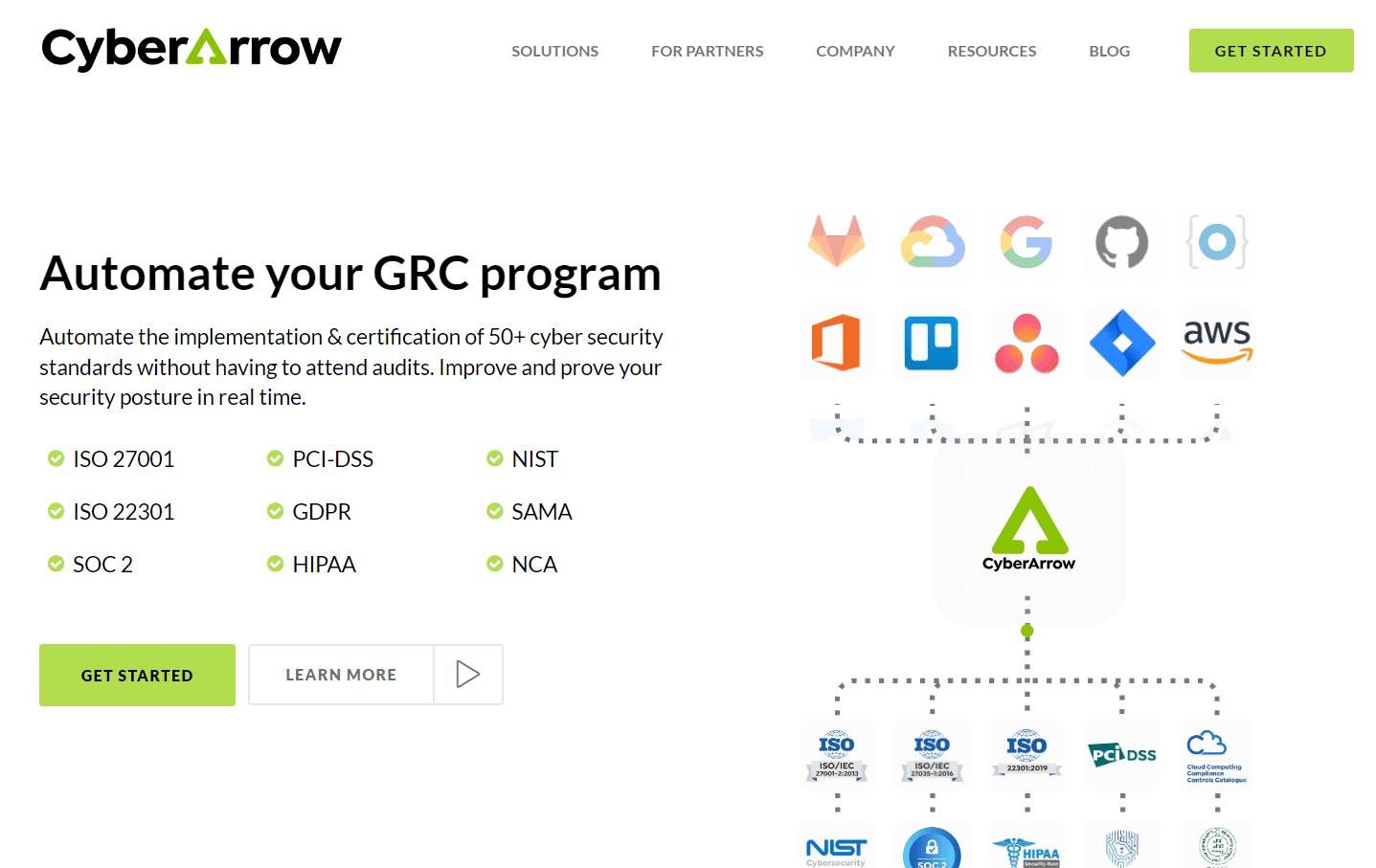
CyberArrow is a GRC platform that streamlines compliance management with advanced automation features. Known for its out-of-the-box templates and enterprise risk management capabilities, CyberArrow allows businesses to easily handle complex compliance requirements. It offers seamless integrations, making it adaptable to various environments.
This Scrut alternative is particularly valued for its efficient user experience, which helps businesses stay audit-ready and manage compliance without excessive manual effort.
Key features of CyberArrow
- Enterprise risk management (ERM): Built-in tools for identifying, assessing, and mitigating enterprise risks.
- Automated evidence collection: Streamlined documentation and evidence-gathering processes, reducing manual workload.
- Out-of-the-box integrations: Works with popular enterprise applications to support seamless workflow integration.
- Comprehensive control mapping: Maps controls across multiple frameworks, eliminating redundant work for faster compliance.
What is Scrut?
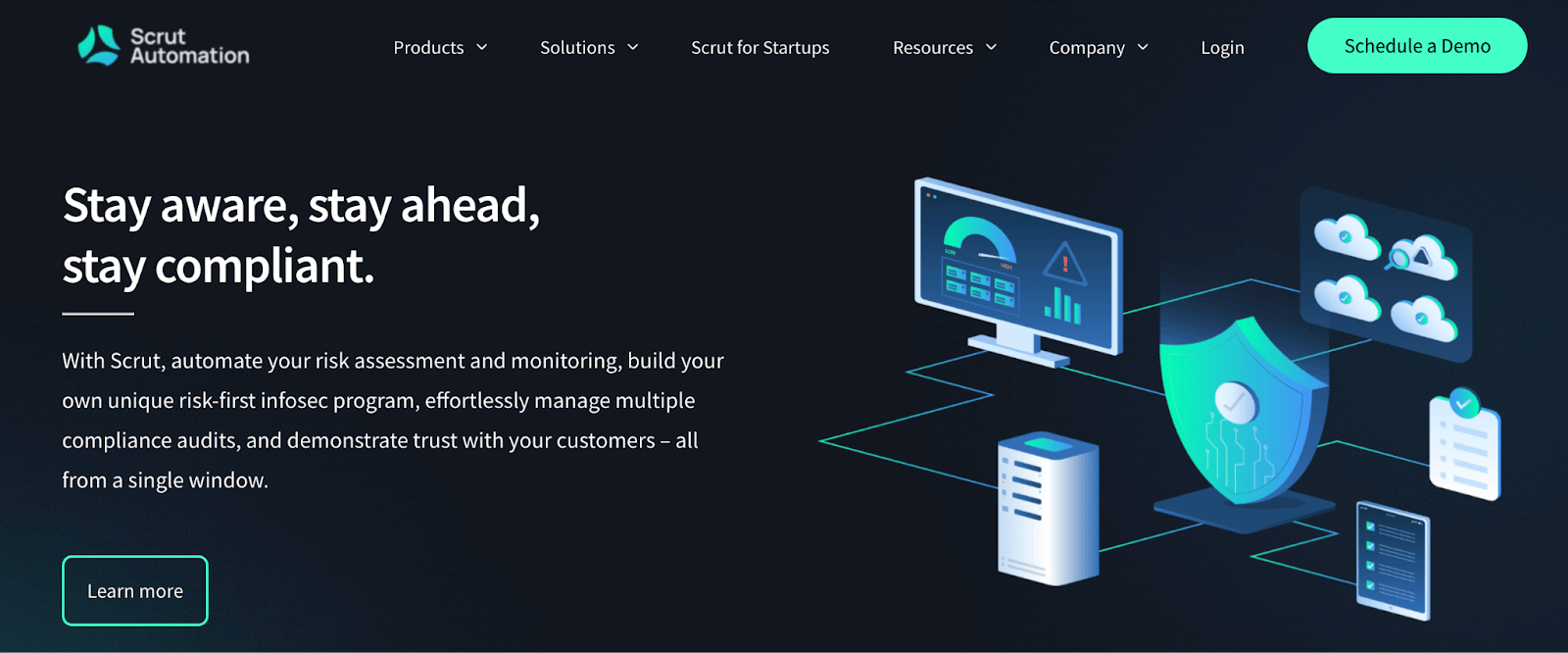
Scrut is a GRC automation platform that helps companies manage compliance for frameworks like SOC 2, ISO 27001, and more. It offers cloud security monitoring, evidence management, and compliance tracking features, which are ideal for businesses starting their GRC journey. However, Scrut’s focus on certain features may not cover all advanced enterprise needs.
Key features of Scrut
- Monitors and manages security risks in cloud environments.
- Tracks tasks and deadlines to help teams stay on top of compliance.
- Provides tools for assessing security risks, although automation is somewhat limited in third-party risk assessments.
- Simplifies evidence collection, though some users find the process could be more intuitive.
CyberArrow vs. Scrut: At a glance
| Features | CyberArrow | Scrut |
| Enterprise risk management | Advanced risk management and assessment, fully customizable | Basic capabilities, less customization |
| Control mapping | Cross-map controls across frameworks | Lacks control mapping, requires manual work |
| Low-touch audit | Zero-touch audit with no auditor interactions | No, requires multiple audit sessions |
| User experience | Intuitive, user-friendly interface | Reports of UX challenges from users |
| Automated risk assessments | Advanced, includes vendor & security assessments | Limited, mostly focused on basic assessments |
CyberArrow vs. Scrut: Feature comparison
When deciding between CyberArrow GRC and Scrut, it’s important to look closely at their core features. Both platforms offer valuable GRC capabilities but differ in several key areas. Below, we compare their capabilities in different aspects.
1. Risk management
- CyberArrow: CyberArrow GRC offers a strong risk management solution with customizable risk assessment and mitigation tools. It includes enterprise-level risk management, helping businesses identify, assess, and mitigate compliance risks across various areas. CyberArrow also offers third-party risk management to help companies manage vendor risk.
- Scrut: While Scrut provides basic risk assessment tools, it doesn’t offer the same level of customization as CyberArrow. It focuses more on cloud security risk monitoring, which can be useful for smaller companies or those primarily focused on cloud-based environments. However, Scrut’s limited vendor and security risk assessment automation might require more manual effort.
2. Audit management
- CyberArrow: CyberArrow’s contactless audit support is a standout feature. It minimizes the back-and-forth with auditors by automating evidence collection and streamlining the audit process, making audits faster and less disruptive. This feature especially benefits companies undergoing frequent audits or with complex compliance needs.
- Scrut: Scrut’s audit management capabilities lack a contactless option, often requiring multiple rounds with auditors. This can make the process more time-consuming and labor-intensive. It’s a good fit for companies with less frequent audit requirements but may be a limitation for businesses that want to speed up the audit process.
3. Compliance automation
- CyberArrow: CyberArrow shines in compliance automation, offering a wide range of out-of-the-box templates and integrations that make it easy to automate compliance tasks across various frameworks. Its control mapping capabilities also ensure compliance efforts are not duplicated, which helps companies save time and stay aligned with multiple standards.
- Scrut: Scrut offers compliance tracking and basic automation features but lacks advanced capabilities, like common control mapping. This means users may need to manually map controls across frameworks, which can lead to repetitive work and longer compliance processes.
4. User experience
- CyberArrow: CyberArrow is designed with user experience in mind, offering an intuitive and user-friendly interface. This makes it easier for teams to navigate, set up workflows, and manage compliance tasks efficiently. It’s particularly beneficial for businesses looking for a straightforward GRC tool that doesn’t require extensive training.
- Scrut: Some users have reported challenges with Scrut’s user experience, especially when managing multiple tasks or navigating through different compliance frameworks. While it offers useful features, the interface might require a learning curve, which could slow down onboarding and everyday use.
5. Evidence collection and control mapping
- CyberArrow: CyberArrow provides automated evidence collection, simplifies documentation, and minimizes manual work. Its comprehensive control mapping also allows users to map controls across multiple compliance frameworks, reducing redundancy and achieving compliance faster.
- Scrut: While Scrut has evidence-collection capabilities, the process may require more manual intervention than CyberArrow. It lacks a control mapping feature, so users need to manually track controls across frameworks, which can slow compliance efforts and make them more labor-intensive.
Why is CyberArrow the best GRC software for you?
CyberArrow takes a comprehensive, automated approach to governance, risk, and compliance management, making it a valuable solution for organizations that want to streamline compliance processes and reduce manual effort.
Here’s why CyberArrow stands out as the top GRC choice:
- Policy management: It simplifies creating, distributing, and tracking policies across your organization. CyberArrow’s platform allows easy setup and automated tracking to ensure policies reach the right people and that acknowledgment is recorded.
- Risk assessments: CyberArrow uses automation to help identify, evaluate, and mitigate risks across your organization. This feature allows teams to manage compliance risks efficiently and proactively respond to them.
- Compliance tracking: This best GRC software monitors your compliance status in real time, with automated updates and detailed reports that simplify audit preparation. This capability is essential for organizations that need accurate compliance insights on demand.
- Plug-and-play platform: With support for over 60 integrations, CyberArrow’s platform can be up and running within 30 minutes. This seamless setup means you can connect existing tools and systems without complex configuration, making it easier to get started with compliance management.
- No manual work: CyberArrow lets you put your cyber security compliance on autopilot, automating tasks that would otherwise require constant oversight. From tracking policies to managing audits, CyberArrow does the heavy lifting, enabling your team to work efficiently without the need for manual intervention.
CyberArrow is the ideal choice for companies looking to reduce manual workloads, improve audit readiness, and effortlessly stay compliant.
See what companies like Emirates say about CyberArrow: